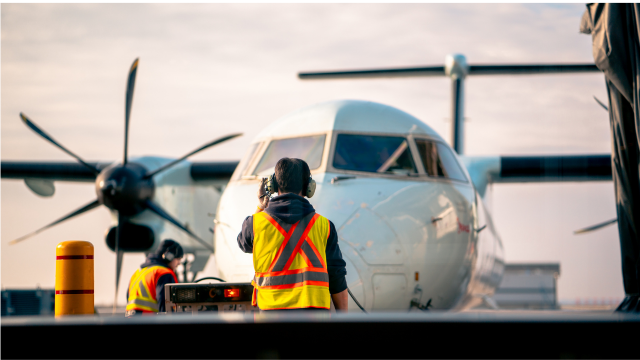
Aircraft fueling jobs UK jobseekers see advertised at airports are among the most safety-critical ground-handling roles in commercial aviation. Usually described in British job adverts as aircraft refuelling or aircraft refueller work, the job involves delivering the correct aviation fuel to aircraft while following strict procedures for fuel quality, vehicle operation, security, record keeping and airside safety.
It is not simply a driving job with a fuel hose attached. Refuellers work around live aircraft, passengers, ground vehicles and other turnaround teams, often to tight departure schedules. A mistake involving the wrong fuel, incorrect quantity, contamination, unsafe vehicle positioning or poor communication can have serious consequences.
The good news for new entrants is that previous aircraft-refuelling experience is not demanded by every employer. Some companies provide specialist training after recruitment. Driving qualifications, an ability to pass airside vetting, safety awareness and dependable shift availability can be more important entry requirements.
This guide explains what aircraft refuellers do, the qualifications employers look for, typical pay and working conditions, security clearance and the routes available for building a career in aviation fuel services.
What Are Aircraft Fueling Jobs?
Aircraft fuelling jobs involve supplying aviation fuel to aircraft refuelling before departure or during other authorised ground operations.
Most commercial-airport roles are advertised as aircraft refueller jobs, refuelling operator positions, fuel operative roles or similar titles. Workers may be employed by specialist aviation-fuel companies, ground-handling organisations, airport fuel-service businesses or contractors working on behalf of airlines.
The job can involve different fuel-delivery systems.
At some airports, fuel is transported directly to the aircraft in a tanker or bowser. At airports with underground hydrant infrastructure, a hydrant dispenser may connect the airport fuel system to theaircraft refuelling
The employee is responsible for using the equipment they have been trained and authorised to operate.
Some jobs focus almost entirely on into-plane refuelling. Others can include fuel-farm work, receiving fuel, sampling, quality checks, vehicle inspections or other operational responsibilities.
What Does an Aircraft Fueler Do?
An aircraft refueller delivers the requested type and quantity of fuel to an aircraft refuelling in accordance with airline, airport and employer procedures.
The work begins well before fuel physically enters an aircraft.
A refueller may receive instructions from an allocator or operations controller, travel to the assigned aircraft refuelling stand, confirm the relevant operational information and prepare the fuelling vehicle or hydrant equipment.
During the operation, the employee monitors the process, follows prescribed safety controls and maintains communication where required.
Afterwards, the job can involve completing fuel records, checking equipment and moving to the next allocated flight.
Depending on the employer, duties may also include:
- daily vehicle inspections;
- fuel-quality procedures;
- recording meter readings or delivery data;
- operating approved aircraft controls;
- reporting equipment defects;
- responding to operational changes;
- communicating by radio; and
- supporting fuel-farm activities.
Accuracy matters throughout the process.
Why Aircraft Fueling Is Important to Airport Operations
Commercial aircraft cannot operate without an assured supply of fuel of the correct specification and quantity.
That makes aircraft refuelling a fundamental part of airport operations.
A passenger aircraft turnaround involves several teams working simultaneously. Baggage may be unloaded and loaded, catering supplied, passengers boarded, the cabin cleaned and technical checks completed. Refuelling has to fit safely into this wider operation.
Delays in fuel delivery can delay departure.
More importantly, fuel quality directly affects flight safety. The Joint Inspection Group describes the goal of aviation fuel quality control as providing fuel that remains clean, dry and on specification.
Delivering the wrong fuel grade can have far more serious consequences than an ordinary service error.
Modern aviation-fuel operations therefore combine speed with disciplined control. The objective is not to complete refuelling as quickly as possible at any cost. It is to deliver the required fuel correctly, safely and within the operational window available.
Key Duties and Responsibilities of Aircraft Fueling Staff
Exact responsibilities vary between airports, but a commercial refueller may be expected to:
- attend assigned aircraft refuelling within the required turnaround time;
- operate authorised refuelling vehicles or hydrant equipment;
- confirm the required fuel information through approved procedures;
- monitor the refuelling operation;
- record fuel delivery information accurately;
- complete vehicle and equipment checks;
- carry out specified fuel-quality checks;
- report faults, spills, incidents or irregularities;
- maintain radio or telephone communication with operations staff;
- follow airport driving and airside rules; and
- comply with employer health, safety, environmental and security procedures.
At some locations, workers also perform fuel-farm duties such as receiving fuel deliveries and supporting sampling or quality-control processes.
The exact boundaries of the role are employer-specific.
A new employee should never assume that being trained to perform one function automatically authorises them to perform another.
A Typical Day in an Aircraft Fueling Job
Aircraft refuelling follows the flight schedule, so no two shifts are necessarily identical.
A shift normally starts with a briefing, vehicle allocation or operational handover. Staff may check their assigned equipment and receive information about expected aircraft refuelling movements.
Refuellers then respond to work allocations.
One flight might require a hydrant dispenser at a terminal stand. Another may need a tanker. Weather, delays, aircraft changes and stand changes can all affect the planned sequence.
Between flights, workers may carry out vehicle checks, complete documentation, communicate with operations teams and deal with equipment or fuel-quality requirements.
Peak periods can be extremely busy.aircraft refuelling may arrive close together, and several fuelling operations can be required within a relatively short period.
There can also be quieter periods.
The important skill is being able to switch from waiting to focused operational work immediately. Refuelling is not a job in which reduced activity means safety awareness can disappear.
Aircraft Fueling Skills and Personal Qualities
Employers look for people who can operate reliably in a controlled, safety-sensitive environment.
Strong safety awareness
Aviation fuel is hazardous, aircraft are valuable and the airport apron contains moving vehicles and equipment. Procedures cannot be treated casually.
Attention to detail
Refuellers work with quantities, aircraft identification, fuel information and operational records. An assumption that “this is probably the right aircraft” is not acceptable.
Numeracy
The role can involve meter readings, quantities and written or electronic fuel records. Employers commonly ask for a reasonable standard of numeracy.
Driving ability
Many refuellers operate large specialist vehicles around aircraft. Good vehicle awareness is essential even where an applicant already holds the appropriate licence category.
Communication
Radio calls, operational instructions and communication with colleagues must be understood accurately.
Teamwork
Although a refueller may work independently at an aircraft, the task sits inside a much larger turnaround operation.
Ability to work under pressure
A departure deadline does not remove the need to follow procedure. Good refuellers remain methodical when operations become busy.
Flexibility
Airports work around the clock, so employers frequently require early, late, night and weekend availability.
These qualities can be particularly valuable for applicants exploring aviation fuel jobs without previous industry experience.
Aircraft Fueling Job Requirements in the UK
There is no single national entry specification for every aircraft-refueller role.
Employers decide their requirements according to the vehicles, airport and operation involved.
Recent UK vacancies commonly request:
- an appropriate full driving licence;
- LGV Category C or C+E entitlement for particular refuelling vehicles;
- good literacy and numeracy;
- a checkable five-year employment or education history;
- ability to satisfy airside security requirements;
- flexibility for shift work;
- safety and environmental awareness; and
- effective communication and teamwork.
Some employers list ADR as desirable.
ADR relates to the carriage of dangerous goods by road. Whether an applicant needs it before recruitment depends on the specific role. It should not be described as a universal prerequisite for all aircraft refueller jobs.
Likewise, previous aircraft-refuelling experience may be preferred but is not always essential.
For example, recent Menzies Aviation recruitment explicitly stated that aircraft-refuelling experience was desirable rather than essential because training would be provided.
How to Become an Aircraft Fueler in the UK

A practical route begins with your driving qualifications.
Check current vacancies at airports you could realistically commute to and identify the licence categories employers request.
If most suitable roles require Category C or C+E and you do not hold it, obtaining the appropriate LGV entitlement may significantly expand your options.
Next, prepare your employment and education history.
Airside vetting can require a clear account of the previous five years, including gaps. Do not wait until after receiving an offer to discover that you cannot obtain evidence for previous employment or periods abroad.
Then search directly with aviation-fuel and ground-handling employers.
Your CV should emphasise relevant transferable experience. Useful backgrounds can include:
- HGV driving;
- logistics;
- fuel distribution;
- warehouse operations;
- construction or industrial work;
- military transport;
- ground handling; or
- other safety-critical roles.
Previous aviation employment is valuable, but it is not the only way to demonstrate reliability.
If successful, expect employer-specific practical training and assessment before working independently.
Aircraft Fueling Training and Qualifications
Aircraft refuellers need considerably more practical training than can be demonstrated through a general online aviation course.
Employer training can cover areas such as aircraft refuelling familiarisation, airside driving, fuelling equipment, fuel-quality procedures, emergency response, communications, environmental controls and local operating procedures.
Training is normally followed by supervised practice and assessment before an employee is authorised for particular duties.
Industry standards also matter.
The Joint Inspection Group’s JIG 1 standard covers aviation fuel quality controls and operating standards for into-plane fuelling services at major and regional airports. JIG 2 covers airport depots and hydrant operations.
Individual employers may build their procedures around relevant JIG, Energy Institute, airline and airport requirements.
Qualifications such as LGV driving entitlements or ADR may also be relevant depending on the position.
Private aviation courses can help applicants understand terminology, airport structures or safety principles. Tyne Academy, for example, offers online aviation learning covering areas such as airline operations and aviation regulation.
That type of learning should be presented accurately. It can develop background knowledge, but it does not qualify someone to independently refuel an aircraft refuelling
Aircraft Fuel Handling and Safety Procedures
Fuel handling is one of the areas where training must be operational rather than theoretical.
The Civil Aviation Authority emphasises three fundamentals: the correct fuel grade, quantity and quality.
Employers also need to manage risks associated with flammable substances. In Great Britain, DSEAR requires businesses to assess risks from dangerous substances, control the possibility of fire and explosion, plan for emergencies and train employees appropriately.
In practice, a trained refueller must work within approved procedures covering areas such as:
fuel identification, equipment condition, static and ignition risks, spills, fuel quality, communication and emergency response.
There are also specific requirements around more complex operations.
For example, current UK air-operations rules impose additional precautions when certain aircraft refuelling are refuelled while passengers are embarking, on board or disembarking. Special refuelling procedures can require risk assessment, documented procedures and trained personnel.
For a career applicant, the important lesson is not to memorise an internet checklist.
It is to understand that aircraft refuelling is highly procedural work and that employees are expected to follow their authorised training exactly.
Airport Security Clearance Requirements
Most commercial aircraft refuellers need regular access to restricted airside areas.
That means security vetting is an important part of recruitment.
For roles requiring unescorted access to an airport Security Restricted Area, aviation-security requirements can include a basic criminal-record disclosure.
Background checking may also cover:
- proof of identity;
- employment history;
- education;
- explanations for gaps; and
- relevant criminal-record information.
The period normally covers at least the previous five years.
If an applicant has lived continuously outside the UK for six months or more during that period, equivalent criminal-record evidence from the relevant country may be required.
Some roles may also involve an Accreditation Check or other airport-specific processes.
Applicants sometimes describe all of this as “getting airport clearance”. That phrase is convenient but imprecise.
There is not one universal security certificate that guarantees access to every UK airport. The employer and airport sponsor the appropriate process according to the worker’s duties.
Aircraft Fueling Equipment and Vehicles
Aircraft refuelling can involve large specialist vehicles, which explains why driving qualifications are prominent in many vacancies.
Two common systems are fuel tankers and hydrant dispensers.
A refuelling tanker or bowser carries aviation fuel in its own tank and transports it directly to the aircraft refuelling
A hydrant dispenser is different. At an airport with an underground hydrant fuel system, it provides the controlled connection between the hydrant point and aircraft refuelling rather than transporting the whole load of fuel in a large tank.
Employees may also work with pumps, meters, filters, hoses and other specialised components.
The equipment is subject to inspection, maintenance and quality-control procedures.
A refueller may therefore be responsible for pre-use or scheduled checks and for reporting defects rather than continuing to use equipment that appears unsafe.
The technical complexity is another reason why an ordinary HGV licence alone does not establish competence to refuel aircraft refuelling
Aircraft Fueler Salary in the UK
There is no national aircraft-refueller pay scale.
Salary depends on the airport, employer, licence requirements, shift pattern, experience and whether premiums or overtime are included.
Indeed’s UK salary tracker reported an average base salary of approximately £34,859 per year for aircraft refuelling t refuellers, based on 11 reported salaries and updated on 22 May 2026.
That sample is relatively small, so the figure should be treated as an indicator rather than a guaranteed market rate.
Recent vacancy benchmarks also illustrate variation, with aircraft-refueller roles around the low-to-high £30,000s at some major airports.
When comparing aviation fuel jobs, check more than annual salary. Look at:
- contracted hours;
- night-shift premiums;
- overtime rates;
- weekend arrangements;
- pension contributions;
- paid breaks;
- holiday entitlement; and
- shift pattern.
A £35,000 salary on a demanding rotating roster can be a very different employment package from the same salary on another schedule.
Aircraft Fueling Working Hours and Conditions
Aircraft operate every day of the year, so refuellers should expect non-standard working hours.
Shifts can include:
early mornings, nights, weekends and bank holidays.
Rotating patterns are common. Recent Menzies recruitment, for example, has used operational rosters rather than Monday-to-Friday office schedules.
The physical environment can also be demanding.
Refuellers work outside in rain, wind, cold and summer heat. They spend significant time driving or standing around aircraft refuelling and may handle heavy equipment as part of trained procedures.
High-visibility clothing and other PPE are standard features of airside work.
The apron can also be noisy. aircraft refuelling engines, ground-power equipment and service vehicles make situational awareness essential.
Potential applicants should think seriously about transport before accepting a role. Public transport may not operate when an early shift begins or a late shift ends.
Career Progression in Aircraft Fueling
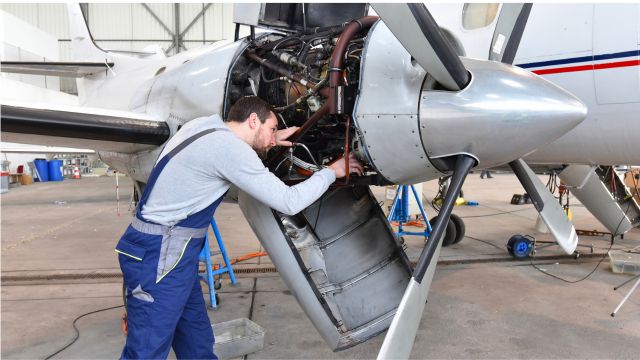
Entry-level refuelling can lead into more senior fuel or airport roles.
An experienced employee may progress towards positions such as:
- lead refueller;
- team leader;
- shift supervisor;
- fuel-farm operator;
- operations controller or allocator;
- fuel-quality role;
- training position;
- maintenance support; or
- fuel operations management.
Further progression can become technically specialised.
Fuel-quality and inspection work, for example, requires deeper knowledge of aviation fuel specifications, testing and operational standards.
The Joint Inspection Group’s own inspector pathway expects substantial knowledge and relevant industry experience.
Employees can also move sideways into wider ground handling or airport operations, particularly when they have developed airside driving, operational communication and supervisory experience.
Progression is not automatic, but fuel services can provide a strong operational foundation.
Aircraft Fueling Jobs at Airports and Aviation Companies
Aircraft-refuelling jobs are concentrated at airports with scheduled commercial traffic, cargo operations, business aviation or other significant aircraft refuelling movements.
Large airports may have substantial dedicated fuel teams.
Potential employers include specialist into-plane fuel companies and major aviation-services businesses.
Menzies Aviation, for example, recruits aircraft refuellers through its fuel-services operations at UK airports.
Other opportunities may be found with airport fuel consortiums, contractors, fixed-base operators and companies responsible for fuel farms or business-aviation services.
Employment structures differ.
One refueller may be directly employed by a specialist fuel company providing services to several airlines. Another may work at a fuel farm supporting multiple into-plane operators.
Read the employer name carefully rather than assuming everyone working beside an aircraft refuelling is employed by the airport or airline whose branding is most visible.
How to Find Aircraft Fueling Jobs in the UK
Start with specialist employers’ careers pages.
Menzies Aviation, for instance, maintains an operational careers portal that includes aircraft-refuelling vacancies when available.
General job boards are also useful, but search more than one spelling and title.
Try phrases such as:
aircraft refueller, aircraft fuel operative, aviation fuel operator, refuelling operator, fuel farm operator and aircraft fueler.
Location-specific searches can improve results:
“aircraft refueller Manchester Airport” or “aircraft refueller Birmingham”, for example.
Also search airports within commuting distance even if no current vacancy appears. Aviation recruitment fluctuates with contracts, seasonal schedules and operational expansion.
Job alerts can help.
For aircraft fueling jobs UK searches, remember that British employers overwhelmingly use the spelling refuelling, so searching only “fueling” can cause you to miss relevant vacancies.
Tips for Applying for Aircraft Fueling Jobs
A strong application should look operational rather than generic.
If the role requires LGV Category C or C+E, make the entitlement clearly visible on your CV.
Do the same for ADR if you genuinely hold it.
Give specific examples of safety-critical work. A statement such as “I always follow procedures” is weaker than an example showing how you identified a vehicle defect, stopped unsafe work or maintained accurate records.
Demonstrate reliability.
Airports need workers who can attend difficult shift times consistently. Experience with nights, rotating shifts or time-critical operations can therefore strengthen an application.
Prepare your five-year history carefully. Keep dates consistent across your CV and security paperwork.
Do not exaggerate aviation experience.
If you have never worked airside, say so and focus on transferable experience plus your ability to learn procedures.
Finally, read the driving requirement carefully. A standard car licence is not equivalent to Category C or C+E when the vacancy specifically requires large-goods-vehicle entitlement.
Common Aircraft Fueling Interview Questions
Interviewers are likely to focus heavily on safety, responsibility and decision-making.
“Why do you want to become an aircraft refueller?”
Show that you understand the job is operational and safety-critical. Interest in aviation is useful, but it should be combined with a realistic understanding of shift work and procedure.
“What would you do if you were under pressure to finish refuelling quickly?”
A strong answer puts safety and authorised procedure ahead of taking shortcuts while recognising the importance of communicating delays promptly.
“What would you do if you identified a defect on the refuelling vehicle?”
Explain that you would follow the defect-reporting and equipment-isolation procedure rather than deciding personally that the defect was probably harmless.
“How do you maintain accuracy during repetitive work?”
Discuss systematic checks, concentration and following the same controlled process rather than relying on memory.
“Tell us about a time you followed a strict safety procedure.”
Use a genuine example from driving, logistics, construction, warehousing, engineering or another relevant environment.
“Can you work nights, weekends and bank holidays?”
Answer accurately. Employers need real availability rather than what applicants think they want to hear.
“How would you respond to an aircraft or stand change?”
Focus on confirming updated instructions, communicating effectively and avoiding assumptions.
“Why is teamwork important in aircraft refuelling?”
Explain that refuelling takes place alongside numerous other turnaround activities and requires clear coordination rather than isolated working.
Key Takeaways
Aircraft refuelling is a safety-critical ground-operations occupation requiring accuracy, good driving skills, communication and disciplined adherence to procedures.
Previous aviation experience is useful but not compulsory for every vacancy. Some employers provide specialist aircraft-refuelling training after recruitment.
Driving requirements can be more restrictive. Category C or C+E entitlement appears frequently in current vacancies because of the size of refuelling vehicles.
Applicants should also expect airside security screening, including a checkable history covering at least five years for relevant access.
Pay varies, but current market data puts typical annual earnings in roughly the £30,000s for many UK aircraft-refueller positions.
Most importantly, a general aviation course can help someone understand the industry but cannot replace practical employer training, driving entitlements, security approval or formal authorisation to perform aircraft-refuelling duties.
Frequently Asked Questions
What does an aircraft fueler do?
An aircraft refueller supplies the correct aviation fuel to aircraft refuelling using authorised tankers, bowsers or hydrant equipment.
The role can also involve vehicle inspections, fuel-quality checks, operational communication, record keeping and reporting faults or incidents.
Exact duties depend on the airport and employer.
How do I become an aircraft fueler in the UK?
Search current vacancies and identify the driving qualifications required at airports within travelling distance.
Many employers require Category C or C+E entitlement, a checkable five-year history and the ability to pass aviation-security screening.
Previous refuelling experience may be desirable rather than essential because some employers provide specialist training.
What qualifications are needed for aircraft fueling jobs?
There is no single academic qualification required for every position.
Employers commonly focus on suitable LGV/HGV driving entitlement, literacy and numeracy, safety awareness, security eligibility and shift flexibility.
ADR can be advantageous for some roles but is not universally required.
How much does an aircraft fueler earn in the UK?
Indeed reported an average base salary of about £34,859 per year for UK aircraft refuellers as of 22 May 2026, although its published sample was small.
Actual earnings vary by employer, airport, licence requirements, shift premiums and overtime.
Check individual vacancy salaries rather than assuming the national average will apply.
What skills are needed for aircraft fueling jobs?
Important abilities include attention to detail, safety awareness, driving competence, numeracy, communication, problem-solving, teamwork and the ability to remain calm under time pressure.
Flexibility is also important because airport fuelling normally operates outside standard office hours.
Do aircraft fuelers need airport security clearance?
Refuellers who need unescorted access to Security Restricted Areas must satisfy the applicable aviation-security requirements.
These can include identity checks, criminal-record screening and verification of employment, education and gaps over at least the previous five years.
The exact airport-pass and vetting process depends on the role and airport.
What training is required for aircraft fueling?
Training normally includes the employer’s aircraft-refuelling procedures, fuel-quality controls, use of specialist equipment, health and safety, airside working, security, emergency response and operational communications.
Employees typically require supervised practical training and assessment before being authorised to work independently.
General online aviation training can provide background knowledge but does not substitute for operational refuelling training.
What are the career opportunities in aircraft fueling?
Experienced refuellers may progress into team-leader, supervisor, fuel-farm, quality-control, training, operations or management positions.
The experience can also support movement into wider airport ground operations.
Technical or senior fuel-quality roles normally require additional knowledge, training and industry experience.

Conclusion
Aircraft fueling jobs UK applicants encounter offer a practical route into one of the less visible but essential parts of commercial aviation. Behind every routine departure is a fuel operation that must provide the right product, in the right quantity, while protecting fuel quality and maintaining strict safety standards.
For people searching for aircraft refueller jobs, the main barriers are not usually university qualifications. Driving entitlement, airside security eligibility, a checkable history, safety awareness and the ability to work irregular shifts are often more important. Previous experience can strengthen an application, but current employers do recruit people without previous aircraft-refuelling experience and provide workplace training.
The role also creates opportunities beyond the starting position. Experience in aviation fuel jobs can lead towards supervision, fuel-farm operations, quality control, training and broader airport operations.
Anyone considering aircraft refuelling should nevertheless treat it as a specialist safety occupation rather than ordinary driving or fuel delivery. Online aviation learning, including relevant courses available through providers such as Tyne Academy, may help build background knowledge of aviation operations, but it does not provide practical refuelling authorisation, an airport pass or the driving qualifications employers require.
For applicants who are comfortable with outdoor work, rotating shifts, large vehicles and tightly controlled procedures, aircraft refuelling can provide a stable operational career and a valuable entry point into the wider aviation industry.