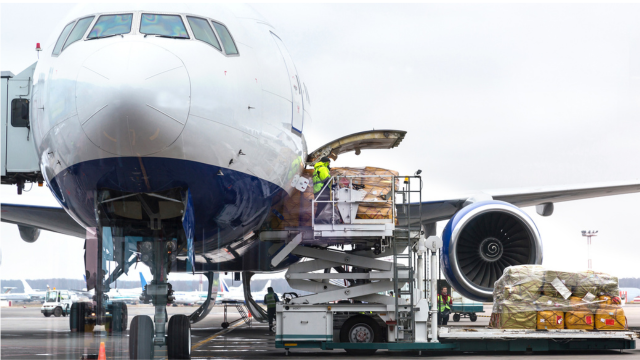
Aircraft maintenance jobs UK employers offer range from entry-level mechanic and technician positions to highly qualified licensed engineers who can certify specified maintenance and return aircraft to service within their authorised privileges.
It is a career where precision matters. An aircraft may contain thousands of components and multiple mechanical, electrical, hydraulic, electronic and avionics systems. Maintenance teams inspect, test, repair and replace those components so aircraft remain airworthy and safe to operate.
There are also important differences between job titles. Someone working as an aircraft technician may perform practical maintenance under supervision or organisational authorisation, while an experienced licensed aircraft maintenance engineer can hold considerably greater certification responsibility.
For that reason, anybody exploring aircraft engineer jobs should understand the UK’s Civil Aviation Authority licensing framework before choosing training.
A general engineering or aviation course can support knowledge, but regulated aviation maintenance careers may require recognised qualifications, practical experience, UK Part-66 examinations, aircraft type training and employer authorisation.
This guide explains the main requirements, responsibilities, salaries, training routes and progression opportunities available within aircraft maintenance and related aerospace careers.
What Are Aircraft Maintenance Jobs?
Aircraft maintenance jobs involve inspecting, servicing, testing, repairing and maintaining aircraft or aircraft components.
They can exist within:
- airlines;
- aircraft maintenance organisations;
- manufacturers;
- business aviation;
- helicopter operators;
- defence organisations;
- component workshops; and
- specialist engineering companies.
The work can be divided broadly into aircraft maintenance and component maintenance.
Aircraft maintenance takes place directly on the aircraft.
Component specialists may work on:
engines, avionics units, wheels, brakes, hydraulic equipment or other removable components.
There is also a distinction between line maintenance and base maintenance.
Line maintenance is generally performed around daily aircraft operations and can include routine servicing, inspections and defect rectification.
Base maintenance normally involves more substantial planned work undertaken during longer maintenance inputs.
The roles, licences and company authorisations required can therefore differ substantially.
What Does an Aircraft Maintenance Engineer Do?
An aircraft maintenance engineer helps ensure that aircraft remain airworthy.
Depending on licence category and employer authorisation, work may include:
- scheduled inspections;
- fault diagnosis;
- component replacement;
- servicing;
- defect rectification;
- functional testing;
- electrical work;
- structural inspection;
- engine maintenance; and
- maintenance certification.
A licensed engineer may also supervise mechanics and technicians.
Current UK vacancies demonstrate this distinction.
British Airways mechanics carry out servicing and maintenance tasks under supervision and document completed work.
Licensed engineers have greater responsibility for checking maintenance, assessing defects and certifying permitted work.
That certification authority is significant.
Signing a Certificate of Release to Service is not simply administrative paperwork. It confirms that relevant maintenance has been completed in accordance with approved requirements within the person’s privileges and authorisation.
Why Aircraft Maintenance Is Important
Aircraft operate in demanding environments.
They experience:
temperature changes, vibration, pressure cycles, weather exposure and repeated take-offs and landings.
Components therefore need inspection and maintenance according to approved programmes.
Aircraft maintenance supports what aviation regulation describes as continuing airworthiness.
The objective is not merely to repair an aircraft after something breaks.
Maintenance programmes also aim to identify degradation before it develops into an unsafe condition.
A technician might find:
a fluid leak, worn tyre, damaged wire, abnormal corrosion or loose fastener
during a routine inspection.
Finding and correcting that defect before the next flight can prevent a much more serious problem later.
Maintenance quality also affects operational reliability.
An aircraft technician grounded unexpectedly because of a technical fault can disrupt hundreds of passengers and several later flights.
Safety remains the primary consideration, but good maintenance also supports reliable airline operations.
Key Aircraft Maintenance Responsibilities
Responsibilities depend on licence, competence and employer authorisation.
Common activities include:
Scheduled maintenance
Aircraft undergo inspections and servicing at defined intervals.
Defect investigation
Engineers and technicians investigate technical faults reported by flight crews or identified during inspection.
Component replacement
Defective or time-limited components may need removal and replacement.
Functional testing
Maintenance often requires tests to confirm that systems operate correctly.
Documentation
Work performed must be recorded accurately.
Tool and equipment control
Tools, test equipment and parts need careful management.
Safety compliance
Employees must follow approved procedures and workplace safety requirements.
Handover
Information may need to be transferred accurately between shifts.
Certification
Appropriately licensed and authorised staff may certify permitted maintenance and release work according to their privileges.
The final responsibility should always reflect the individual’s actual licence and company authorisation.
A Typical Day in Aircraft Maintenance
There is no single standard day.
Someone working line maintenance may start by reviewing aircraft technician due to arrive during the shift.
One aircraft has a defect recorded by the previous crew.
When the aircraft technician arrives, the engineer reviews the technical information and approved maintenance data.
The team then investigates the problem.
A component may need replacement.
After installation, the system is tested and the maintenance record completed.
Meanwhile, another aircraft technician requires routine servicing before departure.
The team must manage both tasks without allowing schedule pressure to override safety or procedure.
Base maintenance looks different.
An aaircraft technician might remain in a hangar for several days or weeks while teams complete extensive inspections, component changes and structural work.
Either environment requires careful handovers because maintenance frequently continues across several shifts.
Aircraft Maintenance Skills and Personal Qualities
Aircraft maintenance suits people who combine practical ability with discipline.
Attention to detail
A small missed defect can have significant consequences.
Mechanical aptitude
Technicians need confidence working with tools, components and mechanical systems.
Logical thinking
Fault diagnosis requires structured reasoning.
Technical literacy
Maintenance instructions, manuals and diagrams must be interpreted accurately.
Maths and science
Engineering principles underpin many maintenance tasks.
Communication
Teams need clear handovers and accurate technical reporting.
Teamwork
Maintenance normally involves multiple specialists.
Responsibility
Employees must be willing to stop and ask questions when something is unclear.
Patience
Technical troubleshooting can require repeated tests.
Digital confidence
Modern aircraft technician maintenance relies heavily on electronic manuals, diagnostic tools and maintenance-information systems.
The National Careers Service similarly highlights engineering knowledge, maths, attention to detail, manual skill, logical reasoning and computer confidence for aerospace technicians.
Aircraft Maintenance Qualifications and Entry Requirements
Requirements depend on the route and employer.
For technician apprenticeships, GCSEs are a common starting point.
Skills England states that candidates for the Level 3 Aircraft Maintenance Technician apprenticeship will typically have around four GCSEs at grade 4/C or equivalent, including:
English, mathematics and a science.
Employers can set different recruitment standards.
British Airways’ current Heathrow maintenance apprenticeship requires applicants to meet specified GCSE standards in maths, science and English.
Other routes include:
- college engineering courses;
- aerospace and aviation engineering;
- mechanical engineering;
- electrical or electronic engineering;
- avionics;
- military technical training; and
- university engineering study.
A degree is not required for every practical aircraft-maintenance career.
Apprenticeships are particularly important because they combine formal study with real aircraft technician experience.
How to Become an Aircraft Maintenance Engineer in the UK
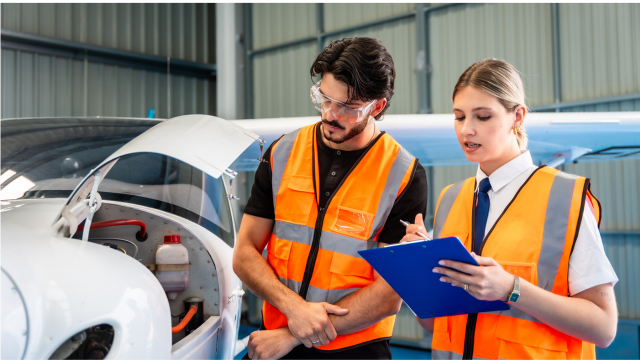
The pathway depends on what you mean by “engineer”.
If your goal is to become an aircraft maintenance technician or mechanic, a common route is:
Step 1: Gain suitable school qualifications
Maths, science and English are particularly useful.
Step 2: Enter technical training
This might involve an aircraft-maintenance apprenticeship or relevant engineering programme.
Step 3: Build practical experience
Aircraft maintenance is a practical occupation, so workplace experience matters greatly.
Step 4: Develop specialist knowledge
You may concentrate on mechanical systems, avionics or a particular aircraft technician fleet.
If you want Part-66 certification privileges, further steps are required.
These can include:
Step 5: Complete the relevant Part-66 knowledge requirements
Step 6: Obtain the required practical maintenance experience
Step 7: Apply for the appropriate UK Part-66 Aircraft Maintenance Licence
Step 8: Complete aircraft type training where required
Step 9: Complete required on-the-job training for the first applicable type rating
Step 10: Obtain company certification authorisation
A licence and an employer authorisation work together in many commercial maintenance environments.
Aircraft Maintenance Licences and Certifications
This is one of the most important areas to understand when researching aircraft maintenance jobs UK.
The UK CAA issues Aircraft Maintenance Licences under UK Part-66.
Major categories include:
| Licence category | Broad scope |
| Category A | Limited certification for specified minor scheduled line-maintenance and simple defect tasks |
| B1 | Primarily structure, powerplant, mechanical and electrical systems, plus limited simple avionics work |
| B2 | Primarily avionics and electrical systems |
| C | Certification following qualifying base maintenance |
There are additional categories and subcategories for particular aircraft technician and general-aviation circumstances.
Knowledge
Applicants must demonstrate the prescribed technical knowledge.
Examinations may be completed through an appropriately UK CAA-approved Part-147 training organisation or the CAA route where applicable.
Experience
Practical experience requirements depend on category and previous approved training.
For example, current CAA rules provide that applicants for B1.1, B1.3 or B2 can need:
- five years’ practical experience without relevant previous technical training; or
- two years after completing an approved Part-147 basic training course.
Different categories have different requirements.
Type ratings
For many larger aircraft, holding the basic licence category is not the end of the process.
The engineer needs the appropriate aircraft technician type rating.
This normally involves theoretical and practical type training.
The first Group 1 type rating also requires approved on-the-job training.
Company authorisation
Holding a Part-66 licence does not automatically allow someone to certify every aircraft technician at their employer.
The maintenance organisation must assess competence and issue the appropriate certification authorisation.
Aircraft Inspection, Repair and Maintenance Procedures
Aircraft maintenance is performed according to controlled technical information rather than personal preference.
Engineers and technicians can work with:
- aircraft maintenance manuals;
- wiring diagrams;
- illustrated parts information;
- structural repair information;
- task cards;
- technical logs; and
- manufacturer instructions.
Suppose an engineer discovers a damaged component.
They do not simply decide whether it “looks safe”.
They identify the relevant approved data and determine the permitted action.
That may involve:
inspection, measurement, repair, replacement or further engineering assessment.
Tooling also matters.
Certain tasks require calibrated measuring or test equipment.
Maintenance documentation then records what was done and, where appropriate, who performed and certified the task.
Discipline in following data is one of the defining characteristics of professional aircraft maintenance.
Aircraft Maintenance Safety Responsibilities
Aircraft maintenance exposes workers to both ordinary engineering hazards and aviation-specific risks.
Possible hazards include:
- working at height;
- moving aircraft;
- vehicles;
- engines;
- electricity;
- hydraulic pressure;
- chemicals;
- fuel;
- noise;
- confined spaces;
- heavy components; and
- elevated work platforms.
Employees therefore need to follow:
risk assessments, safe systems of work, PPE requirements and equipment procedures.
Human factors are equally important.
Fatigue, interruptions, poor communication and assumptions can contribute to errors.
Maintenance organisations therefore place significant emphasis on:
handover, communication, procedural compliance and human-factors training.
Tool control is another aviation-specific priority.
A tool accidentally left inside an aircraft can become foreign-object damage.
This is why maintenance teams use controlled procedures for issuing, tracking and returning tools.
Good housekeeping is part of aircraft technician safety, not merely presentation.
Aviation Regulations and Compliance
Civil aviation maintenance is highly regulated.
For UK-registered Part-21 aircraft, important frameworks include:
UK Part-66 — licensing of aircraft maintenance personnel.
UK Part-145 — approval requirements for maintenance organisations working within its scope.
UK Part-147 — approved maintenance training organisations.
Maintenance staff also work under their organisation’s Maintenance Organisation Exposition and procedures.
The UK’s departure from the EU creates another important distinction.
Since 1 January 2023, an EASA Part-66 licence alone is no longer accepted as the basis for certification of UK-registered aircraft technician by a UK maintenance organisation.
Licensed engineers certifying within that UK framework need the appropriate UK CAA-issued Part-66 licence.
An EASA licence can still be commercially useful for work involving EU regulatory privileges, but candidates should not assume an EASA licence automatically converts into a UK one.
This is particularly important for internationally mobile engineers.
Aircraft Maintenance Tools, Systems and Software

Aircraft maintenance combines traditional engineering tools with advanced technology.
Common tools can include:
- torque wrenches;
- multimeters;
- borescopes;
- micrometers;
- electrical test equipment;
- hydraulic equipment;
- specialist aircraft tooling; and
- diagnostic devices.
Calibration matters for tools used to make critical measurements.
Digital systems are increasingly important too.
Technicians may use electronic maintenance manuals and electronic technical records.
Maintenance organisations can also use specialist platforms for:
work packages, planning, parts, defects and maintenance history.
Current Ryanair-linked recruitment, for example, identifies experience with AMOS as desirable for some licensed-engineer roles.
Software does not replace technical knowledge.
A system can tell an engineer which task is scheduled, but the engineer still needs competence to interpret the technical instructions and perform the maintenance correctly.
Aircraft Maintenance Engineer Salary in the UK
Salary varies dramatically according to licence, aircraft type, experience and certification responsibility.
For general aerospace engineering technicians, including aircraft technician-maintenance technicians, the National Careers Service currently gives an indicative range of:
£27,000 to £50,000 per year.
Apprentices earn less while training.
British Airways’ current Heathrow Aircraft Maintenance apprenticeship advertises:
£16,000 in year one
rising to at least:
£26,000 in year two, with eligible shift pay.
Experienced licensed engineers can earn substantially more.
Recent 2026 examples include:
Prestwick B1/B2 Licensed Engineer: around £89,000.
British Airways CityFlyer B1 Licensed Engineer: up to approximately £92,005 in the first year including stated additions.
Manchester B1 Licensed Engineer: £102,000 plus shift allowance in a current Ryanair-linked vacancy.
These salaries should not be interpreted as normal starting pay.
The roles require significant experience, UK CAA licences, relevant aircraft technician type ratings and recent maintenance experience.
The progression from apprentice to highly experienced certifying engineer can therefore involve a very large increase in responsibility as well as earnings.
Working Hours and Conditions
Aircraft need maintenance around airline schedules, not only during ordinary office hours.
The National Careers Service gives aerospace engineering technicians typical working hours of approximately:
40 to 42 hours per week
and notes that evening, weekend and shift work can be required.
Many airline maintenance operations run continuously.
Line-maintenance engineers may therefore work:
- early mornings;
- nights;
- weekends;
- public holidays; and
- rotating shift patterns.
Current licensed-engineer vacancies frequently specify shift working.
The workplace can include:
hangars, airport ramps, workshops and outdoor aircraft stands.
Some tasks involve confined spaces.
Others require elevated access to wings, tails or upper fuselage areas.
Weather can also affect engineers working outside.
Applicants should therefore consider both the technical content and physical working environment before entering the career.
Aircraft Maintenance Training and Professional Development
Learning continues throughout an aircraft-maintenance career.
Initial training may provide basic engineering knowledge, but engineers later need:
aircraft technician-specific knowledge, company procedures and recurrent competence development.
Professional development can include:
- Part-66 modules;
- type-rating courses;
- on-the-job training;
- human-factors training;
- electrical wiring interconnection systems training;
- fuel-tank safety;
- continuation training;
- new aircraft technology;
- specialist inspection methods; and
- management or supervisory training.
Modern fleets increasingly use:
composite materials, sophisticated avionics and extensive digital diagnostics.
Engineers therefore need to continue learning as technology changes.
Part-66 licences themselves are issued for defined periods and require renewal. The current UK Part-66 AML is valid for five years from issue.
Company authorisations and competence requirements also need ongoing management.
Aircraft Maintenance Career Progression
Aircraft maintenance can provide several long-term routes.
A common practical path might look like:
Apprentice → Aircraft Mechanic → Aircraft Maintenance Technician → Licensed Engineer → Senior Licensed Engineer
From there, possibilities can include:
- shift leader;
- maintenance supervisor;
- base-maintenance manager;
- engineering manager;
- technical services;
- quality or compliance;
- maintenance planning;
- reliability;
- training;
- safety management; or
- continuing airworthiness roles.
Engineers can also specialise.
A B1 engineer may develop deep expertise in mechanical and powerplant systems.
A B2 engineer can build specialist avionics experience.
Others move into structures, engines, non-destructive testing or technical support.
Current British Airways technical-support recruitment specifically seeks professionals with licensed aircraft-maintenance or technical-support experience, illustrating how practical maintenance expertise can lead away from hands-on servicing into fleet engineering support.
Aircraft Maintenance Engineer vs Aircraft Mechanic
The terminology is not perfectly standardised across employers.
However, there is an important practical distinction between performing maintenance and holding certification privileges.
An aircraft mechanic may:
- service aircraft technician
- remove and replace components;
- perform inspections;
- complete maintenance tasks; and
- sign off their own task steps where appropriately authorised.
A licensed aircraft maintenance engineer may additionally hold regulatory and organisational privileges to certify specified maintenance.
Current CAA Part-145 guidance makes the distinction particularly clear.
A mechanic authorised to sign off work they personally performed is not automatically authorised to issue a Certificate of Release to Service.
Certification requires the appropriate certifying-staff privilege.
The simplest way to understand it is:
Mechanic/technician: carries out maintenance within their competence and authorisation.
Licensed/certifying engineer: can hold defined certification privileges in addition to technical maintenance responsibilities.
Some employers use “engineer” more broadly, so always check whether a vacancy specifically requires a UK Part-66 licence.
How to Find Aircraft Maintenance Jobs in the UK
Search using several terms rather than relying on one job title.
Useful searches include:
Aircraft Mechanic
Aircraft Maintenance Technician
B1 Licensed Engineer
B2 Licensed Engineer
Licensed Aircraft Engineer
Avionics Technician
Aircraft Fitter
Base Maintenance Engineer
Line Maintenance Engineer
Look directly at:
airline career websites, maintenance organisations, manufacturers, aerospace companies and specialist aviation recruitment platforms.
Apprentices should monitor employer programmes early because annual recruitment windows can be short.
British Airways, for example, currently has its next Heathrow Aircraft Maintenance apprenticeship intake open for 2027 starts.
For licensed positions, read type requirements closely.
A vacancy may require:
a UK CAA B1 licence plus Boeing 737 type endorsement,
while another might require Airbus A320 or long-haul fleet experience.
Simply having a B1 licence does not make every licensed-engineer vacancy interchangeable.
Common Aircraft Maintenance Interview Questions
“Why do you want to work in aircraft maintenance?”
A strong answer should combine interest in engineering with understanding of the safety responsibility involved.
“What would you do if the manual and your previous experience seemed to conflict?”
Follow approved maintenance data and the organisation’s escalation process rather than relying on memory or habit.
“Tell us about a time you identified a technical problem.”
Use a structured example showing inspection, reasoning and appropriate action.
“What would you do if a flight was delayed and you were being pressured to finish faster?”
Safety and compliance remain priorities.
Schedule pressure should not result in shortcuts.
“Why is maintenance documentation important?”
Because records demonstrate what maintenance was performed and provide traceability for continuing airworthiness.
“How do you prevent errors?”
Useful answers can mention procedures, independent checks where required, tool control, communication and avoiding assumptions.
“What is the difference between B1 and B2 licensing?”
Broadly, B1 concentrates on mechanical, structural, powerplant and related electrical systems, while B2 concentrates on avionics and electrical systems.
“How would you handle an unfamiliar defect?”
Use approved data, gather evidence, consult appropriate experienced or technical personnel and remain within your authorisation.
“Can you work shifts?”
Answer realistically.
Night and weekend work is common in operational airline maintenance.
Key Takeaways
Aircraft maintenance jobs UK employers offer range from trainee mechanic roles to highly experienced licensed engineering positions.
Aircraft technicians inspect, service, repair and test aircraft technician and components within their training and organisational authority.
Not every maintenance job requires a Part-66 licence, but certification responsibilities can require an appropriate UK CAA Aircraft Maintenance Licence.
The principal licensing categories include A, B1, B2 and C, each carrying different privileges.
Applicants also need to understand that a licence alone does not necessarily permit them to certify every aircraft. Type ratings, recent experience, competence assessment and employer authorisation can also apply.aircraft technicianApplicants also need to understand that a licence alone does not necessarily permit them to certify every aircraft. Type ratings, recent experience, competence assessment and employer authorisation can also apply.
The Level 3 Aircraft Maintenance Technician apprenticeship provides a major entry route and typically lasts around three years.
Pay varies widely, from apprentice wages to technician salaries around the National Careers Service’s £27,000–£50,000 range and significantly higher earnings for experienced, type-rated licensed engineers.
Aircraft maintenance can also create progression into supervision, technical support, engineering management, quality and other specialist aerospace careers.
Frequently Asked Questions
What does an aircraft maintenance engineer do?
An aircraft maintenance engineer inspects, maintains, troubleshoots and repairs aircraft technician or aircraft systems.
Depending on licence category and company authorisation, licensed engineers may also certify specified maintenance and issue Certificates of Release to Service.
Their exact responsibilities depend on aircraft type, maintenance environment and regulatory privileges.
How do I become an aircraft maintenance engineer in the UK?
A common route is an aircraft-maintenance apprenticeship combining engineering qualifications with practical experience.
You can then develop towards UK Part-66 licensing by meeting the required knowledge and experience standards.
Licensed careers may additionally require aircraft technician type training, on-the-job training and company certification authorisation.
What qualifications are needed for aircraft maintenance jobs?
Requirements depend on the position.
Aircraft-maintenance apprenticeships commonly look for GCSEs including English, maths and science.
Relevant engineering college or university qualifications can provide other routes.
Certifying positions can require a UK Part-66 Aircraft Maintenance Licence, relevant type rating and employer authorisation.
How much does an aircraft maintenance engineer earn in the UK?
The National Careers Service currently gives aerospace engineering technicians an indicative salary of approximately £27,000–£50,000.
Licensed engineers can earn considerably more.
Current 2026 specialist vacancies include examples around £89,000, £92,000 and above £100,000, but these require substantial licensing, type-rating and experience credentials and are not entry-level salaries.
What skills are needed for aircraft maintenance jobs?
Important skills include engineering knowledge, mechanical aptitude, logical fault-finding, attention to detail and the ability to follow technical instructions accurately.
Communication, teamwork, IT confidence and personal responsibility are also important.
Employees must be willing to work carefully even when operations are under time pressure.
What are the main responsibilities of aircraft maintenance engineers?
Responsibilities can include scheduled inspections, servicing, troubleshooting, repairs, component changes, testing and maintenance documentation.
Licensed and appropriately authorised engineers can also have certification responsibilities.
Senior engineers may supervise mechanics and trainees or coordinate maintenance activity.
What licences are required to work in aircraft maintenance in the UK?
Not every maintenance employee requires an individual licence.
However, certain certification roles on UK-registered Part-21 aircraft technician require the appropriate UK Part-66 Aircraft Maintenance Licence.
Categories include A, B1, B2 and C, among others.
Additional type ratings and company authorisations may also be required before specific certification privileges can be exercised.
What are the career progression opportunities in aircraft maintenance?
An apprentice can progress into mechanic or technician roles and later seek licensed-engineer status.
Experienced engineers may become supervisors, shift leaders or engineering managers.
Other routes include technical support, maintenance planning, quality, compliance, training, safety and continuing airworthiness.

Conclusion
Aircraft maintenance jobs UK employers recruit for can provide one of the most technically demanding and structured career routes in commercial aviation.
Entry can begin relatively early through an apprenticeship. The current Level 3 Aircraft Maintenance Technician pathway combines formal engineering learning with extensive workplace experience, while airline programmes such as British Airways’ current scheme introduce apprentices directly to operational aircraft technician
Progression becomes more specialised from there.
An aircraft technician or mechanic can perform substantial hands-on work, but licensed aircraft engineer jobs introduce another level of regulatory responsibility. Engineers seeking certification privileges need to understand UK Part-66 knowledge, experience and type-rating requirements and the separate need for maintenance-organisation authorisation.
That distinction also explains the wide salary range. Technician careers can provide solid engineering pay, while experienced B1 and B2 licensed engineers with sought-after aircraft technician ratings can command significantly higher salaries.
Tyne Academy’s aircraft technician Training Operator course can provide broad introductory knowledge of airline operations, airport management and aviation safety for someone exploring the sector. Its current public listing states that it carries no formal qualification, and its syllabus is not a UK Part-66 aircraft-maintenance programme. It should therefore be treated as general aviation learning rather than regulated maintenance-engineering training.
Anyone serious about aviation maintenance should ultimately focus on recognised technical training, extensive practical experience and the CAA requirements relevant to the privileges they want to hold.
For people who enjoy engineering, technical problem-solving and work where precision has a direct safety purpose, aircraft maintenance can also open long-term opportunities across airlines, maintenance organisations, manufacturing, technical support and wider aerospace careers.