
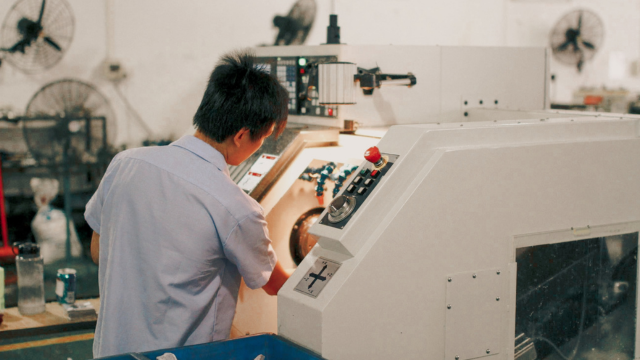
Automation is changing how factories, warehouses, utilities and other technical environments operate. Programmable controllers can coordinate machinery, robots can perform repetitive production tasks, sensors can monitor equipment continuously and digital systems can help engineers identify faults before they result in long periods of downtime. For people interested in these technologies, automation engineering courses UK learners can study provide several possible routes into a rapidly developing engineering field.
Automation engineering is also broader than learning how to programme one robot or PLC. Professionals may need electrical and electronic knowledge, control systems, programming, instrumentation, industrial networking, safety, troubleshooting and an understanding of how complete production systems interact.
Training therefore ranges from short introductory courses to apprenticeships, higher technical programmes, engineering degrees and manufacturer-specific practical training. The appropriate route depends on whether someone wants basic awareness, technical upskilling or preparation for substantial engineering careers in automation and control.
This guide explains the main skills, courses, professional-development routes, technologies and career opportunities associated with automation engineering, industrial automation, robotics training and emerging smart technology.
What Are Automation Engineering Courses and Why Are They Important?
Automation engineering courses teach learners how technologies can be used to monitor, control, manage and improve industrial or technical processes.
A simple automated system might use a sensor to detect a product moving along a conveyor and instruct an actuator to move it. More complicated systems can coordinate hundreds of devices, collect production data, operate robotic cells and communicate with wider manufacturing-management systems.
Training can therefore involve several related disciplines and technical areas.
Typical subjects may include:
- electrical engineering fundamentals;
- programmable logic controllers;
- control systems;
- sensors and instrumentation;
- industrial networks;
- robotics;
- human-machine interfaces;
- SCADA;
- drives and motors;
- programming;
- system integration;
- troubleshooting; and
- industrial safety.
Different courses cover very different portions of this list.
An introductory online programme may explain how automation and robotics fit into manufacturing. A Level 4 apprenticeship can involve years of structured workplace learning, practical development and assessment. A university engineering programme may provide substantial mathematics, electronics and control theory.
These options should not be treated as equivalents simply because they all contain the word “automation”.
Automation engineering is multidisciplinary
Automation systems connect physical equipment with software and digital controls.
That means automation professionals need to understand both areas. A programmer may be able to write a control sequence, but if they do not understand the electrical equipment being controlled, troubleshooting or fault-finding can become difficult or unsafe.
Likewise, an electrical technician who understands motors and wiring but cannot diagnose PLC logic may struggle with modern digitally controlled equipment.
Automation engineering sits between these technical disciplines, combining electrical, software and control knowledge.
Practical competence matters
Engineering is not purely theoretical or academic.
Someone can understand the definition of a PLC without being ready to modify a live production system. Practical training may involve configuring hardware, writing control logic, connecting sensors, testing safety functions and diagnosing deliberately introduced faults.
For this reason, online theory can provide useful foundations and knowledge but cannot always replace supervised practical experience.
The higher the safety or operational consequences of the task, the more important practical competence and hands-on ability become.
Why Automation Engineering Skills Are in Demand in the UK
Automation is central to the modernisation, digital transformation and technological development of UK manufacturing and other infrastructure-intensive industries.
The Government’s Advanced Manufacturing Sector Plan places significant emphasis on digitalisation, artificial intelligence, robotics and advanced production technologies.
Skills England’s latest advanced-manufacturing assessment similarly identifies areas such as robotics, digital twins, predictive maintenance and AI-enabled industrial systems as important emerging capabilities.
Manufacturing is becoming increasingly automated
Factories have used automated machinery for decades, but modern systems are increasingly connected, intelligent and data-driven.
Production equipment can communicate through industrial networks. Sensors continuously provide data. Software can analyse machine condition. Robots and automated guided systems may coordinate material movement.
This creates demand for professionals who can install, maintain, manage and improve these automated systems.
UK industrial policy is encouraging adoption
The Government is supporting robotics training and advanced manufacturing through programmes intended to increase business investment and technology adoption.
This matters for skills because investment in equipment also creates demand for people capable of configuring, maintaining and integrating it.
Businesses cannot gain much value from advanced machinery if they lack technicians and engineers who understand how to operate, maintain and troubleshoot it.
Automation exists beyond factories
Although manufacturing is one of the most visible areas, automation professionals also work in:
- energy;
- water;
- pharmaceuticals;
- food and drink;
- logistics;
- automotive production;
- process industries;
- building systems; and
- systems integration.
Skills England’s Level 4 Automation and Controls Engineering Technician standard specifically recognises the occupation across manufacturing, logistics and utilities.
Technology does not remove the need for engineers
Automation can reduce some repetitive manual work, but automated equipment creates different forms of technical and engineering work.
Someone still needs to:
- design control systems;
- install equipment;
- commission machines;
- configure networks;
- diagnose faults;
- maintain devices;
- improve software; and
- ensure safe operation.
As systems become more sophisticated, these duties can become more technically demanding and specialised.
Essential Automation Engineering Skills to Learn
Aspiring automation professionals should build broad engineering foundations rather than concentrating solely on one software package or platform.
Electrical fundamentals
Automation equipment relies heavily on electrical systems.
Learners should understand concepts such as:
- voltage;
- current;
- resistance;
- AC and DC systems;
- electrical protection;
- relays;
- contactors;
- motors; and
- wiring diagrams.
The required depth depends on the role.
Technicians working directly with electrical equipment need stronger practical competence than someone whose responsibility is mainly software configuration.
Programmable logic controllers
PLCs remain central to industrial automation and automated control.
They receive information from inputs, execute programmed logic and control outputs.
Training may cover:
- digital and analogue inputs;
- outputs;
- ladder logic;
- function blocks;
- timers;
- counters;
- sequencing;
- fault diagnosis; and
- communication with other devices.
Different manufacturers use different platforms, but underlying PLC concepts transfer reasonably well.
A beginner should therefore understand control logic rather than memorising only where buttons appear in one software environment.
Control systems
Control engineering concerns how systems behave and how engineers keep variables within desired limits.
Basic learners may begin with open-loop and closed-loop control before progressing towards subjects such as PID control.
A practical example is temperature control.
A sensor measures temperature, the controller compares it with the target and the system adjusts heating or cooling accordingly.
More advanced control work requires deeper mathematical and technical knowledge.
Sensors and instrumentation
Automated systems need information about the physical world.
Sensors can measure:
- temperature;
- pressure;
- flow;
- position;
- speed;
- level; and
- proximity.
Engineers need to understand how signals are generated, interpreted, monitored and checked.
Poor sensor data can cause an otherwise correct control programme to behave badly.
HMI and SCADA systems
Human-machine interfaces allow operators to interact with machinery.
SCADA systems can provide wider monitoring and control across a process or facility.
Automation professionals may configure displays, alarms, trends and operator controls.
Good HMI design should make important information easy to interpret rather than simply placing as much data as possible onto one screen.
Industrial networking
Automation devices increasingly communicate across networks.
Professionals may encounter protocols and technologies such as PROFINET, PROFIBUS, EtherNet/IP, Modbus and industrial Ethernet.
Networking knowledge becomes particularly useful when multiple PLCs, drives, sensors and supervisory systems need to communicate and exchange information.
Robotics
Industrial robots combine mechanical systems, control software and safety requirements.
Useful robotics training may include:
- coordinate systems;
- robot programming;
- end effectors;
- motion;
- teach pendants;
- safety zones;
- integration; and
- fault diagnosis.
Practical exposure is particularly valuable.
A short theoretical course can introduce robotic concepts, but programming and commissioning physical robots normally require hands-on practice and supervised experience.
Troubleshooting
Fault-finding is one of the most valuable automation skills.
A machine may stop because of a failed sensor, network problem, incorrect program logic, mechanical fault or electrical issue.
Good technicians investigate systematically rather than replacing parts at random.
They identify symptoms, examine available evidence, isolate possible causes and test safely.
Best Automation Engineering Courses in the UK
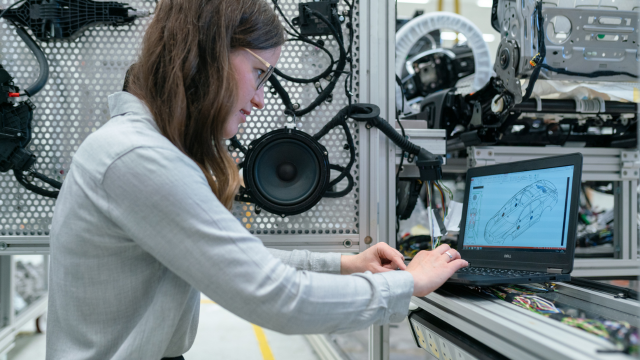
The most suitable route depends heavily on previous education, existing experience and career goals.
| Training route | Suitable for | Typical purpose |
| Tyne Academy engineering courses | Beginners exploring manufacturing and automation concepts | Introductory online knowledge |
| Manufacturer PLC or robotics training | Technicians and engineers using specific systems | Practical platform-specific capability |
| Level 4 Automation and Controls Engineering Technician apprenticeship | Eligible learners in England | Substantial work-based automation training |
| Higher technical or engineering qualifications | Learners seeking formal technical education | Broader control, electrical and automation knowledge |
| Engineering degrees | Learners targeting professional engineering roles | Advanced engineering theory and development |
Tyne Academy automation-related learning
Tyne Academy currently has several courses that touch on automation, robotics training and intelligent engineering systems.
Its Manufacturing Technician course includes modules on manufacturing techniques, materials science, production planning, Automation and Robotics, equipment maintenance and product development.
The programme is approximately 1.1 hours in total.
It can therefore introduce learners to the role of automation within manufacturing, but it should not be presented as a complete automation-engineering programme.
The current listing explicitly says that it provides no formal qualification.
Lean Manufacturing Engineer
Tyne Academy’s Lean Manufacturing Engineer course also contains an Automation and robotics training module alongside production planning, manufacturing processes, maintenance and Lean principles.
Again, the programme is approximately one hour long and provides completion certificates rather than a formal qualification.
It may help someone understand the connection between automation and manufacturing improvement, but it cannot reasonably replace extensive technical training.
Digital Electric Circuits and Intelligent Electrical Devices
Tyne Academy has also listed Digital Electric Circuits & Intelligent Electrical Devices, covering digital circuits, microprocessors, microcontrollers, intelligent electrical devices, signal processing and intelligent control systems.
These subjects are relevant to smart technology and automation.
However, Reed marked this particular course as unavailable when checked in September 2026.
Learners should therefore confirm current availability before relying on a specific Tyne Academy course as part of a learning plan.
Level 4 Automation and Controls Engineering Technician apprenticeship
For eligible learners in England, the Level 4 Automation and Controls Engineering Technician apprenticeship provides a much deeper route.
The occupational standard covers installing, maintaining, fault-finding and optimising automation equipment.
Technologies include PLCs, robots, HMIs, SCADA systems, variable-speed drives, instrumentation, safety systems and industrial networks.
The typical training duration is approximately four years before the final assessment period.
This is fundamentally different from a short online course because the learner develops competence through sustained employment, structured learning and assessment.
Manufacturer training
Professionals already working with industrial equipment can benefit from manufacturer-specific training.
Siemens SITRAIN, for example, provides UK training in its TIA Portal environment, including PLC programming, HMI, PROFINET and drive integration.
Yaskawa’s UK robotics training academy provides practical robot training in which a substantial part of the programme involves hands-on exercises.
This training can be extremely useful where an employer uses the relevant technology.
However, vendor training demonstrates knowledge of a particular platform rather than universal engineering competence.
Automation Engineering Certifications and Professional Development
Automation engineers have several professional-development options, but no single certificate is mandatory for every UK automation job.
Certificates of completion
A short course may provide a completion certificate.
This can show that someone studied a subject.
It does not automatically prove that the learner can commission industrial machinery safely or work independently as an automation engineer.
Tyne Academy’s current relevant programmes fall primarily into this category.
Apprenticeship qualifications
Apprenticeships provide recognised occupational training.
Learners work towards defined knowledge, skills and behaviours and complete independent end-point assessment.
This gives employers evidence of occupational competence that differs substantially from passive course participation.
Engineering Council professional registration
Experienced engineering professionals may work towards:
- Engineering Technician (EngTech);
- Incorporated Engineer (IEng); or
- Chartered Engineer (CEng).
These protected professional titles are overseen by the Engineering Council.
Registration is based on demonstrating professional competence and commitment through an appropriate licensed professional engineering institution.
Completing an automation course does not automatically grant any of these titles.
ISA certification
The International Society of Automation offers the Certified Automation Professional credential.
It is an international professional certification rather than a UK regulated qualification.
Importantly, it is not designed as a casual beginner certificate. Current eligibility requirements involve substantial automation work experience, alongside education requirements or longer experience routes.
Continuing professional development
Automation professionals need continuous development because platforms and industrial systems evolve.
Useful CPD can include:
- PLC programming;
- industrial networking;
- cybersecurity;
- robotics;
- functional safety;
- instrumentation;
- data analytics;
- digital twins; and
- predictive maintenance.
The most useful subject is usually determined by the systems and responsibilities encountered at work.
Automation Tools, Technologies, and Engineering Techniques
Automation engineers work across hardware and software rather than one programming environment.
PLCs
Common industrial PLC ecosystems include Siemens SIMATIC, Rockwell Automation and other vendor platforms.
Engineers configure hardware, develop control programs and diagnose faults.
Human-machine interfaces
HMIs allow operators to control and monitor machines.
Engineers may create screen layouts, alarms and controls.
Interfaces should be designed to help operators make correct decisions rather than overwhelm them with visual information.
SCADA
SCADA platforms provide supervisory monitoring across larger processes.
They can collect data from equipment, present trends, generate alarms and support centralised control.
Drives and motion control
Variable-frequency drives and servo systems control motors and movement.
These technologies are essential in conveyors, machine tools, robotics training and other automated equipment.
Industrial robots
Robots are used for welding, assembly, packaging, material handling and many other repetitive or precision tasks.
Engineers may programme robots directly or integrate them with PLC-controlled systems.
Machine vision
Vision systems can inspect products, recognise objects and guide robots.
Skills England identifies AI-enabled vision systems as one emerging manufacturing capability.
Digital twins
A digital twin is a digital representation connected to a physical asset, process or system.
Engineers may use simulation and real operational data to test changes, monitor performance or improve maintenance decisions.
Predictive maintenance
Traditional maintenance often responds after equipment fails or follows fixed schedules.
Predictive approaches use sensor and performance data to identify signs of deterioration before failure.
This combines traditional engineering knowledge with data analysis and smart technology.
Industrial cybersecurity
Connected factories create cybersecurity risks as well as productivity opportunities.
Automation professionals increasingly need awareness of secure access, network segmentation, system updates and the risks of connecting operational equipment with wider IT environments.
Cybersecurity becomes particularly important because disruption to industrial systems can affect physical processes.
Career Opportunities After Automation Engineering Courses
Automation knowledge can lead towards several technical occupations.
Automation engineering technician
Technicians may install, maintain and troubleshoot automated equipment.
They can work within factories, utilities or systems-integration companies.
Automation engineer
Automation engineers may design or improve control systems, programme PLCs, commission equipment and integrate industrial technologies.
Educational requirements vary substantially between employers.
Controls engineer
Controls engineers focus more specifically on control logic, PLC systems, motion and process control.
These roles may require strong electrical or electronic engineering foundations.
PLC programmer
Some professionals specialise in developing and troubleshooting PLC programs.
Travel can be part of the role where engineers commission systems at customer sites.
Robotics engineer or technician
robotics training specialists install, programme, commission and maintain robotic systems.
Advanced robotics-engineering roles may require substantial mechanical, electrical, software and mathematical knowledge.
Instrumentation and control technician
Instrumentation professionals work with sensors, measurements and control devices.
These roles are common in process industries, utilities and energy.
Systems integration
Systems integrators design and combine automation technologies for customers.
Engineers may work across PLCs, robots, HMIs, drives, instrumentation and networks.
This type of role can provide exposure to many industries and technical platforms.
Maintenance and reliability engineering
Automation knowledge also supports maintenance and reliability roles.
Modern engineers increasingly work with automated diagnostics, condition monitoring and predictive-maintenance systems.
These are all possible engineering careers, but the required qualifications and experience vary considerably.
How to Build a Successful Career in Automation Engineering
Automation engineering rewards practical ability, so a strong career strategy needs more than online course completion.
Build core engineering knowledge
Start with electrical systems, basic electronics, mathematics and control principles.
Learners should understand the equipment that their software will eventually control.
Learn PLC fundamentals
Choose a commonly used PLC platform and begin practising logic.
Learn inputs, outputs, timers, counters and sequences before moving towards more complicated programming.
Simulation software can help beginners practise safely, although real hardware experience remains valuable.
Develop practical skills
Look for opportunities involving real equipment.
An apprenticeship, college laboratory, employer training programme or specialist practical course can provide experience that online theory cannot fully reproduce.
Learn troubleshooting
Do not focus only on building systems when everything works.
Automation engineers are often valuable precisely because they can diagnose systems when something goes wrong.
Practise fault scenarios and learn to read drawings, signals and diagnostic information systematically.
Add robotics and networking
Once control fundamentals are strong, expand into robotics training, HMI, SCADA and industrial networking.
This makes it easier to understand complete production systems rather than one isolated device.
Develop software and data awareness
Modern automation increasingly intersects with programming, databases, cloud systems and analytics.
Python, SQL or data-analysis skills may therefore support progression, particularly in digital manufacturing and predictive maintenance.
Build evidence of technical work
Where confidentiality and safety permit, keep records of training projects.
A portfolio might show:
- a simulated PLC-controlled conveyor;
- an HMI interface;
- a simple motor-control project;
- an industrial-network design;
- a robotics training simulation; or
- an automated monitoring system.
Explain the engineering problem and solution rather than merely uploading screenshots.
Work towards professional recognition
As experience develops, consider whether EngTech, IEng or CEng registration fits your career level and responsibilities.
The professional engineering institution assessing the application can advise on the evidence required.
Future Trends in Automation Engineering and Industrial Automation
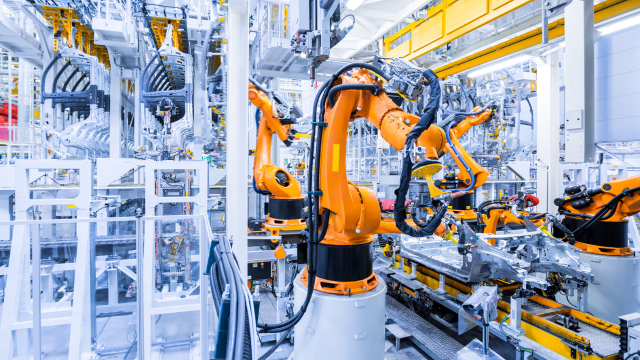
Automation engineering is increasingly connected with AI, robotics and industrial data.
AI-enabled manufacturing
Skills England’s 2026 advanced-manufacturing assessment highlights growing use of AI for areas such as machine vision, predictive maintenance and production optimisation.
Engineers may therefore need enough AI understanding to evaluate and operate these systems even if they are not machine-learning specialists.
Smarter robotics
Industrial robots are becoming more flexible and increasingly integrated with vision systems, sensors and AI.
This can make robotics training useful for tasks that previously required more rigid production environments.
Future engineers will need to understand both robotic hardware and the data-driven systems surrounding it.
Digital twins and simulation
Engineers can increasingly test systems virtually before changing physical equipment.
Digital twins may support design, commissioning, maintenance and optimisation.
This can reduce experimentation on live production systems where mistakes could create downtime.
Connected industrial systems
Automation networks are becoming more interconnected.
Factories can increasingly connect machine-level data with manufacturing systems and business analytics.
This creates opportunities but also increases the importance of networking and cybersecurity.
Predictive maintenance
Condition monitoring is likely to become more sophisticated as sensors become cheaper and analytics improve.
Engineers may increasingly work with vibration, temperature, energy and machine-performance data to identify emerging problems.
Human-machine collaboration
The future of automation is not simply replacing every worker with a robot.
Skills England identifies movement towards hybrid roles in which people supervise, operate and improve increasingly automated systems.
Technicians may therefore spend less time performing repetitive actions and more time analysing, coordinating and troubleshooting technology.
Sustainability and energy efficiency
Automation can also support more efficient use of energy and materials.
Smart control systems can adjust production conditions, monitor consumption and identify inefficiencies.
This makes smart technology increasingly relevant to both productivity and sustainability objectives.
Key Takeaways
Automation engineering combines electrical systems, software, control technology, instrumentation and increasingly data-driven tools.
UK advanced manufacturing policy is encouraging greater adoption of automation, robotics, AI and smart manufacturing, creating a continuing requirement for employees who can install, operate and improve these systems.
Tyne Academy currently provides short engineering and manufacturing courses that introduce automation-related concepts. Its Manufacturing Technician and Lean Manufacturing Engineer programmes both include Automation and robotics training content, but current listings state that they provide no formal qualification.
Learners who want substantial occupational preparation should consider deeper routes such as the Level 4 Automation and Controls Engineering Technician apprenticeship, technical qualifications, engineering degrees and practical manufacturer training.
Successful careers depend on hands-on capability. PLC programming, electrical knowledge, fault-finding, networking and practical robotics training are particularly useful areas to develop.
FAQ
What are automation engineering courses?
Automation engineering courses teach the systems used to control machinery and industrial processes. Subjects can include PLC programming, electrical engineering, sensors, control theory, robotics, HMIs, SCADA, drives, instrumentation and industrial networking. Course depth varies from short introductions to multi-year engineering programmes.
Why should I study automation engineering in the UK?
The UK is investing in advanced manufacturing, robotics, digitalisation and industrial automation. Automation skills are relevant across manufacturing, logistics, utilities, pharmaceuticals, food production and systems integration. However, training should be combined with suitable practical experience for technical roles.
Which automation engineering course is best in the UK?
The best route depends on the learner. Tyne Academy can provide introductory manufacturing and automation awareness, while the Level 4 Automation and Controls Engineering Technician apprenticeship offers substantially deeper occupational preparation in England. Experienced technicians may also benefit from manufacturer-specific PLC or robotics training.
What skills are required for a career in automation engineering?
Important skills include electrical fundamentals, PLC programming, control systems, instrumentation, industrial networking, HMIs, SCADA, troubleshooting and safety awareness. Robotics, programming and data skills are increasingly useful as industrial systems become more connected.
Are automation engineers in demand in the UK?
Automation capability is important to the UK’s advanced-manufacturing strategy, and Skills England identifies robotics, automated systems, digital twins and predictive maintenance among developing skills areas. Demand varies by location and industry, so this should not be interpreted as guaranteed employment for every applicant.
Which automation engineering certifications are valuable?
Value depends on experience and job requirements. Apprenticeships and regulated engineering qualifications can provide formal occupational education. Engineering Council registration as EngTech, IEng or CEng can demonstrate professional competence at appropriate career stages. ISA CAP is an international credential for experienced automation professionals, while vendor training can demonstrate platform-specific knowledge.
What careers are available after completing automation engineering courses?
Possible roles include automation technician, automation engineer, controls engineer, PLC programmer, instrumentation technician, robotics engineer, maintenance engineer and systems-integration engineer. Short introductory training alone will not normally qualify someone automatically for these positions.
Can automation engineering training improve technical skills and career opportunities?
Yes. Relevant automation engineering courses UK learners select can improve understanding of control systems, robotics and manufacturing technology. Career value is strongest when training is combined with practical projects, workplace experience and appropriate qualifications. Training alone does not guarantee employment or professional engineering status.

Conclusion
Automation engineering is becoming increasingly important as UK businesses invest in more connected, intelligent and efficient production systems. For people researching automation engineering courses UK, the most useful approach is to decide whether they need introductory knowledge, system-specific technical training or a substantial route towards occupational competence.
Tyne Academy provides short engineering and manufacturing programmes that introduce automation, robotics and intelligent systems. These can offer a convenient starting point, particularly for learners exploring the relationship between manufacturing and industrial automation. Current listings, however, describe the relevant Tyne Academy programmes as completion-based learning rather than formal qualifications.
Aspiring automation professionals will normally need deeper development in electrical engineering, PLC programming, instrumentation, control systems and fault-finding. Practical robotics training, manufacturer courses and apprenticeship experience can be particularly valuable because engineering competence depends on applying knowledge to real systems.
The field also continues to expand beyond traditional control panels. AI-enabled machine vision, predictive maintenance, digital twins, industrial networks and smart technology are becoming more closely connected with automation.
For anyone considering technical engineering careers, this creates a broad range of opportunities. The strongest candidates will be those who combine sound engineering fundamentals with practical troubleshooting ability, continuous learning and an understanding of how automation technologies operate together as complete industrial systems.