
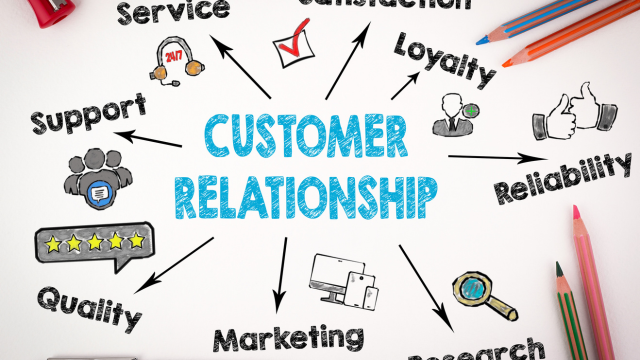
The best customer relationship management strategies help businesses understand customers, communicate consistently and create reasons for valuable relationships to continue over time.
Customer relationship management is much broader than installing a CRM platform. Software can organise contact details, interactions, opportunities and service records, but a successful CRM strategy also depends on how the business communicates, resolves problems, uses customer information and follows up after a sale.
For smaller organisations in particular, effective client management can prevent valuable relationships from becoming dependent on one employee’s inbox or memory. For larger companies, CRM helps different departments work from a more consistent picture of the customer.
The objective should not simply be collecting more data or sending more messages. Strong relationship management improves relevance, service and trust. When that contributes to customer retention, it can support sustainable business growth, although no CRM tactic can guarantee that customers will remain indefinitely.
This guide explains how to segment customers, improve communication, personalise experiences responsibly, use CRM software and AI, and measure whether relationship-management efforts are producing useful results.
What Is Customer Relationship Management and Why Is It Important?
Customer relationship management is the organised process of managing interactions with prospects and customers throughout their relationship with a business.
That relationship can begin before the first purchase.
Someone may download information, request a quotation or speak to a salesperson. After becoming a customer, they may contact support, purchase again, provide feedback or eventually leave.
CRM aims to make those interactions more coherent.
In practical terms, this might mean keeping accurate customer records, documenting communication, assigning ownership, scheduling follow-ups and ensuring support teams can understand previous interactions.
Software frequently supports this work, but technology is only one part.
A company can buy sophisticated CRM software while providing a poor customer experience because employees fail to update information or departments operate independently.
By contrast, a smaller business using a relatively simple CRM can manage relationships effectively if its processes are disciplined.
Customer relationship management matters because customers experience the organisation as one business, even when several internal departments are involved.
They should not need to explain the same issue repeatedly because Sales, Finance and Support cannot see relevant information.
Good CRM therefore combines customer knowledge with coordinated action.
Why Customer Relationship Management Matters for Business Growth
Acquiring customers requires marketing and sales effort.
If relationships end unnecessarily after one transaction, the business has to continually replace customers simply to maintain revenue.
This is why customer retention matters.
Repeat purchasing can reduce dependence on continuous acquisition, particularly in businesses where customers buy frequently or maintain ongoing contracts.
Existing customers can also provide useful feedback.
They know how the product or service performs after purchase and where friction occurs.
CRM can help businesses recognise those patterns.
For example, management might discover that customers cancelling a subscription commonly contacted support several times beforehand.
That does not prove support caused cancellation, but it provides a useful area for investigation.
CRM information can support cross-functional decisions as well.
Product teams can see common requests.
Marketing can understand which customer groups respond to particular communications.
Sales teams can recognise when an existing customer may genuinely benefit from another service.
However, businesses should avoid assuming that increased contact automatically produces stronger relationships.
More emails, calls and automated notifications can become irritating.
The objective is relevant communication and reliable service rather than maximum interaction.
Good CRM supports business growth when it helps the organisation create more customer value, not simply when it increases the volume of activity recorded in a database.
Key Elements of an Effective Customer Relationship Management Strategy
A strong CRM strategy normally begins with reliable customer information.
Employees need to know who the customer is, what they purchased, relevant previous interactions and what action is currently required.
The second element is ownership.
Each important relationship or case should have a clear responsible person or team.
Consistency also matters.
A customer should not receive one promise from Sales and a completely different explanation from Support.
Another key element is segmentation.
Not every customer has the same needs, value or buying behaviour. Businesses should identify useful groups without creating unnecessarily intrusive profiles.
Customer service is equally important.
Relationships become particularly visible when something goes wrong. Fast, fair and understandable problem resolution can have greater impact than routine promotional communication.
Measurement completes the system.
The organisation should track whether relationship-management activity contributes to outcomes such as retention, repeat purchasing, issue resolution or account growth.
An effective CRM strategy therefore combines:
Customer information → Segmentation → Communication → Service → Follow-up → Measurement
Weakness in any one area can reduce the value of the rest.
Best Customer Relationship Management Strategies
The best customer relationship management strategies generally share one principle: use customer information to make interactions more relevant and consistent.
Create a reliable customer record
Important customer information should be accessible to authorised employees in one suitable system.
That reduces dependence on personal notebooks, spreadsheets and inboxes.
Segment according to useful differences
Group customers by factors that genuinely influence communication or service, such as product use, purchasing stage or account type.
Avoid collecting unnecessary information simply because the CRM provides a field for it.
Define communication ownership
Customers should know who to contact, and employees should know who is responsible for follow-up.
Build service into CRM
Record important support issues alongside sales history where appropriate. Relationship management should not stop once the contract is signed.
Follow up after important interactions
A sale, complaint, implementation or renewal can all justify an appropriate follow-up.
Use automation selectively
Automate reminders, routing and predictable administrative work while preserving human involvement where judgement or sensitivity matters.
Measure the relationship, not just activity
Call counts and emails sent are operational measures.
Retention, repeat purchasing, issue resolution and customer feedback provide stronger evidence of relationship quality.
These strategies should be adapted to the buying cycle and business model rather than implemented identically everywhere.
How to Understand and Segment Your Customers
Segmentation helps businesses avoid treating every customer as though their needs are identical.
A straightforward B2B company might group customers according to sector, account size, product used or lifecycle stage.
A retailer may find purchase history, product category or frequency more useful.
The purpose should determine the segment.
If the business wants to improve onboarding, segmenting customers by how recently they joined may be useful.
If it wants to understand cancellations, examining contract type, service use or support history may be more relevant.
Avoid building segments around information that has no practical role in the decision.
Businesses should also distinguish between observed behaviour and assumptions.
A customer bought a particular product—that is known.
The business thinks the customer belongs to a particular lifestyle group—that may be an inference.
The ICO specifically warns that customer profiling for direct marketing needs to be fair, transparent and based on an appropriate lawful basis.
Segmentation should therefore improve relevance without becoming excessive surveillance.
Small businesses do not necessarily need complicated predictive modelling.
Simple distinctions such as prospect, new customer, established customer and inactive customer may already improve communication significantly.
How to Improve Customer Communication and Engagement
Good communication begins with context.
Before contacting a customer, employees should understand what has already happened.
Few experiences are more frustrating than explaining an issue to one employee and then repeating the entire story to another department.
A CRM can reduce this by recording significant interactions.
Communication should also have a purpose.
A business may contact customers to provide useful information, resolve a problem, confirm an action or present an appropriate offer.
Avoid contacting people merely because an automated campaign exists.
Channel preferences matter too.
Some customers prefer email. Others may require telephone conversations for complex issues.
B2B customers may expect communication through a named account manager.
Consistency is particularly important where several employees communicate with the same account.
Sales notes, support records and agreed commitments should be sufficiently visible so employees do not contradict one another.
Businesses should also respect direct-marketing rules.
A customer-service message does not automatically provide unlimited permission for promotional communication.
Good engagement depends partly on knowing when communication is useful and when to stop.
How to Personalize the Customer Experience

Personalisation can make customer relationships feel more relevant when it is based on genuine knowledge.
A business might remember which product a customer uses, recognise that they are approaching renewal or provide guidance appropriate to their stage of onboarding.
That is different from simply inserting a first name into every email.
Useful personalisation reduces effort.
For example, a support agent who can see the customer’s existing product does not need to ask basic questions repeatedly.
A retailer might recommend an accessory compatible with something previously purchased.
A B2B supplier might tailor account reviews around actual usage.
However, personalisation should remain proportionate.
Customers may find it helpful when a company remembers information they knowingly provided. They may react very differently if the organisation suddenly demonstrates knowledge they did not expect it to have.
Businesses using personal information for profiling or marketing need to consider transparency, fairness and applicable data-protection rules.
Avoid assuming that algorithms always understand context.
A customer who bought an expensive laptop last week probably does not need daily recommendations for another identical laptop.
Effective personalisation demonstrates relevance.
Poor personalisation merely demonstrates that the business collected data.
How to Improve Customer Service and Support
Service is one of the strongest tests of relationship quality.
Customers may tolerate an ordinary marketing email. They are much less tolerant when a serious problem is handled poorly.
Start with accessibility.
Customers should understand how to obtain support and, where practical, what response time they can expect.
Provide support employees with enough customer context to handle the issue efficiently.
A CRM-linked service platform can show previous tickets, account details and communication history.
This reduces repeated questioning.
Employees also need suitable authority.
If every reasonable remedy requires several layers of approval, service becomes slower even when the frontline employee understands the solution.
Measure resolution rather than simply response.
A company may answer every ticket in five minutes while taking a week to solve each problem.
First-response time can be useful, but it should not become a substitute for service quality.
Repeated problems should also feed back into the business.
If customers continually contact support because product instructions are confusing, the long-term answer may be better documentation rather than more support staff.
Strong CRM turns customer service into a source of organisational learning.
How to Use CRM Software to Manage Customer Relationships
CRM software works best when it becomes the recognised source of customer information rather than another database employees update reluctantly.
HubSpot, Salesforce, Zoho CRM, Pipedrive and other established platforms can centralise contact records, deals, activities and communication.
HubSpot’s current free CRM, for example, includes contact management, deal pipelines, tasks, reporting and ticketing, while Salesforce connects customer information across sales, service, marketing and commerce.
The right level of technology depends on the organisation.
A small consultancy may need contacts, reminders and a basic pipeline.
A larger organisation may require multiple teams, permissions, service management, automation and detailed reporting.
Whatever platform is used, data quality matters.
Duplicate contacts, missing ownership and outdated stages quickly make CRM reports unreliable.
Create rules for what employees should record.
Do not demand dozens of unnecessary fields.
If updating the CRM takes longer than completing the customer interaction, employees may work around it.
Integrations can reduce manual entry.
Email, customer support, marketing and billing data can sometimes be connected automatically.
CRM software should make good client management easier rather than create additional administration.
How to Build Long-Term Customer Relationships
Long-term relationships are normally built through consistency rather than individual campaigns.
Deliver what was promised.
Communicate clearly when circumstances change.
Resolve problems fairly.
Remember important context.
Follow up when it is useful.
These basics often matter more than elaborate loyalty programmes.
Trust also depends on expectations.
Overselling during acquisition may produce a transaction but weaken the relationship when the customer discovers the limitations afterwards.
This is one reason Sales and Customer Service should share information.
Renewals deserve particular attention.
Instead of waiting until a contract is about to end, businesses can review whether the customer is receiving value throughout the relationship.
For important B2B accounts, periodic account reviews can identify unresolved issues and changing requirements.
Customer education can also support relationships.
Tutorials, onboarding and useful product guidance may help customers obtain more value from what they already purchased.
Businesses should still accept that not every customer should be retained indefinitely.
Some relationships become commercially unsustainable or no longer fit the offer.
Customer retention should therefore be measured intelligently rather than treated as a goal of keeping every account at any cost.
How AI and Automation Can Improve Customer Relationship Management
AI can help businesses process customer information more efficiently.
CRM platforms increasingly use AI to summarise records, identify patterns, draft messages and assist employees before customer conversations.
HubSpot currently incorporates its Breeze AI capabilities into CRM workflows, while Salesforce provides predictive, generative and agentic AI across sales, service and marketing.
One practical use is summarisation.
Instead of reading a long account history before a call, an employee may receive a concise summary of relevant interactions.
AI can also help classify leads or service enquiries.
Customer-support agents may receive suggested responses or related knowledge articles.
Automation remains useful for predictable tasks.
A CRM can create follow-up reminders, move an opportunity after a defined event or assign a new enquiry to the appropriate team.
AI becomes more useful where information is less structured.
For example, it may analyse free-text feedback and identify recurring themes.
Businesses should keep humans involved where context matters.
An AI-generated message may sound professional while containing an incorrect assumption about the customer.
Automated relationship management can also become impersonal when every interaction is triggered by rules.
The goal should be to remove administration while preserving appropriate judgement.
How to Measure Customer Relationship Management Performance
CRM performance should be measured through outcomes as well as activity.
Customer retention rate is useful where the business has ongoing customer relationships.
A simple version is:
Retention rate = ((Customers at end of period − New customers acquired during period) ÷ Customers at start of period) × 100
The measurement period needs to reflect the buying cycle.
Monthly retention makes little sense for a product normally purchased once every several years.
Repeat purchase rate may be more suitable for retail or ecommerce businesses.
Customer churn is useful for subscriptions and contracts.
Sales teams can also monitor pipeline conversion, follow-up completion and account expansion.
Service measures may include resolution time, repeat contact and complaint trends.
Customer feedback can add qualitative context.
A compact CRM dashboard might include:
| Area | Useful measure | What it indicates |
| Retention | Retention or churn rate | Whether relationships continue |
| Sales | Conversion or repeat purchase | Commercial relationship outcomes |
| Service | Resolution and repeat contact | Quality of support |
| Engagement | Meaningful response rates | Whether communication remains relevant |
| Accounts | Renewal or account growth | Development of existing relationships |
| Feedback | Satisfaction or complaint themes | Customer perception and friction |
No single metric proves CRM success.
High retention can be caused by contractual lock-in rather than satisfaction.
Strong email engagement does not necessarily produce profitable customers.
Measures should therefore be interpreted together.
Benefits and Limitations of Customer Relationship Management Strategies
One major benefit of CRM is organisational memory.
Important customer information does not disappear when an employee changes role or leaves the company.
CRM can also improve coordination between departments.
Sales, service and marketing can work from a more consistent understanding of the customer.
Automation reduces repetitive administration.
Reporting can reveal problems or opportunities that individual employees may not notice.
Good CRM may also contribute to stronger customer retention, particularly when it improves onboarding, service and relevant follow-up.
There are limitations.
CRM systems depend on accurate information.
Poor data quality produces poor segmentation and unreliable reporting.
Implementation can also become overly complicated.
Businesses sometimes build dozens of fields, pipelines and automations that employees struggle to understand.
Customer data creates privacy responsibilities.
More information is not automatically better.
Businesses should collect and retain information for legitimate purposes rather than turning CRM into an unlimited archive.
Automation can also damage relationships when poorly designed.
A badly timed automated email can make a business appear less attentive, not more.
Finally, CRM cannot compensate for a weak product.
Relationship strategies can improve communication and service, but customers still need sufficient value to remain.
Future Trends in CRM and AI

CRM is moving towards a more unified view of the customer.
Historically, sales, marketing and customer service often used separate databases.
Modern platforms increasingly bring those interactions together.
Salesforce, for example, positions its CRM around a shared customer view across sales, service, marketing and commerce. HubSpot similarly combines customer information with marketing, sales and service tools.
AI will make that information easier to interpret.
Instead of manually searching several records before a meeting, employees may ask:
“What has happened with this customer during the last three months?”
“What unresolved issues should I know before this renewal call?”
“Which accounts show signs of disengagement?”
Systems can increasingly produce summaries or suggested next actions.
AI agents may go further by completing defined activities such as researching an account, preparing follow-up information or handling straightforward customer-service requests.
Automation will also become more predictive.
Traditional workflows respond to events that already happened.
AI systems can potentially identify patterns suggesting that a customer may need attention before an obvious event occurs.
These predictions should be treated as signals rather than facts.
A model might identify an account as likely to leave, but employees still need context.
Privacy will become increasingly important as CRM data becomes richer.
Combining purchase history, behavioural information, service conversations and external data can improve personalisation but also make profiling more intrusive.
Businesses will need to balance technological capability against customer expectations and legal requirements.
Another trend is greater conversational access to CRM.
Employees who previously needed specialist reporting knowledge may increasingly ask questions in ordinary language.
This could make CRM information accessible to more departments.
The risk is that easy answers create excessive confidence in poor data.
Human relationship skills therefore remain important.
CRM software can provide context, but employees still need communication, judgement and problem-solving capability.
Businesses may combine internal training, vendor resources and external learning when developing these skills. Tyne Academy, for example, currently provides flexible online learning across business and related professional areas. Organisations should assess individual course content and learning outcomes against their actual needs rather than assuming private course completion automatically demonstrates practical CRM competence.
The future of CRM is therefore likely to involve more automation and intelligence, but strong customer relationships will still depend on trust and delivery.
Key Takeaways
The best customer relationship management strategies begin with understanding customers rather than simply buying CRM software.
Customer information should be reliable, appropriately collected and available to the employees who genuinely need it.
Segmentation can make communication more relevant, but businesses should avoid unnecessary or intrusive profiling.
Good communication is contextual and purposeful.
Customer service should be integrated with the wider CRM strategy so sales and support teams understand the same relationship.
CRM software such as HubSpot, Salesforce, Zoho CRM and Pipedrive can support structured client management, but the system needs clear ownership and reliable data.
Automation can remove repetitive work, while AI can assist summarisation, analysis and personalisation.
Performance should be measured through outcomes such as retention, repeat purchasing, service quality and account development rather than activity counts alone.
Ultimately, strong CRM supports business growth when it helps the company create more consistent customer value.
Frequently Asked Questions
What are the best customer relationship management strategies?
The best customer relationship management strategies include maintaining reliable customer records, segmenting customers appropriately, improving communication, providing consistent service and following up after important interactions.
CRM software and automation can support these activities.
Businesses should also measure retention and customer outcomes rather than assuming additional communication automatically strengthens relationships.
Why is customer relationship management important?
CRM helps businesses coordinate interactions across sales, marketing and service.
It reduces dependence on individual memory and gives employees more useful context when communicating with customers.
Good relationship management can support repeat purchasing, customer retention and stronger customer insight.
Its commercial value still depends on the underlying product, service and execution.
How can businesses improve customer relationships?
Start by understanding what customers value and where they experience frustration.
Keep important information accurate, communicate clearly and make support easy to access.
Businesses should also follow through on commitments and use customer feedback to improve recurring problems.
Consistency generally builds stronger relationships than simply increasing the frequency of marketing messages.
How can businesses personalize the customer experience?
Use information that is relevant to the interaction.
Examples include remembering the customer’s product, account history, communication preferences or stage in the relationship.
Businesses should use personal information fairly and transparently and consider applicable data-protection and direct-marketing rules.
Personalisation should make the customer’s experience easier rather than demonstrate how much data the business can collect.
How can CRM software improve customer relationships?
CRM software can centralise contact information, interaction history, deals, tasks and support records.
This gives authorised employees greater context and can reduce repeated questions or missed follow-ups.
Automation can also create reminders and route work.
The software itself does not guarantee stronger relationships; employees still need accurate data and good customer processes.
What are the best CRM strategies for small businesses?
Small businesses often benefit from relatively simple CRM practices.
Maintain one reliable customer database, assign responsibility for follow-ups, record important interactions and create a clear sales or service pipeline.
Use automation for routine reminders but avoid excessive complexity.
A small company may achieve more from consistently using a basic CRM than from purchasing an enterprise platform with hundreds of unused features.
Can AI improve customer relationship management?
Yes. AI can summarise customer records, analyse feedback, assist segmentation and prepare employees for calls or service interactions.
It can also support automated customer-service and marketing workflows.
Important outputs should still be checked because AI can misunderstand context.
Businesses should also consider privacy and customer expectations when using personal information for AI-supported profiling or personalisation.
How do you measure CRM success?
Relevant measures can include customer retention, churn, repeat purchasing, renewal, service resolution, account growth and customer feedback.
Sales pipeline metrics can also help evaluate prospect and customer management.
Choose measures that reflect the business model and buying cycle.
No single CRM metric should be treated as a complete measure of relationship quality.

Conclusion
The best customer relationship management strategies focus on understanding customers and delivering consistent value throughout the relationship.
A strong CRM strategy creates reliable customer information, clear ownership and better coordination between sales, service and marketing. It allows employees to understand previous interactions and respond with greater context instead of treating each contact as an isolated event.
Effective client management also requires sensible segmentation, transparent personalisation and communication that has a genuine purpose.
CRM software can make those processes easier, while automation and AI can reduce repetitive administration and help employees interpret growing amounts of customer information. Neither should replace human judgement where relationships are complex or sensitive.
Businesses should measure whether these activities contribute to meaningful outcomes such as repeat purchasing, stronger service and sustainable customer retention, rather than judging success by the number of emails, calls or CRM records created.
When customer relationship management is connected with real customer value, it can become an important part of long-term business growth rather than simply another sales-management system.