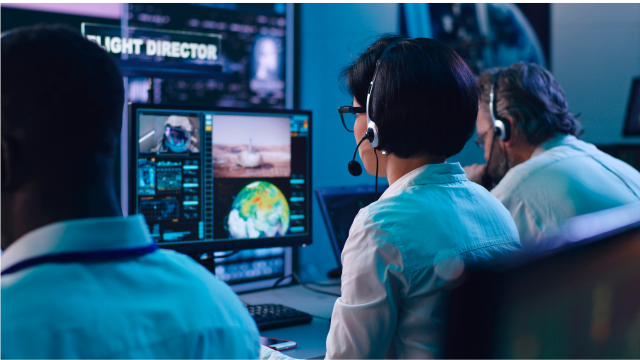
Flight dispatcher jobs UK employers advertise sit at the heart of airline operational control.
A dispatcher or flight operations officer helps turn an airline’s published schedule into a safe, workable daily flying programme.
Before and during flights, operations staff may review weather, routing, airspace restrictions, fuel considerations, aircraft status, airport conditions and disruption. They can prepare or coordinate flight-planning information, monitor aircraft movements and communicate with pilots, ground handlers, engineering teams and operational managers.
The occupation needs an important UK clarification.
Britain does not require every flight dispatcher to hold a national dispatcher licence comparable with the licensing system used in some other countries. Current UK Civil Aviation Authority guidance specifically says the operational-control rules do not impose a requirement for licensed flight operations officers or dispatchers.
That does not make the occupation unskilled.
Airlines using dispatchers for operational control, flight monitoring or flight watch need appropriately trained personnel, and employers can impose demanding technical requirements of their own.
For someone considering a flight dispatcher career, the practical route therefore involves developing aviation knowledge, operational experience and airline-specific competence rather than simply obtaining one universal UK dispatcher certificate.
This guide explains duties, entry requirements, training, current salary examples, working patterns, security checks and progression into wider aviation operations jobs and flight operations management.
What Is a Flight Dispatcher?
A flight dispatcher is an aviation operations professional who supports the safe and efficient planning and monitoring of aircraft operations.
The UK CAA uses the related terms Flight Operations Officer (FOO) and Flight Dispatcher (FD).
Under current CAA definitions, the role involves supporting, briefing or assisting the pilot-in-command in the safe conduct of flight while contributing to operational control and supervision.
In practice, job titles vary considerably.
Employers may advertise similar work as:
- Flight Dispatcher;
- Flight Operations Officer;
- Operations Controller;
- Flight Operations Controller;
- Airline Operations Controller;
- Operations Coordinator.
The exact responsibilities depend on the airline and its operational-control structure.
One dispatcher may concentrate heavily on flight plans, weather and operational documentation.
Another may spend more time monitoring aircraft in real time and coordinating disruption.
A business-aviation dispatcher may also deal extensively with:
- landing permits;
- handling arrangements;
- fuel;
- hotels;
- ground transport;
- international operating requirements.
The title is therefore useful, but the job description is more important.
What Does a Flight Dispatcher Do?
A dispatcher helps make sure a proposed flight can be operated safely, legally and efficiently within the airline’s procedures.
Typical work may include:
- reviewing routes;
- interpreting weather;
- checking NOTAMs;
- monitoring operational restrictions;
- supporting flight planning;
- following aircraft movements;
- identifying potential disruption;
- communicating information to crew;
- coordinating with ground services.
A dispatcher does not replace the pilot.
The pilot-in-command remains responsible for operating the aircraft within the applicable regulatory and company framework.
Likewise, the dispatcher is not an air traffic controller.
They do not sit in a control tower issuing air traffic clearances.
Instead, they work within the airline or aviation organisation’s own operational system.
For example, a dispatcher might notice that forecast weather at a destination is deteriorating.
They can review the operational implications, coordinate updated planning information and support the crew and operations team in assessing available options.
The role is therefore analytical, communication-heavy and highly time sensitive.
Why Flight Dispatchers Are Important to Airline Operations
Airline schedules are created months before individual flights operate.
Real-world conditions can change within minutes.
Possible complications include:
- thunderstorms;
- fog;
- high winds;
- airport closures;
- aircraft technical problems;
- air traffic restrictions;
- crew disruption;
- runway changes;
- geopolitical airspace restrictions.
Someone needs to maintain a continuously updated picture of how these factors affect the flying programme.
That is where operational-control personnel become important.
A dispatcher can identify developing problems before the aircraft departs.
During flight, operations staff can also monitor developments and communicate relevant information.
TUI’s current Operations Control Centre vacancy provides a good example of this function. Its operations controllers carry out flight watch, maintain awareness of aircraft positions and work with flight crew, handling agents, engineering teams and other operational departments when disruption occurs.
Good dispatch therefore supports three major objectives:
Safety
The flight should operate within applicable procedures and limitations.
Compliance
Relevant operational and regulatory requirements need to be followed.
Efficiency
Routes, timings and disruption responses should support an effective flying programme.
Key Duties and Responsibilities of Flight Dispatchers
Although responsibilities vary by employer, several duties appear repeatedly in UK operations roles.
Flight planning
Dispatchers may prepare, review or coordinate operational flight plans.
Weather monitoring
This can include interpreting:
- METARs;
- TAFs;
- significant weather information;
- operational forecasts.
NOTAM review
NOTAMs can provide information affecting aerodromes, navigation facilities, airspace or procedures.
Route assessment
Operations staff may consider airway availability, restrictions and suitable alternatives.
Flight watch
Once aircraft are operating, the dispatcher or controller may monitor progress.
Disruption management
Weather, technical faults or network disruption may require rapid replanning.
Crew communication
Operational information may need to be passed to flight crew accurately.
Stakeholder coordination
Dispatch staff frequently communicate with:
- air traffic-related organisations;
- airports;
- handlers;
- engineering;
- crewing teams;
- suppliers.
Documentation
Operational records and flight documents need to be accurate and appropriately retained.
Regulatory compliance
Employees must work within the operator’s manuals and applicable aviation regulations.
Accuracy is particularly important because small errors can affect an entire flight operation.
A Typical Day as a Flight Dispatcher
A dispatcher working an early shift may begin by taking a handover from the overnight operations team.
The first task is to build an accurate picture of the day’s flying programme.
Which aircraft are operating?
Are any delayed?
Are there technical restrictions?
What is the weather doing at major destinations?
Are there significant NOTAMs or airspace constraints?
The dispatcher starts reviewing planned flights.
A storm system is moving towards one destination later in the day.
An airport on another route has temporary runway restrictions.
One aircraft has a technical item affecting operational planning.
Information must be updated and communicated.
Later, an aircraft pushes back.
Operations staff begin monitoring its progress.
Another flight develops a delay because air traffic flow restrictions increase.
The dispatcher works with colleagues to understand the downstream impact.
A delayed aircraft may subsequently affect:
- the next flight;
- crew duty;
- passenger connections;
- maintenance planning.
During a significant disruption, the workload can change very quickly.
This mixture of planning and real-time decision support is what makes flight operations work demanding.
Flight Dispatcher Skills and Personal Qualities

Successful dispatchers normally need a mixture of technical understanding and personal discipline.
Attention to detail
Flight numbers, times, fuel information, weather and operational restrictions must be handled accurately.
Situational awareness
The dispatcher needs to understand what is happening across several flights simultaneously.
Analytical thinking
Operational information has to be interpreted rather than simply collected.
Communication
Information needs to reach the right person clearly and quickly.
Decision support
Dispatchers often help operational teams understand available options.
Calmness under pressure
Airline disruption can develop rapidly.
Organisation
Several flights may require attention at the same time.
IT confidence
Modern dispatch is heavily dependent on specialised software and digital information systems.
Teamwork
Airline operations involve constant coordination.
Safety mindset
Commercial pressure should never encourage an employee to ignore operational requirements.
A good dispatcher also knows when to escalate.
Trying to solve a problem outside your authority can be more dangerous than recognising that a senior controller, manager, engineer or pilot needs to become involved.
Flight Dispatcher Qualifications and Entry Requirements
There is no universal UK academic requirement for every dispatcher role.
Employer expectations vary considerably.
Entry-level positions may ask for:
- GCSEs or equivalent;
- English;
- maths;
- IT confidence;
- communication ability.
More technical roles may prefer:
- previous flight-operations experience;
- airline or ground-handling experience;
- knowledge of aviation regulation;
- understanding of meteorology;
- flight-planning software experience.
A recent European Cargo Operations Officer vacancy, for example, sought previous experience in a similar airline-operations environment together with knowledge of aviation regulations and operations software.
DHL Air’s recent Flight Operations Officer recruitment similarly sought previous flight-operations experience and understanding of:
- TAF;
- METAR;
- NOTAM;
- flight-planning systems.
Employers can therefore place considerable weight on practical experience.
An aviation degree can be useful but is not the only entry route.
The Level 3 Aviation Flight Operations Coordinator apprenticeship provides another structured pathway in England.
How to Become a Flight Dispatcher in the UK
Several routes can lead into airline dispatcher jobs.
Route 1: Apprenticeship
The Level 3 Aviation Flight Operations Coordinator apprenticeship provides a direct work-based route.
Route 2: Airline operations assistant
Someone can enter an airline Operations Control Centre in a junior support role and develop internally.
Route 3: Ground operations
Experience in:
- ramp operations;
- load control;
- passenger handling;
- airport operations;
can provide useful aviation background.
Route 4: Flight planning or business aviation
Specialist aviation-support companies employ dispatchers and operations staff.
Route 5: Relevant education
Travel, aviation or aerospace programmes can provide theoretical background.
Whatever route you choose, learn the language of operations.
Become comfortable with concepts such as:
- METAR;
- TAF;
- NOTAM;
- UTC;
- ICAO airport codes;
- alternates;
- operational control.
Then apply for jobs that match your experience level.
Do not assume every role containing “dispatcher” is entry level.
Some employers expect several years of operational experience.
Flight Dispatcher Training and Certification
This is where the UK system differs importantly from some overseas models.
Current UK CAA guidance says the Air Operations rules do not require licensed Flight Operations Officers or Flight Dispatchers.
So there is not one universal CAA flight-dispatcher licence that every UK dispatcher must obtain before employment.
However, the CAA also says operators using FOOs/FDs for operational control should provide appropriate training.
For staff carrying out flight monitoring or flight watch, current guidance says the operator’s programme should draw on relevant ICAO material and be included in the airline’s Operations Manual.
Training can include subjects such as:
- aviation law;
- operational procedures;
- meteorology;
- navigation;
- aircraft performance;
- flight planning;
- communications;
- emergency procedures;
- operational control.
The precise programme depends on assigned duties.
Employees also need company-specific training.
Knowing general dispatch theory does not automatically mean someone can independently dispatch an airline’s fleet.
They need competence in that operator’s:
- systems;
- manuals;
- aircraft;
- routes;
- escalation procedures.
Flight Planning and Operational Responsibilities
Flight planning is one of the most technically recognisable parts of dispatch work.
The aim is to develop a suitable operational plan considering factors such as:
- departure;
- destination;
- route;
- weather;
- alternate airports;
- airspace;
- aircraft capability;
- fuel requirements.
Specialist software performs much of the calculation, but the dispatcher still needs to understand what the system is producing.
Blindly accepting software output is poor operational practice.
Weather information is particularly important.
Dispatchers may work with:
METAR
Routine reports of observed aerodrome weather.
TAF
Forecast aerodrome weather.
SIGMET
Warnings of significant meteorological conditions affecting aviation.
NOTAMs also require careful attention.
A NOTAM may identify an operational issue such as:
- runway restrictions;
- navigation aid outages;
- airspace changes;
- airport operating limitations.
The dispatcher brings these information streams together.
The role therefore requires both technology and human judgement.
Flight Dispatcher and Pilot Collaboration
Dispatchers and pilots work towards the same objective: a safe and effective flight.
The UK CAA definition of a dispatcher specifically refers to supporting, briefing or assisting the pilot-in-command.
Before departure, flight operations crew may receive operational information covering:
- flight plan;
- weather;
- NOTAMs;
- alternates;
- relevant restrictions.
Pilots can question the plan or raise operational concerns.
Operations staff can then review alternatives.
During flight, the operations centre may continue monitoring developments.
If destination weather worsens, the dispatcher can help provide updated information.
However, avoid importing assumptions from another country’s regulatory model.
In the UK, a dispatcher should not automatically be described as holding the same statutory shared-release authority that can apply in certain overseas systems.
Responsibilities depend on UK regulations and the particular operator’s approved operational-control procedures.
Effective collaboration therefore requires clarity.
The dispatcher supports operational control.
The pilot-in-command retains the authority and responsibilities attaching to command of the aircraft.
Flight Dispatcher Salary in the UK
There is no national flight-dispatcher pay scale.
Salary varies according to:
- employer;
- experience;
- airline type;
- operational complexity;
- location;
- shift pattern.
Current recruitment gives useful examples.
Flightworx Aviation is currently advertising a Stansted Flight Dispatcher position from approximately:
£30,000 per year.
A recent European Cargo Operations Officer role advertised:
£30,000–£35,000 per year.
A current TUI Airline Operations Controller role does not publish salary directly on TUI’s careers page, although third-party recruitment listings place comparable operations-control work higher.
More senior or specialised operations positions can move further above entry-level dispatcher salaries.
These examples should not be treated as guaranteed national rates.
A junior dispatcher in business aviation may earn differently from an experienced airline operations controller responsible for a large fleet.
When comparing offers, also consider:
- shift allowance;
- night payments;
- pension;
- travel benefits;
- bonus;
- overtime.
Operations-control jobs often involve unsocial hours, which can materially affect the total package.
Flight Dispatcher Working Hours and Conditions
Commercial aviation operates continuously.
Dispatchers therefore frequently work shifts.
Possible patterns include:
- early mornings;
- days;
- nights;
- weekends;
- bank holidays.
TUI’s current Luton Operations Control Centre operates 24 hours a day, 365 days a year.
Its current Airline Operations Controller vacancy uses 12-hour shifts:
07:00–19:00
and
19:00–07:00
DHL Air has similarly advertised flight-operations work on rotating day/night schedules.
The job is normally office or operations-centre based rather than physically demanding airside work.
However, mental pressure can be considerable.
Employees spend long periods:
- monitoring screens;
- interpreting information;
- communicating;
- resolving problems.
Disruption can create sudden workload peaks.
An ordinary shift can become extremely busy when weather affects several European airports simultaneously.
Shift workers also need to manage sleep carefully.
Fatigue and concentration matter in safety-related operational environments.
Airport Security and Background Check Requirements
A common misconception is that every flight operations dispatcher automatically requires full airside security clearance.
That is not necessarily true.
Many dispatchers work inside airline operations centres and may rarely enter restricted airport areas.
Requirements depend on access.
Where a job requires an Airport Identification Card giving unescorted access to a Security Restricted Area, current government guidance says an Accreditation Check normally involves verification of:
- identity;
- employment history;
- education;
- gaps over at least five years;
- unspent criminal records;
- relevant government-held information.
Some aviation employers carry out additional background checking even where the employee does not regularly work airside.
European Cargo, for example, has recently stated that Operations Officer applicants need to be able to pass company background and criminal-record checks.
Candidates should therefore keep accurate records of:
- previous jobs;
- education;
- unemployment;
- other gaps.
Do not purchase your own supposed “airside clearance” course.
Airport access is sponsored and processed through the relevant employer and airport procedures.
Flight Dispatcher Career Progression

A flight dispatcher career can develop in several directions.
One possible path is:
Operations Assistant → Flight Dispatcher → Senior Dispatcher → Operations Controller → Operations Supervisor → Operations Manager
Job titles differ between airlines.
Experienced employees may specialise in:
- operational control;
- network operations;
- flight planning;
- safety;
- compliance;
- disruption management.
Others progress into leadership.
The Skills England Level 3 Aviation flight operations Operations Coordinator standard lists potential progression towards:
- operations or departmental management;
- internal audit;
- risk and safety management.
Operational experience can therefore become valuable beyond dispatch itself.
A dispatcher develops knowledge of how:
- pilots;
- aircraft;
- airports;
- engineering;
- crewing;
- air traffic constraints;
interact.
That broad perspective is useful for management positions.
Progression usually requires more than technical knowledge.
Senior employees need stronger:
- leadership;
- decision making;
- stakeholder management;
- incident management.
Flight Dispatcher vs Air Traffic Controller
These occupations are easy to confuse but fundamentally different.
| Flight Dispatcher | Air Traffic Controller |
| Works for airline/aviation operator or support provider | Works within air traffic services |
| Supports operational planning and flight operations monitoring | Controls and separates aircraft within assigned airspace |
| Reviews weather, routes, NOTAMs and operational information | Issues clearances and instructions to aircraft |
| No general UK dispatcher licence requirement | Requires formal ATC licensing |
| Works mainly with airline operational-control teams | Communicates directly with pilots for traffic control |
The licensing distinction is particularly significant.
UK air traffic controllers operate under a formal CAA licensing system.
NATS’ current trainee route involves specialist training leading first towards a Student Air Traffic Controller licence and ultimately a full validated ATC licence.
Flight dispatchers do not follow that same licensing route.
The two professions work with different responsibilities even though both contribute to safe aviation.
Someone interested in airspace separation and directing aircraft should explore ATC.
Someone more interested in airline planning, aircraft monitoring and disruption management may prefer dispatch.
How to Find Flight Dispatcher Jobs in the UK
Job titles vary, so search broadly.
Useful terms include:
flight dispatcher jobs UK
flight operations officer
airline operations controller
flight operations controller
operations control centre aviation
airline dispatcher jobs
Potential employers include:
- airlines;
- cargo airlines;
- business-aviation companies;
- trip-support providers;
- flight-training organisations.
Current examples include operators around:
- Stansted;
- Luton;
- East Midlands;
- Farnborough;
- Bournemouth.
Look at airline careers sites directly.
Specialist aviation job boards can also be useful.
Apprenticeships provide another route.
Search for:
Aviation Flight Operations Coordinator apprenticeship
When reviewing a vacancy, check whether it is actually aviation dispatch.
The word “dispatcher” is also widely used in road transport, warehousing and logistics.
Look for references to:
- aircraft;
- flight planning;
- NOTAMs;
- METAR/TAF;
- OCC;
- flight watch.
Tips for Applying for Flight Dispatcher Jobs
Tailor your CV to the operational language of the vacancy.
Relevant experience might include:
- airline operations;
- airport operations;
- ground handling;
- load control;
- aviation customer service;
- logistics control.
Highlight evidence of working under pressure.
For example:
“Managed competing operational priorities during disruption while providing accurate updates to several teams.”
Mention technical knowledge accurately.
If you have experience reading METARs and TAFs, say so.
If you have never used commercial flight-planning software, do not claim otherwise.
Research the employer’s operation.
A cargo airline may have different priorities from a charter company.
Prepare for technical questions as well as competency questions.
Employers may test:
- aviation terminology;
- weather;
- situational judgement;
- communication;
- prioritisation.
Accuracy in the application itself matters.
A dispatcher is expected to notice detail.
Spelling mistakes in aircraft registrations, dates or aviation terminology can create a poor impression.
Common Flight Dispatcher Interview Questions
What does a flight dispatcher do?
Explain flight planning, monitoring, operational information and coordination.
Why do you want a career in flight operations?
Show interest in the operational system rather than simply saying you like aeroplanes.
What is a METAR?
It is a routine aerodrome meteorological report describing observed weather conditions.
What is a TAF?
It is a terminal aerodrome forecast covering expected weather over a defined period.
What is a NOTAM?
It communicates time-sensitive operational information relevant to aviation.
What would you do if destination weather deteriorated?
Explain that you would review current information and the operational implications, follow procedures and communicate with the appropriate flight crew and operations personnel.
How do you prioritise several developing problems?
Safety and operational significance should drive priority.
Tell us about a time you worked under pressure.
Use the STAR method.
What would you do if you noticed an error in a flight plan?
Do not ignore it because departure time is approaching.
Verify the issue and follow the correct correction/escalation process.
How would you handle disagreement with a pilot?
Remain professional, provide accurate operational information and work within the airline’s defined authority and escalation procedures.
Good aviation operations depend on communication rather than ego.
Future Career Opportunities in Flight Operations
Flight operations are becoming increasingly data driven.
Modern operations centres receive large volumes of information concerning:
- aircraft position;
- weather;
- air traffic restrictions;
- engineering status;
- airport capacity;
- crew availability.
Automation can process much of this information.
That does not necessarily remove the dispatcher.
Instead, it changes what valuable dispatchers do.
Routine calculation can increasingly be automated.
Human employees become particularly important when information conflicts or unusual disruption requires judgement.
Future dispatchers are therefore likely to need stronger:
- data interpretation;
- digital-system literacy;
- risk assessment;
- decision support.
Airline operations are also becoming more integrated.
Operations Control Centres increasingly bring together:
- flight operations;
- engineering;
- crewing;
- customer operations.
Someone entering aviation operations jobs today can therefore develop a broad understanding of the entire airline.
Emerging aviation sectors may create additional opportunities too.
Drone and advanced-air-mobility operators are already recruiting flight-operations specialists and team leaders.
The underlying capabilities — planning, monitoring, risk management and operational coordination — can transfer to new aviation models.
Key Takeaways
Flight dispatcher jobs UK employers advertise sit within airline operational control rather than air traffic control.
A dispatcher may:
- prepare or review flight planning;
- analyse weather;
- check NOTAMs;
- monitor aircraft;
- manage disruption;
- support pilots and operational teams.
Current UK CAA guidance does not require a nationally licensed flight dispatcher.
Operators using dispatchers for operational control and flight-watch functions should instead provide appropriate training within their operating system.
Entry requirements vary.
GCSE-level education may be sufficient for some development routes, while experienced airline dispatcher jobs can require several years of operational work.
England’s Level 3 Aviation Flight Operations Coordinator apprenticeship provides a structured work-based route and currently takes about 18 months before its assessment period.
Current salary examples include around £30,000 for an active Stansted Flight Dispatcher vacancy and approximately £30,000–£35,000 for recent airline Operations Officer recruitment.
Shift work is common because airline flight operations run 24/7.
Security requirements depend on the role’s access rather than the title alone.
Long-term flight dispatcher career progression can lead towards senior dispatch, operations control, safety, compliance and operations management.
Frequently Asked Questions
What does a flight dispatcher do?
A flight dispatcher supports safe and efficient airline operations.
The role can involve flight planning, weather analysis, NOTAM review, operational documentation, flight monitoring and communication with pilots and other operational teams.
Dispatchers may also help coordinate responses when weather, technical problems or air traffic disruption affect the planned operation.
How do I become a flight dispatcher in the UK?
Possible routes include an Aviation Flight Operations Coordinator apprenticeship, junior airline operations roles or progression from airport and ground-handling work.
Develop knowledge of flight planning, weather, NOTAMs and aviation procedures.
Then apply for entry-level operations vacancies appropriate to your experience.
Employers normally provide additional operator-specific training.
What qualifications does a flight dispatcher need?
There is no single mandatory UK qualification for every dispatcher.
Some employers request GCSEs or equivalent, particularly English and maths.
More experienced positions can require previous airline-operations experience and knowledge of specialised flight-planning systems.
The Level 3 Aviation Flight Operations Coordinator apprenticeship is one recognised structured route in England.
How much does a flight dispatcher earn in the UK?
Pay varies substantially.
A current Flightworx Aviation vacancy at Stansted starts at approximately £30,000.
Recent flight-operations roles have advertised salaries around £30,000–£35,000, while more experienced operational-control positions can pay more.
Shift payments and employer benefits can affect total remuneration.
There is no national dispatcher salary scale.
What skills are needed to become a flight dispatcher?
Important skills include:
- attention to detail;
- communication;
- analytical thinking;
- situational awareness;
- organisation;
- IT confidence;
- problem solving;
- calmness under pressure.
Knowledge of aviation weather, operational procedures and flight-planning systems becomes increasingly important in technical roles.
What training is required for flight dispatchers?
Current UK CAA rules do not impose one universal dispatcher licence.
Where commercial operators use FOOs/FDs for operational control and flight-watch functions, CAA guidance expects relevant operator training based on appropriate ICAO material.
Employees also require company-specific training covering the operator’s systems, manuals and procedures.
Is flight dispatcher a good career in the UK?
It can be a strong career for someone who enjoys aviation, analytical work and operational problem solving.
The role offers direct involvement in daily airline operations without requiring pilot training.
However, it commonly involves shift work, significant responsibility and periods of intense pressure during disruption.
Whether it is a good fit depends on your interests and preferred working environment.
What is the difference between a flight dispatcher and an air traffic controller?
A dispatcher works within airline or aviation operational control, supporting flight planning, flight monitoring and operational coordination.
An air traffic controller manages aircraft traffic within controlled airspace and issues relevant clearances and instructions.
ATC is a formally licensed profession in the UK.
Flight dispatch does not have the same universal CAA licensing requirement.

Conclusion
Flight dispatcher jobs UK employers offer can provide one of the most direct ways to become involved in the real-time operation of an airline without working as flight crew.
The job sits where planning meets reality.
A route may look straightforward when it first appears on the schedule.
Then weather changes.
A runway closes.
Air traffic restrictions develop.
An aircraft picks up a technical problem.
The dispatcher and wider operations team must continually reassess how the flying programme can continue safely and efficiently.
That makes technical understanding important.
Dispatchers may need to interpret METARs and TAFs, review NOTAMs, understand flight-planning information and maintain situational awareness across several aircraft.
Communication is equally important.
Pilots, engineers, handlers, crewing departments and airport partners may all need accurate information at the same time.
The UK qualification position should also be understood correctly.
Unlike certain overseas systems, current UK CAA rules do not impose a universal licensed-flight-dispatcher requirement. Instead, operators using FOOs or dispatchers within their operational-control model are expected to provide suitable training appropriate to the function.
For new entrants, England’s Level 3 Aviation Flight Operations Coordinator apprenticeship provides a particularly relevant structured route. It combines workplace training with skills including operational documentation, aircraft monitoring, flight watch, disruption management and regulatory compliance.
Salary varies with experience and responsibility. Current October 2026 evidence includes an active Stansted dispatcher vacancy starting at £30,000 and recent operations positions around £30,000–£35,000. More senior control and management roles can command higher salaries.
People considering a flight dispatcher career should also be ready for shift work.
Airlines operate day and night. A current TUI operations role, for example, works across 12-hour day and night shifts within a 24/7/365 Operations Control Centre.
Security vetting depends on the particular workplace. Someone who requires an airside identification card with unescorted access to a Security Restricted Area will normally need the appropriate Accreditation Check, while an office-based dispatcher may not require identical airport access.
Tyne Academy currently offers a Flight Operations Coordinator course through Reed for £29.99. It introduces flight scheduling, aircraft movement, crew coordination and aviation-safety concepts and may provide useful background learning for someone exploring airline dispatcher jobs. However, the listing explicitly describes it as providing no formal qualification, so it should not be presented as a CAA dispatcher licence or substitute for an apprenticeship or employer-specific operational training.
Longer term, dispatch can open doors into wider aviation operations jobs, including senior operational control, safety, compliance and operations management.
The strongest candidates combine technical aviation knowledge with something equally important: the ability to remain accurate, calm and safety-focused when the flying programme stops going according to plan.