
Flight operations officer jobs UK employers advertise place employees close to the centre of day-to-day aviation decision-making.
A Flight Operations Officer may help prepare flights before departure, monitor aircraft once they are operating, interpret weather and operational information, maintain documentation and communicate with pilots, ground teams, airports and other departments.
The work is mainly operational rather than customer-facing.
While a passenger sees a flight number and departure time, the operations team sees a much larger picture involving aircraft availability, weather, airspace, airports, crew, engineering limitations and disruption.
That makes the role attractive to people who want to work directly within airline operations without becoming pilots or air traffic controllers.
There is also no single entry route.
Some people begin through apprenticeships. Others move from ground handling, airport operations or junior airline control roles. Experienced staff can progress towards network control, safety, compliance or management.
This guide explains the duties, qualifications, training, salary and progression associated with flight operations careers, including how to find airline operations jobs, develop the right skills and understand what employers expect from people pursuing aviation officer jobs in the UK.
What Is a Flight Operations Officer?
A Flight Operations Officer is an aviation professional who supports the planning, monitoring and control of aircraft operations.
The UK Civil Aviation Authority uses the related terms:
Flight Operations Officer
and
Flight Dispatcher
for personnel designated by an operator to participate in operational control and support the pilot-in-command.
Job titles can vary considerably between employers.
You may see similar roles advertised as:
- Flight Operations Officer;
- Operations Officer;
- Flight Dispatcher;
- Flight Operations Coordinator;
- Airline Operations Controller;
- Operations Control Centre Officer;
- Network Operations Controller.
The actual job description therefore matters more than the title.
One Flight Operations Officer may focus heavily on flight-planning documents.
Another may spend most of the shift monitoring aircraft and responding to disruption.
A business-aviation officer may additionally arrange:
- permits;
- airport handling;
- fuel;
- accommodation;
- ground transport.
The common theme is operational support.
The employee helps the organisation turn a planned flight into a safe and workable real-world operation.
What Does a Flight Operations Officer Do?
A Flight Operations Officer can support aircraft before departure, during flight and after arrival.
Typical activities include:
- reviewing the day’s flying programme;
- checking weather information;
- monitoring NOTAMs;
- supporting flight planning;
- preparing operational documents;
- checking airport information;
- following aircraft progress;
- coordinating disruptions;
- communicating with crew.
Suppose an aircraft is scheduled to fly from the UK to southern Europe.
Before departure, operations staff may need to consider:
- destination weather;
- alternative airports;
- airspace restrictions;
- airport operating hours;
- relevant NOTAMs;
- operational limitations.
Once the flight departs, the team may continue monitoring it.
If weather deteriorates or an airport becomes temporarily unavailable, the operations team can supply updated information and support the wider decision-making process.
The officer does not replace the pilot-in-command.
Their purpose is to provide accurate operational support within the airline’s procedures.
Why Flight Operations Officers Are Important
Airline schedules are planned in advance.
Actual flying conditions are not.
Operational problems can include:
- severe weather;
- airport congestion;
- runway closures;
- aircraft technical issues;
- crew disruption;
- air traffic restrictions;
- geopolitical airspace changes.
Flight Operations Officers help maintain awareness of these factors.
Their role is important because one disruption can quickly affect several later flights.
Consider an aircraft arriving two hours late.
That delay might affect:
- its next departure;
- passenger connections;
- crew duty limits;
- maintenance;
- airport slots.
Operations staff help identify those consequences and coordinate possible responses.
Modern flight operations therefore depend heavily on situational awareness.
A good officer is not simply entering data into a system.
They are continually asking:
What is happening now?
What could happen next?
Who needs to know?
That is particularly important within airline Operations Control Centres, where teams monitor a large flying programme in real time.
Key Duties and Responsibilities
Responsibilities vary by operator, but common duties include the following.
Flight planning support
Officers may prepare, review or coordinate operational flight plans.
Weather monitoring
They may interpret aviation weather information such as METARs and TAFs.
NOTAM review
Operational notices can affect runways, airspace, navigation aids and airport facilities.
Flight watch
Some roles involve monitoring aircraft throughout the operating day.
Disruption management
Officers help coordinate responses when the original plan becomes unworkable.
Operational communication
They may communicate with:
- pilots;
- handling agents;
- engineers;
- airports;
- crewing teams.
Documentation
Flight records and operational logs need to remain accurate.
Post-flight administration
Completed flights may require times, delays or other information to be recorded.
Emergency support
Operations staff need to understand their company’s emergency-response procedures.
Current TUI operations recruitment, for example, includes flight watch, aircraft-position monitoring, weather interpretation, Eurocontrol information and disruption management among its responsibilities.
A Typical Day as a Flight Operations Officer
Imagine starting a morning shift in an airline operations centre.
The first step is usually a handover.
You need to understand what happened overnight.
One aircraft is delayed.
Another has a technical restriction.
Weather is deteriorating at two destinations.
You begin checking today’s flying programme.
A flight scheduled later in the morning needs updated weather and operational information.
You review relevant notices and make sure the necessary information reaches the appropriate people.
The first aircraft departs.
Another flight then experiences an air traffic delay.
The estimated arrival time changes.
That can affect the aircraft’s following sector.
You update systems and communicate with relevant teams.
Later, a technical problem develops.
Engineering needs to determine what can be done.
Crewing may need to assess duty-time implications.
Ground handlers need revised timings.
The operations team coordinates the changing picture.
This illustrates why the role needs concentration.
The day is rarely simply:
prepare one flight → finish → prepare another.
Several flights can demand attention simultaneously.
Flight Operations Officer Skills and Personal Qualities
Several capabilities appear repeatedly in current operational roles.
Attention to detail
Small errors in aviation information can have significant consequences.
Situational awareness
You need to understand several developing events simultaneously.
Communication
Information must be clear, accurate and timely.
Problem solving
Operational plans frequently change.
Prioritisation
Not every problem has equal safety or operational importance.
IT confidence
Operations centres use multiple digital systems.
Numerical ability
Flight planning and operational information can involve figures, times and calculations.
Teamwork
Modern airline operations are multidisciplinary.
Resilience
Disruption can create intense pressure.
Safety awareness
Commercial convenience should never override safety requirements.
A particularly valuable characteristic is knowing when to escalate.
A good Operations Officer does not pretend to have authority or technical knowledge they do not possess.
They recognise when the issue needs:
- a pilot;
- engineer;
- operations manager;
- safety specialist;
- other authorised person.
That judgement develops with training and experience.
Flight Operations Officer Qualifications and Entry Requirements
There is no one qualification required for every Flight Operations Officer vacancy in the UK.
Entry-level employers may request:
- GCSEs or equivalent;
- English;
- maths;
- IT skills;
- communication ability.
More experienced positions can require previous aviation experience.
Relevant backgrounds include:
- airline operations;
- ground handling;
- airport operations;
- crew planning;
- load control;
- flight planning.
Current West Atlantic recruitment for an Operations Control Centre Officer, for example, asks for Level 2 education alongside recent aviation-operations experience, preferably in airline operational control or crew planning.
Current TUI recruitment is broader.
Previous airline operations or ground-handling experience is described as preferable rather than essential for its Airline Operations Controller position, although candidates need an understanding of operational aviation and the ability to complete the company’s initial training.
This demonstrates why candidates should read each specification carefully.
A university aviation degree can help.
It is not the only route.
How to Become a Flight Operations Officer in the UK
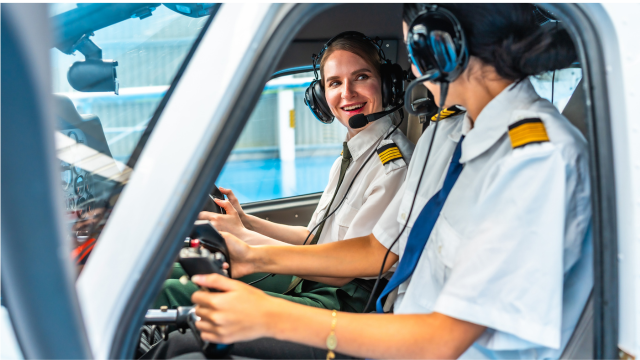
Several pathways can lead into the profession.
Apprenticeship
England’s Level 3 Aviation Flight Operations Coordinator apprenticeship is one of the clearest structured entry routes.
Junior airline operations role
Airlines can recruit assistants or controllers and provide internal training.
Ground handling
Experience working around airline operations can provide valuable practical understanding.
Airport operations
Airport experience can build knowledge of aviation procedures and operational coordination.
Crew or logistics control
Experience managing time-critical transport operations can provide transferable skills.
Aviation education
College or university aviation programmes can provide theoretical knowledge.
Whichever route you take, develop familiarity with operational terminology.
Useful areas include:
- ICAO airport codes;
- UTC;
- METARs;
- TAFs;
- NOTAMs;
- flight plans;
- operational control.
Then target roles appropriate to your current level.
Avoid assuming every Flight Operations Officer vacancy is entry level.
Some operators want candidates who can contribute with limited supervision from the beginning.
Flight Planning and Operational Support
Flight planning is a central part of many airline operations jobs.
An operational flight plan can take account of factors such as:
- aircraft type;
- route;
- weather;
- destination;
- alternates;
- airspace restrictions;
- fuel requirements.
Specialist systems perform much of the underlying computation.
However, operations personnel still need to understand the information.
Technology should support judgement rather than replace it blindly.
For example, if a preferred route becomes unavailable because of airspace restrictions, the operation may need a different routing.
That could affect:
- distance;
- fuel;
- arrival time;
- downstream scheduling.
Operational staff help the airline assess such consequences.
The precise level of responsibility varies according to the operator’s approved procedures.
Some employees directly prepare plans.
Others review, distribute or support planning carried out by specialist dispatch functions.
Flight Documentation and Record Management
Accurate documentation is a major part of flight operations.
Records may include:
- operational flight plans;
- weather packages;
- NOTAM information;
- flight logs;
- delay information;
- operational messages.
The exact documents depend on the operator and flight.
Accuracy matters because records may subsequently be required for:
- operational review;
- regulatory compliance;
- safety investigation;
- performance analysis.
Current Network Aviation Group recruitment specifically includes accurately completing company flight logs and post-flight data among Operations Officer responsibilities.
Document control also means making sure employees use the correct information.
An outdated weather product or superseded operational instruction can be dangerous.
Operations staff therefore need strong habits around:
- timestamps;
- version checking;
- system updates;
- record retention.
These tasks may look administrative, but in aviation accurate administration can form part of operational safety.
Weather, Route and Operational Information
Weather is one of the most important variables in aviation.
Flight Operations Officers commonly work with information such as:
METAR
A report of observed weather at an aerodrome.
TAF
A forecast of expected aerodrome weather.
SIGMET
Information concerning significant weather phenomena that may affect aircraft operations.
Operational teams need to understand what that information means for the flight.
For example:
- strong crosswinds may affect an airport;
- thunderstorms may affect routes;
- low visibility may disrupt arrivals.
Routes can also be affected by:
- airspace closures;
- air traffic restrictions;
- military activity;
- geopolitical events.
NOTAMs provide another major information source.
A NOTAM may alert operators to:
- runway closure;
- navigation equipment outage;
- airport restriction;
- temporary airspace change.
The skill is not merely reading information.
It is identifying what matters to the particular flight.
Communication With Pilots and Ground Teams
Flight operations connect many departments.
An officer may communicate with:
- pilots;
- cabin operations;
- ground handlers;
- air traffic-related organisations;
- airports;
- engineering;
- crewing;
- network control.
Communication needs to be concise.
A busy pilot or engineer needs the relevant operational fact, not unnecessary background.
The UK CAA’s definition of a Flight Operations Officer specifically recognises the role of supporting, briefing or assisting the pilot-in-command.
That relationship needs professional boundaries.
The operations officer provides operational information and support.
The pilot retains the responsibilities associated with command of the aircraft.
Similarly, an Operations Officer should not make engineering decisions that belong to licensed engineers.
Strong teams understand these boundaries.
Good communication is therefore partly about knowing who owns which decision.
Flight Operations Officer Training and Development
The UK does not impose a universal national Flight Operations Officer licence.
Current CAA guidance expressly states that the rules do not require licensed FOOs or flight dispatchers.
Instead, where an operator uses these employees within its operational-control system, it should provide appropriate training based on relevant ICAO material and document that training in its Operations Manual.
This makes employer training extremely important.
Topics can include:
- air law;
- operational control;
- meteorology;
- navigation;
- flight planning;
- aircraft performance;
- communications;
- emergency procedures.
Employees also need organisation-specific training covering:
- company aircraft;
- routes;
- systems;
- manuals;
- escalation procedures.
England’s Level 3 Aviation Flight Operations Coordinator apprenticeship provides another structured development route.
Skills England currently lists it as an 18-month Level 3 apprenticeship.
It can support progression towards operations management, internal audit or risk and safety careers.
Training therefore continues well beyond someone’s first aviation course.
Flight Operations Officer Salary in the UK
There is no national pay scale covering all flight operations officer jobs UK.
Current recruitment suggests that salaries around the low £30,000s are realistic for some operational roles.
Examples include:
| Current/recent example | Salary |
| West Atlantic OCC Officer | £30,554 |
| Skyborne Operations Officer | £30,000 |
| West Atlantic Senior Operations Officer pathway | £34,572 |
| West Atlantic OCC Supervisor pathway | £39,931 |
| London Air Ambulance Flight Operations Officer | Around £45,000 |
These figures should be treated as examples rather than guaranteed rates.
Pay depends on:
- experience;
- employer;
- operational responsibility;
- location;
- shift pattern.
Some airline employers advertise salary simply as competitive.
Night work or shift allowances may also affect total earnings.
When comparing offers, check the full package.
This may include:
- pension;
- private healthcare;
- travel benefits;
- overtime;
- shift payments.
More senior control and management roles can move above frontline Operations Officer salaries.
Working Hours and Conditions
Flight operations rarely stop at 5pm.
Airlines operate continuously.
Many Operations Control Centres therefore run:
24 hours a day, 365 days a year.
Shift patterns can include:
- early mornings;
- nights;
- weekends;
- bank holidays.
TUI’s current operations-controller role uses 12-hour shifts:
07:00–19:00
and
19:00–07:00.
Network Aviation Group currently advertises:
two day shifts → two night shifts → four days off.
Most work is office based.
Employees may spend much of a shift:
- using computers;
- monitoring flights;
- speaking by telephone;
- using operational communication platforms.
The job is not generally physically demanding.
It can, however, be mentally intense.
During major weather disruption, several aircraft can require attention at once.
People considering flight operations careers should therefore think seriously about whether they are comfortable with shift work and sustained concentration.
Airport Security and Background Check Requirements

Not every Flight Operations Officer requires identical security clearance.
Much depends on where the employee works.
A control-centre employee may work entirely landside.
Another role may require access to operational airside areas.
Where somebody needs an Airport Identification Card permitting unescorted entry to a Security Restricted Area, an Accreditation Check normally applies.
Current government guidance says this includes verification of:
- identity;
- employment history;
- education;
- gaps covering at least the previous five years;
- unspent criminal record;
- relevant government-held records.
Airlines can also impose their own pre-employment vetting requirements.
TUI’s current recruitment, for example, states that employment offers are subject to appropriate security checks, which may include professional references and overseas criminal-record information.
Candidates should therefore maintain accurate details of previous:
- employment;
- education;
- unemployment;
- overseas residence.
Security vetting is normally organised through the employer.
A private online course cannot independently grant an airport airside pass.
Flight Operations Career Progression
Operations experience can lead in several directions.
One possible progression route is:
Operations Assistant → Flight Operations Officer → Senior Operations Officer → Operations Controller → OCC Supervisor → Operations Manager
Not every company uses those titles.
West Atlantic’s current published career pathway, for example, progresses from OCC Officer towards Senior Operations Officer and OCC Supervisor.
Other people specialise.
Possible routes include:
- flight planning;
- network control;
- safety;
- compliance;
- internal audit;
- operational risk.
The current Level 3 apprenticeship also identifies progression towards:
- operations management;
- internal audit;
- risk and safety management.
Another option is moving between aviation sectors.
Operations staff can work for:
- passenger airlines;
- cargo airlines;
- charter operators;
- business aviation;
- flight-training organisations.
Some aviation officer jobs outside scheduled airlines use many of the same core capabilities.
Experience therefore has considerable transfer value.
How to Find Flight Operations Officer Jobs
Search using several titles.
Useful terms include:
flight operations officer jobs UK
flight operations officer
airline operations controller
operations control centre officer
flight operations coordinator
flight dispatcher
Look directly at:
- airline career sites;
- cargo-airline websites;
- aviation-support companies;
- flight-training organisations;
- specialist aviation job boards.
Current UK opportunities are concentrated around major aviation locations including:
- Heathrow;
- Gatwick;
- Luton;
- Stansted;
- East Midlands;
- Bournemouth.
Do not limit your search to airports themselves.
A Flight Operations Officer normally works for an airline or aviation operator rather than the airport operator.
Also consider apprenticeships.
The Level 3 Aviation Flight Operations Coordinator apprenticeship can provide a particularly strong route for candidates without previous operational-control experience.
Job alerts are useful because specialist openings can be relatively infrequent.
Common Flight Operations Officer Interview Questions
What does a Flight Operations Officer do?
Explain planning, operational support, documentation, flight monitoring and communication.
Why are you interested in flight operations?
Show that you understand the work rather than simply saying you like aircraft.
What is a METAR?
Explain that it is an aerodrome weather observation.
What is a TAF?
Explain that it provides forecast weather information for an aerodrome.
What is a NOTAM?
Explain that it communicates time-sensitive operational information relevant to aviation.
How would you prioritise several disruptions?
Safety and operational significance should come first.
Tell us about a time you worked under pressure.
Use the STAR structure:
- Situation;
- Task;
- Action;
- Result.
What would you do if you found incorrect flight information?
Verify it and follow the relevant correction or escalation procedure.
Do not ignore it simply because departure is approaching.
How do you communicate complex information quickly?
Give an example showing concise and accurate communication.
Are you comfortable working nights and weekends?
Answer honestly.
Shift flexibility is essential for many operational-control roles.
Key Takeaways
Flight operations officer jobs UK employers advertise involve supporting safe and efficient aircraft operations before and during flight.
Responsibilities can include:
- flight planning;
- weather monitoring;
- NOTAM review;
- documentation;
- flight watch;
- disruption management;
- pilot and ground-team communication.
The UK does not require one universal national Flight Operations Officer licence.
Operators using FOOs within operational control should provide appropriate training based on relevant ICAO guidance and their own procedures.
The Level 3 Aviation Flight Operations Coordinator apprenticeship provides a structured route into the profession in England.
Current salary evidence suggests around £30,000 for some Operations Officer roles, with experienced and supervisory positions moving into the mid-to-upper £30,000s and specialist roles potentially higher.
Working nights, weekends and 12-hour shifts is common in airline operations jobs because Operations Control Centres operate continuously.
Airside security requirements depend on the position and access needed.
Long-term flight operations careers can lead towards senior operational control, safety, compliance, risk, audit and management.
Frequently Asked Questions
What does a flight operations officer do?
A Flight Operations Officer helps plan, monitor and support aircraft operations.
Typical duties include checking weather and NOTAMs, preparing flight documentation, supporting flight planning, monitoring aircraft and coordinating operational disruptions.
They also communicate with pilots, ground handlers and other airline departments.
How do I become a flight operations officer in the UK?
Possible routes include an apprenticeship, junior airline operations role or progression from airport or ground-handling work.
Develop knowledge of:
- aviation weather;
- NOTAMs;
- flight planning;
- airline operations;
- aviation terminology.
England’s Level 3 Aviation Flight Operations Coordinator apprenticeship provides one structured route.
What qualifications are needed for flight operations jobs?
There is no universal qualification requirement.
Some entry roles ask for GCSE-level education or equivalent.
Experienced roles may require previous airline or aviation-operations experience.
Aviation degrees and specialist training can help but are not mandatory for every employer.
Company-specific training remains important after appointment.
How much does a flight operations officer earn?
Pay varies by employer and experience.
Current examples include around £30,000 for several Operations Officer roles.
West Atlantic’s published pathway moves from £30,554 to £34,572 for Senior Operations Officer and £39,931 for OCC Supervisor.
Specialist positions can pay more.
These figures are examples rather than a national salary scale.
What skills does a flight operations officer need?
Important capabilities include:
- attention to detail;
- communication;
- analytical thinking;
- situational awareness;
- IT confidence;
- prioritisation;
- teamwork;
- ability to remain calm under pressure.
Operational safety awareness is fundamental.
What training is required for flight operations officers?
There is no universal UK CAA Flight Operations Officer licence.
However, current CAA guidance says operators using FOOs within operational control should provide suitable training based on relevant ICAO material.
Employees also require company-specific training covering the operator’s systems, aircraft, manuals, routes and procedures.
Where do flight operations officers work?
They can work for:
- passenger airlines;
- cargo airlines;
- charter companies;
- business-aviation providers;
- flight-training organisations;
- specialist aviation-support businesses.
Many work in airline Operations Control Centres rather than directly on the airport apron.
What are the career opportunities in flight operations?
Possible progression includes:
- Senior Operations Officer;
- Airline Operations Controller;
- OCC Supervisor;
- Operations Manager;
- Safety Officer;
- Compliance Officer;
- Risk Manager;
- Internal Auditor.
Experience can also transfer between passenger, cargo, charter and business aviation.

Conclusion
Flight operations officer jobs UK employers recruit for provide an opportunity to work inside the operational heart of aviation without becoming a pilot or air traffic controller.
The role combines planning with real-time problem solving.
Before departure, an officer may help review weather, routes, airport information and operational documentation.
Once an aircraft is airborne, the operations team may continue monitoring the flight and providing relevant information.
When disruption occurs, the job becomes particularly important.
Weather can change.
Airspace can close.
Aircraft can develop technical problems.
Crew or airport restrictions can disrupt the schedule.
The Flight Operations Officer helps the wider team understand those problems and coordinate an appropriate response.
That makes certain qualities especially valuable.
Attention to detail matters because aviation information needs to be accurate.
Communication matters because pilots, engineers, handlers and operational managers depend on timely updates.
Situational awareness matters because several apparently small problems can combine into a much larger operational issue.
For people interested in flight operations careers, the qualification route is more flexible than many assume.
Current UK CAA guidance does not impose one national licence for all Flight Operations Officers or dispatchers. Instead, operators employing them as part of operational control should provide training appropriate to their functions and based on relevant ICAO material.
England’s Level 3 Aviation Flight Operations Coordinator apprenticeship offers one of the clearest structured routes into the sector. It combines workplace development with operational knowledge and can lead towards management, audit and risk-related careers.
Salary varies.
Current evidence places several operational roles around £30,000, while senior and supervisory opportunities can move towards £35,000–£40,000 or more depending on responsibility. Specialist Flight Operations Officer posts can command higher salaries.
The working pattern also deserves consideration.
Many airline operations jobs run around the clock. Twelve-hour days and nights, weekends and bank holidays are normal in some Operations Control Centres.
Anyone considering this profession should therefore be comfortable with both aviation responsibility and shift work.
Tyne Academy currently offers its Flight Operations Coordinator course through Reed for £29.99. The self-paced programme introduces subjects including flight scheduling, aircraft movements, crew coordination and aviation safety. It may provide useful introductory background for somebody exploring aviation officer jobs.
However, the listing explicitly states that it provides no formal qualification. It should not therefore be presented as a CAA licence, a substitute for the Level 3 apprenticeship or evidence that somebody is independently competent to perform airline operational-control duties.
The stronger career strategy is to combine introductory learning with real operational experience, employer training and continuous development.
Ultimately, successful flight operations professionals need to do one thing exceptionally well:
turn large amounts of changing aviation information into clear, accurate and safety-focused operational decisions.