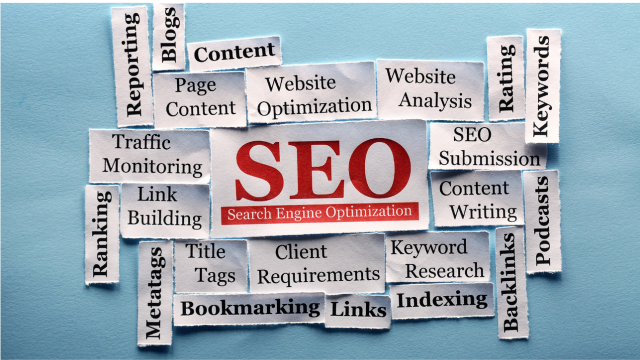
SEO-friendly content is not content that has been stuffed with keywords until it sounds unnatural.
Nor is it content written for a search engine instead of a reader.
Understanding how to create SEO friendly content means bringing several things together: useful information, genuine search demand, logical structure, clear content writing, technically accessible pages and an experience that helps the reader complete whatever brought them to the page.
The objective is visibility, but visibility alone is not enough.
A page can achieve strong search rankings for the wrong query and bring visitors who never become customers. A business can publish hundreds of articles through blogging and still achieve little if those articles add no useful information or fail to address what people actually want.
Modern SEO therefore starts with relevance.
Find out what your audience needs. Understand why they are searching. Create the best suitable page for that need. Then make it easy for search engines to discover and interpret.
This guide explains that process from keyword research and search intent through titles, internal linking, AI, user experience, measurement and content refreshing.
What Is SEO-Friendly Content and Why Is It Important?
SEO-friendly content is material designed to be useful to people while also being understandable and accessible to search engines.
It might be:
an article;
a service page;
a product description;
a comparison;
a guide;
a video page;
or a category page.
The format depends on the search need.
A good SEO page normally does several things well.
It answers an identifiable question or need.
It communicates clearly.
It uses language relevant to the subject.
It is organised logically.
It connects with other useful pages.
It provides enough original value to justify existing.
And it is technically available for crawling and indexing.
Google’s current guidance strongly favours people-first content writing.
That means businesses should ask whether the page would still be useful if the visitor arrived directly rather than through Google.
If the answer is no, the content writing may have been created for the wrong reason.
Why Businesses Need SEO-Friendly Content
Search creates an opportunity to reach people while they are actively looking for information.
That is different from interrupting somebody with an advertisement.
A person searching for:
“accountant for ecommerce business UK”
has expressed a fairly specific need.
A suitable accountancy firm with a useful service page has an opportunity to appear during that decision.
SEO-friendly content helps businesses participate in these moments.
It can support:
brand discovery;
customer education;
lead generation;
product discovery;
local visibility;
and ecommerce sales.
However, search visibility is competitive.
Publishing a basic 500-word article merely because a keyword has search volume is rarely a strong long-term strategy.
Businesses need to create something worth finding.
That may mean explaining a subject more clearly, providing original examples, demonstrating experience, answering overlooked questions or creating a more useful format.
SEO therefore works best when it improves thecontent writing rather than distorting it.
Key Benefits of Creating SEO-Friendly Content
Strong search content can create several forms of value.
It can attract relevant organic traffic without paying for every individual visit.
It can answer customer questions before they contact sales.
It can strengthen topical coverage across a website.
It can support internal linking between informational and commercial pages.
It can also continue producing value after publication.
A useful guide may remain discoverable for years if it is maintained properly.
SEO-friendly content can also improve the website for non-search visitors.
Clear headings, accessible images, logical navigation and useful summaries benefit users regardless of how they arrived.
Another benefit is market intelligence.
Keyword and Search Console data can reveal what customers ask, how they describe problems and where existing pages fail to meet demand.
That information can influence wider marketing, sales and product strategy.
Key Elements of SEO-Friendly Content
No single factor makes a page SEO friendly.
The strongest pages normally combine several elements.
Clear search intent
The page should solve the kind of problem suggested by the query.
Useful information
It should provide enough depth to satisfy the reader.
Original value
Avoid simply rewriting what the top ten results already say.
Strong structure
Headings should make the information easy to navigate.
Natural keyword use
Important terms should appear where relevant without forced repetition.
Internal links
Connect the page with useful related material.
Strong search presentation
Titles and descriptions should accurately communicate what the user will find.
Appropriate media
Images, diagrams, tables or video should improve understanding where useful.
Good page experience
Content should work well across devices and avoid unnecessary friction.
Measurement
SEO content writing needs to be reviewed after publication.
The strongest content writing combines these elements rather than optimising each one mechanically.
How to Conduct Keyword Research
Keyword research identifies the language people use when searching.
Start with your customers rather than a keyword database.
List:
the problems they experience;
questions they ask;
products they compare;
services they need;
objections they raise;
and language they use during sales conversations.
Then expand the list using search data.
Useful sources include:
Google Search Console;
Google Keyword Planner;
Google Trends;
site-search data;
customer-service conversations;
and dedicated SEO platforms.
Existing Search Console information is particularly valuable because it shows queries for which your site already receives impressions.
Look beyond raw search volume.
A phrase with 10,000 monthly searches may have little commercial relevance.
A highly specific phrase with several hundred searches may represent people much closer to buying.
Research should therefore consider:
relevance;
intent;
competition;
and business value.
The objective is not to collect as many keywords as possible.
It is to understand enough search demand to create useful pages.
How to Choose the Right Keywords
Keywords should represent the subject and likely search intent of the page.
Begin with one primary topic.
Then identify related questions and supporting concepts.
For example, an article targeting:
“how to choose accounting software”
might naturally discuss:
bookkeeping;
invoicing;
VAT;
bank feeds;
and reporting.
These supporting terms help provide complete coverage.
Do not create separate pages for every trivial wording variation.
Google can understand related phrasing and concepts.
Creating near-duplicate articles targeting:
“best software for invoices”;
“best invoicing software”;
and “top invoice software”
may simply divide your site’s authority across several weak pages.
Also distinguish keyword types.
Informational keywords
The user wants knowledge.
Commercial keywords
The user is comparing options.
Transactional keywords
The user appears ready to take action.
Navigational keywords
The user is trying to reach a particular brand or website.
The content writing format should match the intent.
A detailed educational guide may not satisfy someone searching specifically to buy a product.
How to Create an SEO-Friendly Content Structure
Good structure helps readers understand where they are and where to find the answer they need.
Begin with one clear H1.
The title should accurately describe the page.
Use H2 headings for major sections.
Use H3 headings where a section needs meaningful subsections.
Avoid headings created purely to insert another keyword.
A useful article structure might move from:
definition;
context;
method;
practical examples;
mistakes;
FAQs;
to conclusion.
But structure should follow the topic rather than a fixed template.
Place important information relatively early.
Do not force readers through an extended introduction before answering the question.
Short and medium-length paragraphs generally work well online.
Lists can clarify steps or comparisons, but overusing them can make an article feel fragmented.
Structure should improve comprehension.
It should not exist because somebody once said Google prefers a certain number of headings.
How to Write SEO-Friendly Titles and Headings

Titles influence both search understanding and user choice.
Google recommends titles that are:
descriptive;
concise;
unique;
and relevant to the page.
Avoid vague titles such as:
“Everything You Need to Know”
when the actual subject can be stated clearly.
Also avoid exaggerated clickbait.
A title should establish realistic expectations.
Place important topic language naturally where useful, but do not force every keyword variation into the title.
Headings should then organise the page.
A strong heading allows somebody scanning the article to understand what the next section contains.
For example:
“How to Measure Customer Retention”
is more informative than:
“Measuring Results”.
Google can create search-result title links from several sources, including the page’s title element, visible headings and other prominent text.
That makes consistency useful.
The H1 and title element do not need to be identical, but they should describe the same subject accurately.
How to Optimise Content for Search Intent
Search intent describes what somebody appears to want from a query.
Optimising for intent begins by asking:
What would satisfy this search?
Suppose someone searches:
“best CRM for small business UK”.
They probably expect comparison and decision support.
A page explaining only the dictionary definition of CRM may be accurate but still fail the query.
Conversely, somebody searching:
“what is customer relationship management”
may prefer explanation rather than a product comparison.
Look at the language of the query.
Words such as:
best;
compare;
price;
near me;
how;
why;
review;
and buy
can indicate different intentions.
Also review the current search landscape to understand what formats tend to satisfy the topic.
Do not copy competitors.
Use the results to understand the type of problem being solved.
Then ask how your page can provide additional value.
Search-intent optimisation ultimately means respecting why the person searched.
How to Create SEO-Friendly Meta Titles and Descriptions
The title element helps describe a page and can influence the title link Google displays.
Write one that is accurate and specific.
Avoid:
keyword repetition;
generic page titles;
unnecessarily long wording;
or titles that promise something the page does not deliver.
Meta descriptions deserve similar care.
Google primarily creates snippets from page content writing although it may use the meta description when that provides a better summary.
That means businesses cannot force Google to display a specific meta description for every query.
Still, write a useful one.
Describe:
what the page covers;
who it is relevant to;
and the main value of visiting.
Avoid strings of keywords.
For example, a poor description might be:
“SEO writing, SEO content, SEO blog writing, SEO tips, Google SEO.”
A stronger version would summarise what the reader will learn.
Meta descriptions do not need a rigid character-count obsession.
Google truncates snippets according to available display space and context.
Clarity is more important than hitting an arbitrary number precisely.
How to Optimise Images and Media
Images can make content writing easier to understand and can also appear through Google’s visual search experiences.
Use high-quality images where they genuinely add information.
Place them near relevant text.
Use descriptive filenames where practical.
For example:
employee-training-dashboard.jpg
is more informative than:
IMG8472.jpg.
Alt text matters particularly for accessibility.
Describe the useful content of the image rather than stuffing the alt attribute with target keywords.
A chart showing monthly customer churn might use alt text that explains what the chart demonstrates.
Decorative images may not need descriptive alt text where appropriate accessibility practice calls for an empty alternative.
File performance also matters.
Large uncompressed images can slow the page unnecessarily.
Use suitable modern formats, dimensions and compression.
Video should also have context around it.
Search engines cannot rely solely on visual or spoken content writing in the same way a human viewer can.
Supporting text, titles and relevant metadata can help explain what the media contains.
How to Improve Internal Linking
Internal links connect pages within the same website.
They help users discover related material and help search engines understand site relationships.
Google explicitly recommends ensuring that every important page receives a link from at least one other discoverable page.
Link naturally from relevant context.
For example, an article explaining email marketing might link to a detailed guide about email automation where that guide genuinely helps the reader.
Use descriptive anchor text.
“Read our guide to email automation”
is generally more useful than repeated links saying:
“click here”.
Avoid forcing dozens of internal links into every article.
Prioritise relevance.
Internal linking can also support commercial journeys.
An informational article about choosing how to create SEO friendly content writing project-management software might naturally link to:
a comparison;
a product page;
or another decision-stage resource.
Review older pages when publishing something new.
The new article should link out appropriately, but existing relevant content should also link back to the new page.
How to Optimise Content for Featured Snippets
Featured snippets are search-result features where Google presents extracted information prominently.
Website owners cannot manually nominate a page and guarantee that it will become the featured snippet.
There is also no special featured-snippet schema that forces selection.
What businesses can control is clarity.
When a section answers a specific question, provide a direct answer.
For example:
What is email segmentation?
Email segmentation is the process of dividing an email audience into groups based on how to create SEO friendly content writing relevant characteristics or behaviour so that different groups can receive more appropriate messages.
That format is easy for readers to understand.
Procedural questions may benefit from logically ordered steps.
Comparison questions may benefit from a compact table where the information genuinely suits a table.
Definition questions may need one clear explanatory paragraph.
Do not distort the entire article to chase featured snippets.
Google chooses when a snippet is useful and which page to source it from.
Optimise primarily for the reader.
How to Create SEO-Friendly Content With AI
AI can accelerate several parts of content writing production.
Useful applications include:
topic research;
keyword grouping;
outline development;
question generation;
first drafts;
summaries;
editing;
and content-gap analysis.
The important word is how to create SEO friendly content assist.
Google’s current guidance does not prohibit content merely because AI was used.
The issue is quality and purpose.
Google’s October 2026 guidance specifically stresses that generative models can produce inaccurate information and that AI-generated material should be manually checked for accuracy and trustworthiness.
Do not publish generated copy simply because it sounds fluent.
Check:
facts;
dates;
names;
claims;
citations;
examples;
and technical instructions.
Then add something that generic generation cannot easily provide.
That may be:
original expertise;
real testing;
internal data;
first-hand experience;
unique photographs;
or informed analysis.
AI becomes risky when it is used to mass-produce hundreds of minimally differentiated pages primarily to manipulate search rankings.
Use technology to make good content writing better, not to manufacture volume without value.
Best SEO Content Writing Tools
Tools can support content writing, but none can determine automatically whether a page deserves to rank.
Google Search Console
This should be part of almost every SEO-content workflow.
It shows which queries generate impressions and clicks, which pages attract search traffic and how performance changes over time.
Google Keyword Planner
Useful for keyword ideas and search-demand estimates.
Remember that it is designed mainly for Google Ads rather than as a precise organic-ranking predictor.
Google Trends
Useful for comparing relative search interest and identifying seasonality or changing demand.
Semrush SEO Writing Assistant
Semrush’s current SEO Writing Assistant evaluates content in areas including:
SEO;
readability;
originality;
and tone.
It can provide recommendations based on target keywords and competitor content and integrates with several common writing environments.
Treat recommendations as prompts rather than rules.
A tool score is not a Google ranking factor.
PageSpeed Insights
Helpful when poor performance affects the experience around content.
Tools should improve decisions.
Avoid rewriting useful sentences merely because software wants another keyword or different word count.
How to Optimise Content for User Experience

SEO and user experience overlap substantially.
A page should make the main content easy to find and use.
Start with readability.
Use understandable language for the intended audience.
Do not introduce technical terminology unnecessarily.
Keep navigation predictable.
Avoid intrusive pop-ups that obstruct the information someone came to read.
Make important pages usable on mobile devices.
Check:
font size;
buttons;
tables;
forms;
images;
and navigation.
Page speed matters as part of the overall experience, how to create SEO friendly content although achieving perfect technical scores does not guarantee higher rankings.
Accessibility matters too.
Use headings properly.
Provide useful alt text.
Ensure links can be understood.
Avoid relying entirely on colour to communicate essential information.
User experience should also match intent.
Someone searching for a quick factual answer should not be forced through 2,000 words of introductory material before finding it.
SEO-friendly content respects the visitor’s time.
How to Measure SEO Content Performance
Measurement should begin after publication, not end there.
Google Search Console provides several core indicators.
Impressions
How often the page appeared in relevant Google Search results.
Clicks
How often users clicked through from Search.
CTR
Clicks divided by impressions.
Average position
An average measure of the highest position for the relevant result according to Search Console’s reporting method.
These metrics need context.
A rising number of impressions can show that Google is beginning to surface the page for more searches.
Low CTR may suggest that:
the page appears for weakly relevant queries;
the title does not communicate value;
or stronger competing results dominate the search experience.
Connect search performance with website outcomes where possible.
Measure:
leads;
sales;
sign-ups;
engaged visits;
or other commercially meaningful activity.
A blog generating 20,000 monthly visits and no useful action may be less valuable than a page receiving 1,000 highly relevant visits and consistent enquiries.
How to Update and Refresh Existing SEO Content
Publishing new content is only part of blogging and SEO.
Existing pages need maintenance.
Begin with pages that once performed well but have declined.
Check:
Search Console trends;
accuracy;
outdated statistics;
broken links;
obsolete screenshots;
changed products;
and search intent.
Do not change the publication date simply to make old content look fresh.
Make a meaningful update.
Sometimes refreshing means adding information.
Sometimes it means deleting material that is no longer useful.
Several overlapping weak articles may benefit from consolidation into one stronger resource.
Redirect obsolete URLs appropriately when pages are removed or merged.
Also review internal links after updating.
Newer articles may provide useful resources that did not exist when the original page was written.
Content maintenance should be prioritised according to value.
A business does not need to rewrite every article every six months.
Update content when accuracy, customer needs or performance justify the work.
Common SEO Content Mistakes to Avoid
One of the most persistent mistakes is keyword stuffing.
Repeatedly inserting the same exact phrase can damage readability and does not turn weak content writing into strong SEO.
Other common mistakes include:
- writing for search engines instead of readers;
- producing many near-duplicate articles;
- choosing keywords based only on search volume;
- ignoring search intent;
- copying competitor structures without adding value;
- publishing unreviewed AI-generated content;
- creating vague titles;
- neglecting internal links;
- using keyword-stuffed image alt text;
- assuming meta descriptions always appear exactly as written;
- forcing content to arbitrary word counts;
- measuring only rankings;
- publishing content and never updating it.
Another mistake is creating content writing outside the site’s genuine area of focus merely because a keyword is trending.
Google’s people-first guidance specifically questions producing large volumes across unrelated topics solely in hopes that some pages attract search traffic.
Businesses should build depth where they can genuinely help an audience.
Future Trends in SEO Content Creation
Search is becoming more generative, visual and conversational.
AI Overviews and other AI-supported search experiences can synthesise information from multiple sources rather than presenting only a list of conventional links.
This does not make strong content obsolete.
It raises the standard.
Generic summaries are becoming extremely easy to create.
That increases the relative value of information that is difficult to reproduce automatically.
Examples include:
original research;
first-hand testing;
expert analysis;
real examples;
unique data;
and useful visual evidence.
Multimodal content writing is also becoming more important.
Images and video can be discovery surfaces themselves rather than decorative additions to text.
AI-assisted production will become routine, but human editorial responsibility will remain important.
Google’s current guidance explicitly expects automatically generated material to be checked for accuracy, including metadata and image alternatives.
Content teams are therefore likely to spend less time producing basic first drafts and more time:
researching;
verifying;
differentiating;
editing;
and analysing performance.
The future of SEO content writing is unlikely to belong to whoever generates the most words.
It will favour organisations that publish information worth retrieving, citing and returning to.
Key Takeaways
Understanding how to create SEO friendly content begins with people rather than algorithms.
Research what your audience is searching for and understand why the query exists.
Use keywords naturally to establish relevance, but do not treat keyword density as a ranking formula.
Strong content writing provides accurate information, useful depth and something that distinguishes the page from generic alternatives.
Organise the page with clear titles and headings.
Write accurate meta descriptions without assuming Google will always display them exactly.
Use relevant images, accessible alt text and descriptive internal links.
For featured snippets, prioritise concise answers and logical structure without expecting guaranteed selection.
AI can support research, planning, drafting and editing, but review its output carefully before publishing.
When blogging, remember that maintenance matters as much as publication. Refresh valuable older pages when information or search behaviour changes.
Finally, measure more than search rankings. Impressions, clicks and CTR help explain search visibility, but leads, sales and other meaningful user outcomes determine whether the content writing is creating business value.
Tyne Academy currently provides digital-marketing learning that covers areas including SEO, content marketing, copywriting and AI content creation. Structured learning can help marketers understand these principles, while practical SEO ability develops by researching real queries, publishing content, studying the resulting data and improving the work.
Frequently Asked Questions
How do you create SEO-friendly content?
Start by identifying a genuine search need.
Research the language people use, understand the search intent and create a page that solves the problem clearly.
Structure the content writing with useful headings, add relevant internal links and optimise titles, metadata and media appropriately.
Then measure its performance after publication.
That continuing process is the foundation of how to create SEO friendly content.
What makes content SEO-friendly?
SEO-friendly content writing is useful to readers and easy for search engines to discover and understand.
It should have a clear topic, strong structure, accurate information, natural keyword use, crawlable internal links and a good overall user experience.
Original value also matters.
Simply rewriting existing search results with different wording is rarely a strong long-term content writing strategy.
How do I write SEO-friendly articles?
Choose a topic aligned with your audience and conduct keyword research before drafting.
Identify the main search intent and build an outline around the questions the reader needs answered.
Write naturally.
Use headings to organise information, include relevant examples and link to useful related pages.
After publication, use Search Console to identify which searches and pages gain visibility and refine the article when appropriate.
How important are keywords in SEO content?
Keywords remain useful because they reveal how people search and help writers understand demand.
However, modern SEO does not require mechanically repeating an exact phrase.
Use the primary topic naturally alongside relevant concepts and supporting language.
The purpose of keyword research is to understand users and organise content writing not to maximise keyword density.
How do I optimise content for search intent?
Determine what the searcher appears to want.
A “how to” query usually needs instruction.
A “best” query often needs comparison.
A product query may require a purchase-oriented page.
Review the language of the query and the wider search landscape to understand the likely need, then create the format and depth most suitable for solving it.
Can AI create SEO-friendly content?
AI can assist with SEO-friendly content, including research organisation, outlines, keyword grouping, drafts and editing.
It should not normally be allowed to publish important content without review.
Google’s current guidance emphasises manual fact-checking because generative models can produce inaccurate information.
AI should support useful human-created content writing rather than mass-produce pages purely to manipulate rankings.
What are the best SEO content tools?
Useful tools include Google Search Console, Google Keyword Planner, Google Trends, PageSpeed Insights and Semrush SEO Writing Assistant.
Search Console is particularly important because it provides actual Google Search performance information for your website.
SEO writing platforms can offer helpful optimisation suggestions, but their scores are not Google ranking factors and should not replace editorial judgement.
How do you measure SEO content performance?
Start with Search Console metrics such as impressions, clicks, CTR, average position, queries and page performance.
Then connect those results with website analytics and business outcomes.
Useful measures may include leads, sales, registrations or other conversions.
The best-performing SEO content is not necessarily the page with the highest traffic. It is the page that attracts the right audience and helps achieve a useful outcome.

Conclusion
Learning how to create SEO friendly content is not about finding a formula that guarantees first position in Google.
No such formula exists.
The more durable approach begins with search demand and customer needs.
Research the topic carefully. Understand intent. Create accurate and useful information. Organise it so people can navigate it easily and make sure search engines can access and interpret the page.
Strong content writing also needs differentiation.
Generic information is increasingly easy to generate, especially with AI. Original expertise, evidence, examples and practical insight therefore become more valuable.
Use blogging to build useful depth around subjects relevant to your audience rather than publishing purely to increase page count.
Optimise titles, snippets, media and internal links, but keep those tactics subordinate to usefulness.
And do not judge success from search rankings alone.
Measure whether the content earns relevant impressions and clicks, attracts the right visitors and contributes to the purpose for which the page was created.
That is what makes SEO-friendly content writing sustainable: it works for search because it first works for people.