
Knowing how to improve digital marketing results begins with recognising that more activity does not necessarily mean better marketing.
A business can publish more social posts, send more emails, increase advertising spend and produce more content while seeing little improvement in sales or enquiries. What matters is whether the right people are being reached with the right message and whether the resulting actions contribute to meaningful commercial outcomes.
That means improving marketing performance requires more than optimising individual channels. Search, content, email, paid advertising, social media, website conversion and customer data need to work together.
Strong online campaigns also require measurement. Businesses need to know which channels generate useful traffic, which campaigns produce qualified customers and whether the resulting value justifies the cost.
This guide explains practical ways to improve digital marketing performance, strengthen measurement and increase ROI without relying on short-term tricks or vanity metrics.
What Are Digital Marketing Results and Why Do They Matter?
Digital marketing results are the measurable outcomes produced by online marketing activity.
They may include:
- website traffic;
- leads;
- ecommerce purchases;
- bookings;
- downloads;
- email subscriptions;
- customer acquisition;
- revenue;
- repeat purchases.
The correct result depends on the objective.
For an ecommerce company, sales revenue may be the clearest outcome.
For a solicitor, a qualified consultation enquiry may matter more than website purchases.
For a software company, free-trial registrations might be a useful intermediate measure, although the business will eventually need to know how many become paying customers.
This distinction matters because digital platforms provide large numbers of metrics.
Impressions, followers, views and clicks can help diagnose performance, but they do not necessarily demonstrate commercial success.
A campaign that receives 20,000 clicks and no sales may be less valuable than one receiving 2,000 clicks and generating 100 profitable customers.
Good digital marketing performance therefore connects activity metrics with business outcomes.
Why Digital Marketing Campaigns Underperform
Campaigns fail for many different reasons, and increasing the budget rarely fixes all of them.
One common problem is poor audience targeting.
A campaign may reach large numbers of people who have little reason to buy the product.
Another problem is message mismatch.
An advert promising “50% off business software” may attract attention, but if the landing page shows full pricing or a different offer, conversion is likely to suffer.
Weak websites also undermine campaigns.
Advertising can successfully generate traffic while slow pages, confusing navigation or complicated forms prevent visitors from taking action.
Measurement errors are another major issue.
If conversion tracking is incomplete, marketers may reduce spending on channels that genuinely contribute to revenue or increase spending on campaigns that merely generate superficial leads.
Other common causes include:
- poor search intent targeting;
- repetitive creative;
- weak offers;
- unclear calls to action;
- low-quality leads;
- overcomplicated checkout processes;
- insufficient testing;
- unrealistic expectations.
Before changing a campaign, diagnose which part of the customer journey is failing.
Key Benefits of Improving Digital Marketing Performance
Improved marketing performance can increase the value produced from an existing budget.
A company does not necessarily need to spend more if it can improve conversion rates, reduce waste or direct spending towards higher-value customers.
Better performance can also create stronger insight.
As measurement improves, marketers learn which audiences respond, which products attract demand and which messages influence purchasing decisions.
That information can support wider business decisions.
Another benefit is stronger customer experience.
Conversion optimisation often involves making websites easier to use, reducing unnecessary form fields and providing clearer information.
SEO improvements may encourage more useful content.
Better email segmentation means customers receive more relevant messages.
Improving marketing performance can therefore benefit the audience as well as the advertiser.
Most importantly, performance improvement helps businesses move away from marketing performance based on instinct alone.
Creative judgement remains important, but decisions become stronger when informed by evidence.
Key Digital Marketing Metrics to Track
The right metrics depend on the objective, but several are broadly useful.
Impressions
Impressions show how often content or advertising was displayed.
They measure exposure rather than effectiveness.
Click-through rate
CTR compares clicks with impressions.
A low CTR may indicate weak creative, poor targeting or a message that does not match the audience.
Conversion rate
Conversion rate measures how often visitors or advertising interactions produce a desired action.
Google Ads currently defines conversion rate as conversions divided by eligible interactions such as clicks.
Cost per acquisition
CPA indicates how much marketing performance spend is required to generate a defined conversion or customer.
It becomes much more meaningful when the business understands what that conversion is worth.
Customer acquisition cost
CAC should include the broader cost of acquiring a customer, which may go beyond advertising spend.
Conversion value
Where sales or other outcomes have financial values, marketers can compare different campaigns according to the value generated.
Return on ad spend
ROAS compares attributed advertising revenue or conversion value with advertising cost.
Marketing ROI
ROI takes a wider perspective by comparing commercial return with marketing performance costs.
No single metric should be interpreted in isolation.
A high conversion rate is not automatically good if the conversions are low quality.
Best Strategies to Improve Digital Marketing Results
Start with the business objective.
Do not optimise campaigns until there is agreement about what success means.
For example:
“Generate more traffic” is vague.
“Generate 80 qualified demo requests per month while maintaining an acceptable acquisition cost” is more useful.
Next, map the customer journey.
Where do people first discover the brand?
What information do they need before buying?
Which questions or objections prevent action?
Then inspect each stage.
If impressions are low, the problem may be reach.
If impressions are healthy but clicks are poor, creative or targeting may need improvement.
If traffic is strong but conversions are weak, the website or offer may be the problem.
If conversions are high but customers are unprofitable, targeting or pricing may require attention.
This diagnostic approach is stronger than making random changes across every channel simultaneously.
Best SEO Strategies for Better Marketing Results
SEO should bring relevant searchers to useful pages rather than simply increase visitor numbers.
Begin with search intent.
Someone searching “what is CRM software?” is likely researching.
Someone searching “best CRM for small UK business” is comparing options.
Someone searching a specific product name plus “pricing” may be close to a decision.
Different intent requires different content.
Strong SEO also requires technically accessible pages, clear internal linking and reliable content.
Google currently recommends people-first material that adds original value rather than pages created mainly to capture rankings.
That means businesses should avoid publishing hundreds of generic AI-generated articles simply to cover keyword variations.
Instead, identify topics where the business can offer useful expertise.
Search Console should also be used to identify opportunities.
Pages receiving many impressions but relatively few clicks may need better titles, stronger relevance or improved content.
Pages that rank for unexpected queries can reveal new audience needs.
The objective is not maximum organic traffic. It is relevant organic visibility that supports wider marketing performance goals.
Best Content Marketing Strategies

Effective content begins with a clear purpose.
Every piece should answer a useful customer question or support a stage of the buying journey.
For example:
A guide may build awareness.
A comparison article can help with evaluation.
A case study can demonstrate credibility.
A product page can support purchase.
Businesses should avoid producing content because the calendar says another blog is due.
Research customers first.
What questions are repeatedly asked during sales conversations?
What objections stop people from buying?
What information do customers search for before contacting the company?
These are strong content opportunities.
Originality also matters.
If ten competitors already provide essentially identical explanations, simply rewriting them adds little.
Original examples, first-hand experience, customer insights, expert commentary or proprietary data can make a page more useful.
Content should also be distributed.
SEO, email, social media, partnerships and internal links can all help useful material reach the intended audience.
Best Social Media Marketing Strategies
Social media performs best when businesses understand why people use each platform.
Do not post the exact same material everywhere without considering format and audience expectations.
LinkedIn may work well for professional insight, B2B commentary and employer branding.
Instagram and visually focused channels may suit product demonstrations, lifestyle content and visual storytelling.
Short-form video can help demonstrate products or explain complex ideas quickly.
The correct channel depends on the customer.
Marketers should also separate organic and paid social strategies.
Organic social can support awareness, community and brand familiarity.
Paid social allows more deliberate targeting and conversion-focused campaigns.
Test different creative ideas rather than only changing minor wording.
One campaign might compare customer testimonials against product demonstrations.
Another could test educational content against direct offers.
Measure the result according to the campaign goal.
High engagement is valuable only if engagement itself supports the objective.
Best Email Marketing Strategies
Email remains powerful because it allows businesses to communicate directly with an audience rather than relying entirely on platform algorithms.
The first improvement is segmentation.
New subscribers, existing customers and inactive users should not necessarily receive identical messages.
Lifecycle-based communication can be more relevant.
For example, a new subscriber may receive educational material before a direct sales offer.
A customer may receive onboarding information after purchase.
A previous buyer might receive a relevant renewal or complementary-product message later.
Subject lines matter, but the content has to deliver on the promise.
Misleading subject lines may produce short-term opens while damaging trust.
Marketers should also track clicks, conversions, unsubscribes and downstream revenue where relevant rather than focusing entirely on open rates.
UK marketers must also consider PECR and data-protection rules.
List growth should therefore be based on lawful, transparent acquisition rather than purchasing questionable databases.
Best PPC and Paid Advertising Strategies
Paid advertising should optimise towards valuable actions rather than clicks alone.
Start with accurate conversion tracking.
If a business cannot distinguish purchases or qualified leads from low-value interactions, automated bidding systems receive poor signals.
Assign conversion values where possible.
Google Ads currently supports value-based bidding strategies designed to optimise towards business value rather than simply conversion volume.
Marketers should also monitor search terms and audience quality.
High traffic does not automatically indicate success if the campaign attracts irrelevant visitors.
Creative quality remains important even as advertising becomes more automated.
Google’s current Performance Max guidance recommends providing a wide range of strong text, image and video assets so the system can match creative with different placements and audiences.
Avoid making major changes every day.
Automated campaigns need enough time and data to learn.
Google currently recommends allowing Performance Max campaigns around six weeks where practical before judging early performance too aggressively.
Human oversight remains essential. Automation should execute the strategy, not replace it.
Best Website Conversion Optimisation Strategies
Increasing conversion rate can sometimes produce greater value than buying additional traffic.
Begin with message consistency.
The landing page should match the advert, email or search result that brought the visitor there.
If an advert promotes a free consultation, the page should make that consultation easy to find.
Then examine friction.
Does the form ask for unnecessary information?
Is checkout confusing?
Does the site work properly on mobile devices?
Are important costs revealed too late?
Visitors should understand:
What is being offered?
Why should they care?
What should they do next?
Trust also matters.
Clear contact information, transparent pricing where appropriate, genuine reviews and understandable policies can reduce uncertainty.
A/B testing can help compare meaningful variations.
However, avoid declaring a winner based on tiny samples.
Conversion optimisation works best as repeated evidence-based improvement rather than occasional redesign.
Best Marketing Automation Strategies
marketing performance automation should reduce repetitive work without making communication feel mechanical.
Useful automation examples include:
- welcome email sequences;
- lead routing;
- abandoned-basket reminders;
- customer onboarding;
- CRM updates;
- recurring reports;
- lead-scoring workflows.
Start with a clearly defined process.
Do not automate something merely because software allows it.
For example, an automated follow-up sequence may be useful if leads regularly go unanswered.
But sending seven generic emails to everyone who downloads one guide may irritate more people than it converts.
Automation should respond to behaviour where possible.
Someone who has just made a purchase should not continue receiving adverts encouraging them to buy the same product.
Systems also need regular review.
A workflow created two years ago may still be sending outdated offers unless somebody checks it.
The objective is relevant communication at scale, not maximum automated contact.
Best AI-Powered Digital Marketing Strategies
AI can strengthen marketing performance when used for defined tasks.
It can help marketers:
- organise research;
- analyse large datasets;
- create initial content variations;
- summarise customer feedback;
- generate advertising concepts;
- identify audience patterns;
- automate routine workflows.
Advertising platforms themselves increasingly use AI.
Google Performance Max, for example, uses machine learning across bidding, targeting, creative combinations and channel allocation.
Generative AI can also speed content production.
However, output still needs human review.
AI may invent facts, misunderstand context or produce generic material that sounds similar to competitors.
The strongest workflow uses AI to increase the marketer’s capacity while keeping humans responsible for strategy, evidence and final approval.
Businesses should also develop clear rules around confidential and personal data.
Employees need to know what information may be entered into AI systems and which tools have organisational approval.
AI should strengthen marketing performance judgement, not remove it.
Best Data-Driven Marketing Strategies
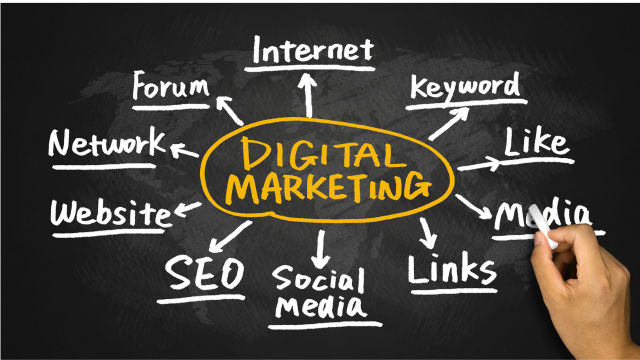
Data-driven marketing performance does not mean following every metric blindly.
It means using evidence to improve decisions.
Start by connecting each metric to a business question.
Instead of asking:
“What was our CTR?”
ask:
“Which campaign generated customers at an acceptable acquisition cost?”
Combine data sources where practical.
Advertising platforms show media performance.
Analytics tools show website behaviour.
CRM systems may show which leads become actual customers.
Finance systems reveal revenue and profitability.
Looking only at advertising dashboards can produce misleading conclusions.
Lead-generation businesses should pay particular attention to lead quality.
If one campaign generates 100 leads and only two become customers while another generates 30 leads and ten become customers, the smaller campaign may be far stronger.
Use dashboards to surface patterns, then investigate the cause.
Data should support judgement rather than replace it.
How to Improve Digital Marketing ROI
Improving ROI requires increasing valuable outcomes, reducing unnecessary cost or both.
Start with revenue quality.
Not every conversion has equal value.
A customer who makes one £20 purchase is different from a customer who spends £1,000 over several years.
Where possible, connect marketing performance systems with actual customer and revenue information.
Next, reduce wasted spend.
Pause campaigns that repeatedly attract irrelevant users.
Refine targeting.
Remove unnecessary software subscriptions.
Improve landing pages before increasing advertising budgets.
Retention can also improve ROI.
Acquiring new customers is only part of marketing. Email, loyalty programmes, useful onboarding and customer communications may generate additional value from people already acquired.
Businesses should also calculate the broader cost of marketing, not just media spend.
Agency fees, software, creative production and internal labour may all matter when evaluating true return.
The objective is profitable growth rather than the lowest possible advertising cost.
How to Measure Digital Marketing Performance
Begin with a measurement plan.
Identify the business outcomes that matter and define how they will be recorded.
In Google Analytics, important user behaviours can be configured as key events.
Advertising conversions can then be used to measure and optimise campaign performance.
Track results at several levels.
Channel level: SEO, email, paid search, social.
Campaign level: individual initiatives and offers.
Landing-page level: whether traffic converts.
Customer level: whether acquired users produce long-term value.
Attribution also needs care.
A customer may see a social advert, later search the brand, read an email and finally purchase through a direct visit.
Giving all credit to the final interaction can hide the role other channels played.
No attribution model provides perfect truth.
Marketers should therefore interpret attributed revenue as useful evidence rather than an infallible record of causation.
How to Optimise Underperforming Marketing Campaigns
Do not immediately rebuild the entire campaign.
First locate the failure.
Low impressions
Check targeting, bids, budgets, search demand or distribution.
High impressions but few clicks
Review creative, audience relevance and message.
Strong traffic but poor conversion
Investigate the landing page, offer, form and mobile experience.
Many leads but few sales
Review lead quality and targeting.
Good conversions but weak profitability
Examine acquisition cost, pricing, margins and customer lifetime value.
Change one meaningful area at a time where possible.
This makes it easier to understand what caused the result.
Campaigns should also be allowed enough time to generate usable data.
Making daily changes based on small fluctuations can prevent automated systems from stabilising and make performance harder to interpret.
Record experiments.
marketing performance team should know what changed, why it changed and what happened afterwards.
Optimisation becomes much stronger when previous learning is preserved.
Common Digital Marketing Mistakes to Avoid
One of the biggest mistakes is optimising for vanity metrics.
Large numbers of impressions or followers can look impressive without producing meaningful results.
Another mistake is spreading budgets too thinly.
A small company may achieve better results by performing strongly on two relevant channels than maintaining weak campaigns across eight.
Other common problems include:
- failing to define conversions;
- publishing generic content;
- ignoring landing pages;
- using poor-quality customer data;
- automating irrelevant messages;
- changing campaigns too frequently;
- failing to test creative;
- treating attribution reports as absolute truth.
Businesses should also avoid chasing every new marketing performance trend.
A platform can be growing rapidly without being useful for a particular customer group.
Another mistake is increasing spending before fixing the conversion journey.
Sending twice as many visitors to a weak website usually creates twice as much wasted traffic.
Future Trends in Digital Marketing Performance
AI will continue to influence nearly every part of digital marketing performance.
Advertising platforms are already automating bidding, audience selection, creative combinations and measurement.
Generative tools are accelerating research and production.
The next stage is likely to involve more autonomous marketing workflows that can analyse performance and recommend or execute changes across multiple systems.
This increases the value of high-quality data.
AI systems optimise according to the signals they receive. If conversion tracking is inaccurate or low-quality leads are treated as successful outcomes, automation may optimise towards the wrong behaviour.
Search is also changing.
AI-supported search experiences increasingly answer questions directly while still surfacing external sources. That makes distinctive, useful content more important rather than less.
First-party customer data will remain strategically valuable as privacy rules and platform restrictions continue affecting third-party tracking.
Creative quality will also matter more.
When AI makes average content easy to produce, genuinely distinctive ideas, customer insight and brand identity become more valuable.
The future of marketing performance is therefore likely to combine stronger automation with stronger human judgement.
Key Takeaways
Learning how to improve digital marketing results begins by defining what a meaningful result actually is.
Track commercial outcomes rather than relying only on clicks, impressions or followers.
Use SEO to attract relevant search demand rather than traffic for its own sake.
Create content that adds genuine value.
Segment email audiences and respect UK marketing performance rules.
Use paid advertising with accurate conversion tracking and appropriate value signals.
Improve landing pages before simply buying more traffic.
Use automation and AI to reduce repetitive work while keeping human oversight.
Connect campaign data with CRM and revenue information where possible.
Above all, evaluate online campaigns according to their contribution to sustainable ROI, not according to how much activity they generate.
Frequently Asked Questions
How can I improve my digital marketing results?
Start by identifying the business outcome you want and measuring the customer journey towards it.
Then review targeting, creative, content, landing pages, conversion tracking and follow-up processes.
Anyone researching how to improve digital marketing results should optimise the weakest stage rather than making random changes across every marketing channel.
What is the best way to improve digital marketing performance?
The best approach is continuous testing based on reliable data.
Define meaningful conversions, measure current performance, identify the biggest constraint and make a focused change.
Repeat the process after enough data has been collected to evaluate the result.
Which digital marketing metrics should I track?
Useful metrics include conversions, conversion value, cost per acquisition, revenue, ROAS and customer acquisition cost.
Diagnostic measures such as impressions, clicks, CTR and conversion rate can explain why performance changes.
The right combination depends on whether the campaign aims to generate sales, leads, subscriptions or another business outcome.
How can SEO improve digital marketing results?
SEO can bring relevant visitors to the website when they are actively searching for information, products or services.
Good SEO combines search-intent research, useful content, technical accessibility and strong internal linking.
It should be evaluated according to qualified traffic and business outcomes rather than rankings alone.
How can I increase digital marketing ROI?
Increase the value generated from existing spending and remove unnecessary cost.
Improve targeting, conversion rates, lead quality and retention.
Reduce spend on campaigns that consistently produce poor-quality customers.
Where possible, connect marketing data with real sales and customer value so budget decisions reflect commercial outcomes.
How can AI improve digital marketing performance?
AI can support audience analysis, campaign optimisation, content variations, workflow automation, data analysis and advertising bidding.
It can save time and help marketers process more information.
However, AI still requires accurate data, clear objectives and human review. Automating a poor strategy can make poor decisions happen faster.
How do I measure digital marketing success?
Define the business objective first.
Then track the conversions and revenue connected with that goal.
Use analytics, advertising platforms and CRM data together where possible.
Compare results with cost and review customer quality rather than evaluating success through traffic or engagement alone.
Why is my digital marketing campaign not working?
Possible reasons include weak targeting, poor creative, unclear offers, low search demand, inaccurate conversion tracking, slow landing pages, complicated forms or poor-quality leads.
Review the campaign as a funnel.
Identify where potential customers stop progressing and investigate that stage before making large-scale changes.

Conclusion
Understanding how to improve digital marketing results is ultimately about replacing activity-led marketing with evidence-led marketing.
A strong campaign starts with the audience and business objective. SEO and content can capture relevant demand. Social media can build awareness and engagement. Email can strengthen customer relationships, while paid advertising provides scalable acquisition when targeting and conversion measurement are reliable.
The website then has to turn that attention into action.
This is why marketing performance cannot be improved by looking at channels independently. An excellent advert can still fail because of a weak landing page. Strong SEO can produce little commercial value if the content attracts the wrong intent. High email engagement may mean little if subscribers never become customers.
AI and automation can improve efficiency across online campaigns, but their effectiveness depends on the quality of the underlying data and strategy. Accurate conversion tracking, meaningful value signals and human judgement remain essential.
Tyne Academy has previously offered digital-marketing training covering areas including content, SEO, email, social media and PPC. That particular externally listed programme is currently marked unavailable, so learners should check Tyne Academy’s live catalogue before relying on older course listings. Tyne Academy’s provider-level CPD approval also does not automatically make every digital-marketing programme independently CPD-approved or a regulated qualification.
For businesses, the central lesson is simpler: track what creates value, improve the weakest stage of the customer journey and test changes carefully.
The best digital marketing is not the campaign that generates the most numbers on a dashboard. It is the marketing that consistently reaches suitable customers, creates useful actions and delivers sustainable ROI.