
Understanding how to improve local business SEO means making it easier for search engines and potential customers to understand three things: what your business does, where it operates and why it deserves to appear for a relevant local search.
For many businesses, that involves two connected areas.
The first is the Google Business Profile, which can appear in Google Search and Maps.
The second is the business website, which supports broader local search visibility through useful pages, accurate location information, relevant content, backlinks and sound technical SEO.
Good local SEO is not about forcing a town name into every paragraph or creating dozens of nearly identical location pages.
It is about improving relevance, prominence and customer usefulness while maintaining accurate business information across the web.
Google itself says local results are mainly based on relevance, distance and prominence. That means businesses can influence many aspects of local visibility, but they cannot control every result because the searcher’s location also matters.
This guide explains how to strengthen those controllable factors and track whether local rankings and customer actions improve.
What Is Local SEO and Why Is It Important for Businesses?
Local SEO is the process of improving a business’s visibility for searches connected with a particular geographical area.
Examples include:
- accountant in Leeds;
- emergency plumber Bristol;
- family solicitor Manchester;
- coffee shop near me;
- dentist in Birmingham; and
- electrician open now.
These searches often show conventional organic results alongside Google Maps or other local results.
Local SEO therefore covers more than a website.
It may involve:
- Google Business Profile;
- website optimisation;
- customer reviews;
- business listings;
- local links;
- structured data;
- location pages;
- mobile experience; and
- reputation management.
The objective is not merely visibility.
The business ultimately wants customers to take an action such as calling, requesting directions, making a booking, visiting a store or submitting an enquiry.
That means local SEO performance should eventually be connected with customer outcomes rather than measured only through keyword positions.
Why Local SEO Matters for Small and Local Businesses
Small businesses often compete against companies with much larger marketing budgets.
Local intent can narrow that competition.
A small independent accountant in Sheffield does not necessarily need to outrank every accounting website in the UK.
It may need strong visibility among people searching for accountants within Sheffield and nearby areas.
Google’s local system is particularly relevant because distance is one of its principal local-ranking considerations.
This can create opportunities for genuinely local businesses.
Local searches can also demonstrate strong commercial intent.
Someone searching for “roof repair near me” is probably closer to choosing a provider than someone reading a broad article about different roofing materials.
That makes local visibility valuable to businesses such as:
- restaurants;
- retailers;
- professional services;
- healthcare practices;
- trades;
- hospitality businesses;
- salons;
- gyms; and
- local service providers.
Businesses with several physical locations can also use local SEO to make each branch easier to discover.
Key Benefits of Improving Local SEO
Better local SEO can improve visibility across Search and Maps.
It can also make the business easier to evaluate once discovered.
An accurate Business Profile gives potential customers useful information such as opening hours, services, address and reviews.
Strong local SEO may also support:
- more phone enquiries;
- more direction requests;
- increased store visits;
- online bookings;
- qualified website traffic;
- stronger local brand recognition; and
- better visibility against nearby competitors.
Another benefit is credibility.
Consistent information across the website, Google and established business directories makes it easier for users to confirm they have found the correct company.
Local SEO can also produce compounding value.
A useful local guide may attract links.
Those links can strengthen the site’s authority.
Positive customer experiences may create genuine reviews.
Reviews may make the profile more attractive and can contribute to Google’s understanding of local prominence.
Local SEO is therefore better viewed as an ecosystem than a collection of isolated tactics.
How to Conduct a Local SEO Audit
Start by assessing the business as a customer would encounter it.
Search for:
- the business name;
- primary services;
- important service-plus-location terms;
- branded variations; and
- relevant local competitors.
Then review several areas.
Google Business Profile
Check verification, categories, address, service area, telephone number, hours, website link, photographs and business description.
Website
Review titles, headings, contact information, location pages, internal linking, mobile usability and technical problems.
Reviews
Look at volume, recency, overall sentiment and whether the business responds.
Citations
Check whether important business listings show accurate information.
Backlinks
Identify local organisations, trade bodies, suppliers or publications linking to competitors but not your site.
Tracking
Confirm Google Search Console, analytics and Business Profile performance data are available.
An audit should produce priorities.
Do not make 40 changes simply because a tool generated 40 warnings.
Fix issues most likely to affect customers and visibility first.
How to Optimize Your Google Business Profile
Your Google Business Profile is one of the most important local-search assets available to an eligible business.
Google recommends keeping information complete, accurate and current.
Start with the business name.
Use the real-world name rather than stuffing services or town names into it.
Google specifically requires businesses to represent their names as they are consistently known in the real world. Adding unnecessary information can lead to profile problems or suspension.
Then review:
- primary category;
- secondary categories where genuinely applicable;
- address or service area;
- telephone number;
- website;
- opening hours;
- special hours;
- business description;
- attributes;
- products or services where available;
- photographs; and
- videos.
Choose the most accurate category rather than the category you think contains the best keyword.
Keep holiday and temporary hours updated.
Upload authentic images showing the premises, products, team or completed work where appropriate.
Google’s Profile Strength Indicator can help identify missing information in verified profiles.
Completeness does not guarantee a particular ranking, but incomplete information makes it harder for users and Google to understand the business.
How to Choose the Right Local Keywords

Local keyword research should begin with customer language.
Think about the service and location together.
For example:
- employment solicitor Bristol;
- boiler repair Nottingham;
- wedding photographer York;
- physiotherapy Cardiff; and
- vegan restaurant Brighton.
Then consider longer queries.
A customer may search:
emergency electrician in South London
or:
accountant for small business in Glasgow.
Use Google Search Console, Business Profile search terms, customer questions, paid-search information and keyword tools to identify real language.
Do not optimise every page around dozens of tiny variations such as:
- plumber London;
- London plumber;
- plumbers in London;
- best plumber London.
Modern search engines understand variation.
Focus instead on creating the strongest page for the underlying need.
Also distinguish informational and commercial intent.
“What does conveyancing cost?” deserves a different page from “conveyancing solicitor Newcastle”.
Keyword selection should map to useful content, not merely produce a spreadsheet.
How to Optimize Your Website for Local Search
Your website should clearly explain what you offer and where.
Make important business information easy to find.
A local business website will often benefit from clear:
- service pages;
- contact information;
- location information;
- opening hours;
- About page;
- testimonials or case studies where appropriate; and
- location pages for genuine branches.
Keep contact information consistent with the Business Profile.
Create useful page titles and headings.
For example:
Commercial Cleaning Services in Leeds | Business Name
is clearer than:
Welcome to Our Website
Use internal links between relevant services and locations.
Add a clear contact or booking route.
Google’s current page-experience guidance also encourages secure delivery, good mobile usability and Core Web Vitals. These are part of creating a satisfactory user experience, although no single score guarantees a top position.
The website should serve customers first.
Local optimisation should improve clarity rather than make pages sound artificially repetitive.
How to Create Location-Specific Content
Location-specific content can be valuable when it genuinely helps someone in that location.
Useful examples include:
- individual branch pages;
- local service-area information;
- neighbourhood guides relevant to the business;
- local case studies;
- local event coverage;
- regional regulations or processes;
- delivery information; and
- customer success stories.
Suppose an estate agent operates in several parts of Birmingham.
Rather than generating dozens of thin pages that replace only the neighbourhood name, it could create substantive area pages including property types, transport, local amenities and relevant market context.
A solicitor with offices in Manchester and Liverpool might create separate office pages with correct addresses, directions, staff and contact information.
Avoid doorway-style pages created primarily to capture keyword variations without meaningful differences.
If the business does not genuinely operate in a location, do not pretend that it does.
Good local content demonstrates real relevance.
How to Build and Manage Local Citations
A citation is an online reference to business information, commonly including the name, address and telephone number.
Citations may appear on:
- industry directories;
- local chambers of commerce;
- professional bodies;
- trusted business directories;
- local websites; and
- mapping or navigation services.
Google states that it can source Business Profile information from public web content, licensed third-party data and users as well as information supplied by business owners.
This makes accuracy important.
Check for:
- old telephone numbers;
- former addresses;
- incorrect business names;
- duplicate listings; and
- closed locations.
Do not pursue hundreds of low-quality directories simply to increase the citation count.
Prioritise reputable, relevant sources.
BrightLocal’s Citation Tracker, for example, can audit where a business is listed and identify inaccurate data and competitor citation opportunities. Its Citation Builder can separately create or correct listings.
Citations should reinforce business identity, not create spam.
How to Get More Customer Reviews
Reviews are important for both customers and local search.
Google says review count and review score can contribute to local prominence and that more reviews and positive ratings can help local ranking.
The safest approach is straightforward:
Ask genuine customers for honest reviews.
Google provides businesses with a review link and QR code that can be included in places such as:
- thank-you emails;
- receipts;
- post-service messages; and
- in-store displays.
Timing matters.
Ask after the customer has genuinely experienced the service.
Do not offer rewards for positive reviews.
Google prohibits incentives such as free or discounted goods or services in exchange for posting, changing or removing reviews.
Do not selectively pressure only happy customers to create an artificially perfect profile.
A credible review profile develops naturally from genuine customer experiences.
How to Respond to Google Reviews Effectively
Responding to reviews demonstrates that the business pays attention to customer feedback.
Google also recommends replying and says helpful responses can help businesses stand out.
For positive reviews, keep replies personal but concise.
Avoid copying the same response dozens of times.
For negative reviews:
- Remain professional.
- Acknowledge the concern.
- Avoid arguing publicly.
- Protect customer privacy.
- Correct obvious misunderstandings calmly.
- Offer an appropriate route to continue the conversation.
Do not reveal confidential information simply to defend the business.
A negative review can sometimes become evidence of good customer service if the response is calm and constructive.
If a review clearly violates Google’s policies, use Google’s reporting process rather than attacking the reviewer publicly. Businesses cannot directly delete someone else’s review simply because they dislike it.
How to Build High-Quality Local Backlinks
Backlinks remain relevant to local visibility because Google includes information from links and websites when assessing prominence.
Useful local links may come from:
- chambers of commerce;
- professional associations;
- suppliers;
- local newspapers;
- community organisations;
- charities;
- universities or colleges;
- event websites;
- complementary local businesses; and
- industry publications.
Earn links by creating something worth referencing.
Examples include original local research, useful guides, sponsorships, expert commentary or genuinely newsworthy business activity.
Avoid purchasing large numbers of low-quality links.
Local relevance can matter more than raw volume.
A link from a respected local trade body may be far more credible than dozens of unrelated directory pages.
Competitor research can also help.
Look at where established local competitors earn legitimate links and identify opportunities relevant to your business.
How to Improve Local On-Page SEO
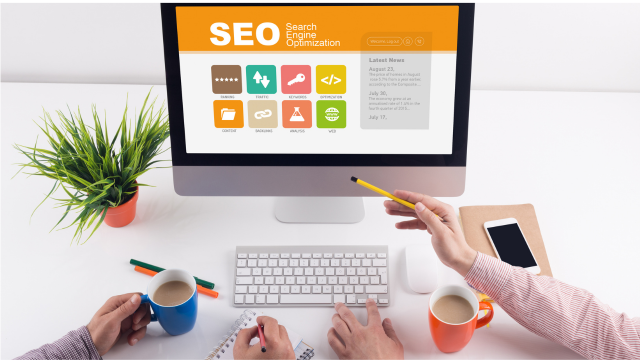
On-page SEO helps search engines understand individual website pages.
Focus on fundamentals.
Page title
Describe the service and location naturally.
H1 heading
Make the primary subject obvious.
Main content
Explain the service thoroughly and answer customer questions.
Internal links
Connect relevant services, locations and supporting resources.
Contact details
Make location and contact information easy to find.
Images
Use useful images and descriptive alternative text where appropriate.
Structured data
Google supports LocalBusiness structured data to communicate details such as business name, address, telephone number, opening hours and relevant business type.
Structured data does not guarantee rankings or a particular search feature.
It helps machines understand information already represented accurately on the page.
Avoid stuffing town names into every heading.
A page should sound as though it was written for a customer, not an algorithm.
How to Optimize for “Near Me” Searches
Businesses do not normally need to write “near me” repeatedly on their websites.
The phrase reflects the searcher’s location.
Google can use location information when somebody searches for something nearby, including queries such as “salons near me” or “open now”.
To improve eligibility and relevance:
- maintain an accurate Business Profile;
- provide the correct address or service area;
- choose accurate categories;
- maintain current opening hours;
- build relevant local website content;
- earn genuine reviews;
- strengthen local prominence; and
- ensure the website clearly identifies the business location.
Distance cannot be manipulated legitimately.
A business five miles away cannot guarantee it will outrank a suitable competitor around the corner for every searcher.
That is why local rank reports should be interpreted geographically.
A business may rank strongly around its premises and differently several miles away.
“Near me” optimisation is therefore mostly strong local SEO plus accurate location information.
How to Improve Local Mobile SEO
Local searches frequently happen when users need something quickly.
That makes mobile experience especially important.
Check that:
- pages load efficiently;
- text is easy to read;
- menus work on smaller screens;
- telephone numbers are clickable;
- forms are simple;
- buttons are easy to use;
- directions are accessible; and
- intrusive overlays do not block content.
Google’s current page-experience guidance explicitly recommends that content display well on mobile devices and that websites provide a strong overall user experience.
Think about the intent behind local mobile searches.
Someone looking for an emergency plumber probably wants the telephone number immediately.
Someone searching for a restaurant may want directions, opening hours and a menu.
Design the mobile experience around that need.
Mobile SEO is not simply shrinking the desktop design.
It is prioritising the information a mobile customer is most likely to need.
Best Local SEO Tools for Businesses
A useful local SEO toolkit does not need to be huge.
| Tool | Best use |
| Google Business Profile | Managing Search and Maps presence |
| Google Search Console | Organic queries, pages and technical visibility |
| Google Analytics | Website behaviour and conversions |
| BrightLocal | Local rankings, citations, audits and reviews |
| Semrush Local | Listings, GBP management and map tracking |
| PageSpeed Insights | Page performance and Core Web Vitals |
| Rich Results Test | Checking supported structured data |
Google Business Profile Performance
Verified businesses can view searches, views and customer interactions through Business Profile performance reporting.
BrightLocal
BrightLocal currently offers Local Rank Tracker, Local Search Grid, Citation Tracker, GBP Audit and Local Search Audit. Higher plans add listing and review-management functions.
Its Local Search Grid is particularly useful because it measures rankings from multiple geographical points rather than assuming the business has one universal local position.
Semrush Local
Semrush Local currently combines GBP management with map-rank tracking, with higher tiers adding listing and review management.
Use tools to identify opportunities.
Do not treat automated recommendations as ranking guarantees.
How to Track Local SEO Rankings and Performance
Local SEO measurement should combine visibility with customer action.
Track:
Google Business Profile searches
Which searches cause the profile to appear?
Views and interactions
Google Business Profile performance can report views and customer actions on Search and Maps.
Website organic traffic
Use analytics to understand visits to important local pages.
Search Console queries
Monitor relevant local queries, impressions and clicks.
Calls and enquiries
Track whether visibility creates leads.
Bookings or sales
Where possible, connect local search with real commercial outcomes.
Reviews
Monitor volume, sentiment and response activity.
Geographic rankings
Use a local grid tool if ranking visibility across several neighbourhoods matters.
Avoid obsessing over one manual search from your own device.
Search results can vary according to location and other contextual factors.
Look for broader trends.
A move from position four to position three matters only if it contributes to more useful visibility and customer activity.
Common Local SEO Mistakes to Avoid
One of the biggest mistakes is keyword-stuffing the Business Profile name.
Other common problems include:
- inaccurate categories;
- outdated opening hours;
- duplicate profiles;
- inconsistent contact details;
- buying fake reviews;
- incentivising reviews;
- ignoring negative feedback;
- creating thin location pages;
- copying content across dozens of towns;
- building low-quality directory links;
- forgetting mobile users;
- neglecting the website because the Business Profile ranks well;
- using structured data inaccurately;
- tracking only one keyword;
- expecting identical rankings everywhere; and
- assuming every ranking change was caused by the latest SEO edit.
Another mistake is promising a business the number-one local position.
Google explicitly says there is no way to request or pay for better organic local ranking, and distance remains partly outside the business’s control.
Local SEO should improve probability and visibility, not promise a fixed position.
Future Trends in Local SEO
Local search is becoming more connected with AI-driven discovery.
Google’s Search documentation changed again in September 2026 to add support for local-business queries within newer search-experience units, illustrating that business information is increasingly being reused across evolving search interfaces.
This increases the importance of accurate entity information.
Businesses need consistent:
- names;
- locations;
- services;
- categories;
- opening hours;
- website information; and
- reputation signals.
AI does not make these fundamentals obsolete.
It makes clean business information more valuable.
Local SEO tools are changing as well.
BrightLocal now includes AI visibility tracking alongside conventional Google local ranking tools, while Semrush’s Local Toolkit includes AI-assisted Google Business Profile management.
Reviews are likely to remain important because they provide both reputation information and first-hand customer context.
Search is also becoming more multimodal.
Images, videos and rich business information can help users evaluate local businesses before visiting the website.
The broader trend is therefore away from thinking of local SEO as “ten blue links”.
Businesses need consistent visibility across Maps, profiles, organic pages and emerging AI-supported discovery experiences.
Key Takeaways
Understanding how to improve local business SEO requires strengthening both the business profile and website.
A strong strategy should:
- verify and complete the Google Business Profile;
- maintain accurate hours, categories and contact information;
- choose realistic local keywords;
- create useful service and location pages;
- maintain accurate local citations;
- request genuine customer reviews;
- respond professionally to feedback;
- earn relevant local backlinks;
- improve on-page SEO;
- use suitable LocalBusiness structured data;
- make mobile customer journeys easy;
- track performance geographically; and
- measure enquiries and sales as well as rankings.
Strong local search performance comes from relevance, local credibility and accurate information—not shortcuts.
Frequently Asked Questions
How can I improve local business SEO?
Start by fully completing and verifying your Google Business Profile, then make sure your website clearly explains your services and locations. Maintain accurate citations, earn genuine reviews, improve mobile usability, create useful local content and build relevant backlinks. Track enquiries and other business outcomes alongside search visibility.
What is the best local SEO strategy?
The strongest strategy combines Google Business Profile optimisation with a well-structured website, genuine reviews, accurate citations, locally relevant content and credible backlinks. Priorities should depend on the weaknesses revealed by an audit rather than following one identical checklist for every business.
How can I improve my Google Business Profile?
Keep your business information complete and accurate, including the correct real-world name, category, address or service area, opening hours, contact information and website. Add useful photos, monitor suggested changes, request genuine reviews and respond professionally to customer feedback.
How can I rank higher in local Google searches?
Improve factors within your control: relevance, profile completeness, website quality, reviews, prominence and accurate business information. However, Google also considers distance, so no business can guarantee the same local ranking to every searcher.
What are the best local SEO tools?
Google Business Profile, Search Console and Analytics provide a strong free foundation. BrightLocal is useful for geo-grid rankings, citations and local audits, while Semrush Local combines map tracking, profile management, listings and review tools. PageSpeed Insights and Google’s Rich Results Test can support website optimisation.
How do customer reviews affect local SEO?
Google states that review count and review score can influence local prominence and that more reviews and positive ratings can help local ranking. Reviews also influence customer decisions. Businesses should request genuine feedback without incentives and respond professionally.
How can I rank for “near me” searches?
Maintain accurate location information, choose relevant Business Profile categories, optimise your website for real services and locations, build prominence and gather genuine reviews. You normally do not need to repeat the phrase “near me” throughout your website because Google uses information about the searcher’s location when interpreting nearby searches.
How long does it take to improve local SEO?
There is no fixed timeframe. Some Business Profile edits may appear relatively quickly—Google says profile-information changes can take up to three days to update in search results—while rankings may take much longer to respond to website, review, backlink and prominence improvements. Google also notes that rankings for a new business can take up to a month to begin appearing. Sustainable local SEO usually develops over weeks and months rather than overnight.

Conclusion
Learning how to improve local business SEO is mainly about making the business easier for both customers and search engines to understand and trust.
Start with the Google Business Profile.
Verify it.
Use the real business name.
Choose the right categories.
Keep opening hours and contact information accurate.
Add useful images and monitor the profile for changes.
Then strengthen the website.
Create clear service pages and genuine location pages. Improve mobile usability. Use sensible internal linking and, where appropriate, LocalBusiness structured data.
Reviews deserve particular attention.
Google explicitly confirms that review count and rating can contribute to local prominence. Businesses can make review collection easier using Google’s review links and QR codes, but they should never buy reviews or provide incentives in exchange for favourable feedback.
Local citations and backlinks also contribute to the wider picture.
Accurate listings help reinforce business information, while links and mentions from legitimate local and industry sources can strengthen prominence.
The key limitation is distance.
Google’s local rankings depend partly on how far the relevant business is from the searcher or location specified in the query. That means local SEO cannot guarantee that one business will appear first to everybody across an entire city.
Measure accordingly.
Use Business Profile performance, Search Console, website analytics and local rank-grid tools to understand visibility. More importantly, measure calls, bookings, enquiries, visits and sales.
Tyne Academy currently provides a broad catalogue of online professional learning and has recently offered marketplace courses containing SEO, digital marketing, marketing analytics and PPC modules. However, the relevant dedicated digital-marketing listings checked for this article are currently shown as unavailable, and I could not verify a live specialist local-SEO qualification in Tyne Academy’s present catalogue. It is therefore better viewed as a broader supplementary learning provider rather than evidence of specialist local-search accreditation.
Ultimately, successful local search optimisation comes back to three ideas:
Be relevant to what the customer needs.
Make your location and business information accurate.
Build enough genuine prominence that customers and search engines have reasons to trust you.
Those fundamentals remain the strongest route to sustainable local visibility.