Knowing how to improve online marketing strategy is increasingly important because digital marketing is no longer about running a few isolated advertisements or posting regularly on social platforms.
Customers can discover a business through Google, compare it on social media, read several articles, click a paid advertisement, join an email list and return weeks later before eventually buying.
An effective strategy needs to connect those interactions.
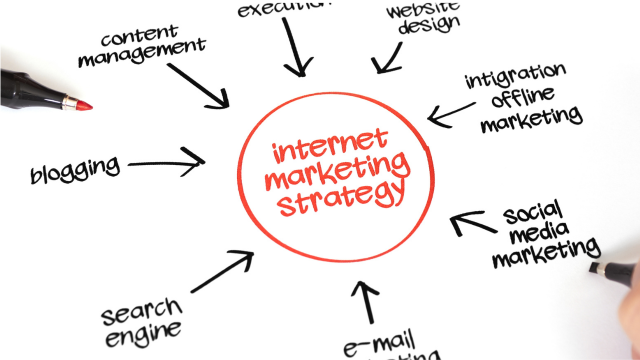
That means coordinating SEO, PPC, social media, content, email, analytics and other digital campaigns around clear commercial objectives rather than treating every channel as a separate activity.
The strongest online marketing strategies tend to have three characteristics: they target a clearly defined audience, measure meaningful outcomes and continually improve based on evidence.
This guide explains how businesses can build that kind of approach.
What Is an Online Marketing Strategy?
An online marketing strategy is a structured plan for attracting, engaging and converting customers through digital channels.
It defines:
- who you want to reach;
- what you want them to do;
- which channels you will use;
- what message you will communicate;
- how much you will invest;
- how campaigns will work together; and
- how success will be measured.
A strategy is different from a collection of tactics.
Running Google Ads is a tactic.
Publishing on LinkedIn is a tactic.
Writing blog posts is a tactic.
A strategy explains why those activities exist and how they work together to achieve a business goal.
For example:
Increase qualified enquiries from UK small businesses by 25% over six months through organic search, paid search, LinkedIn content and email nurturing.
That objective creates a much clearer basis for decision-making than simply saying:
We need to do more digital marketing.
Why Businesses Need a Strong Online Marketing Strategy
Without an overall strategy, marketing activity often becomes fragmented.
One employee focuses on Instagram.
An agency runs Google Ads.
Someone else writes articles.
The sales team collects leads.
Yet nobody has a complete view of:
- which audiences are most valuable;
- where leads originate;
- which messages convert;
- what customers search for;
- what happens after a lead is generated; or
- which channels justify further investment.
That leads to wasted budget.
A coordinated strategy helps businesses decide where resources can have the greatest impact.
Customer journeys are rarely linear
People do not always discover a brand and immediately buy.
A customer might:
- search for information;
- read a blog article;
- leave the site;
- see a social post;
- click a retargeting ad;
- subscribe to an email list;
- compare alternatives; and
- eventually convert.
Marketing therefore needs to support different stages of awareness and consideration.
Competition is increasing
Most industries now compete for visibility in:
- organic search;
- paid search;
- social feeds;
- inboxes;
- video platforms; and
- AI-assisted discovery.
A clear strategy helps prevent businesses from spreading their budget too thinly across every available channel.
Key Benefits of Improving Your Digital Marketing Strategy
A stronger strategy can improve several areas of performance.
Better use of budget
Businesses can spend more on channels that produce qualified results and reduce investment in activity that creates little commercial value.
Clearer targeting
Better audience definition improves:
- advertising;
- messaging;
- content;
- landing pages; and
- offers.
Stronger measurement
Instead of tracking superficial metrics, the business can connect marketing activity with:
- enquiries;
- sales;
- revenue;
- customer acquisition cost; and
- retention.
Greater consistency
When channels work from the same positioning and customer understanding, the brand feels more coherent.
Faster learning
A structured testing process creates evidence about what works.
Marketing becomes less dependent on opinions.
Start With Clear Marketing Goals
Improvement begins by defining what the strategy is supposed to achieve.
Avoid vague goals such as:
- increase awareness;
- grow social media;
- get more traffic; or
- improve engagement.
These can be useful ambitions, but they need measurable outcomes.
A stronger target might be:
Generate 150 qualified enquiries during Q1 at an average acquisition cost below £45.
Or:
Increase organic revenue from non-brand search traffic by 20% within nine months.
Connect marketing goals to business goals
Marketing should support priorities such as:
- revenue growth;
- customer acquisition;
- repeat purchases;
- geographic expansion;
- launching a new service; or
- entering a new audience segment.
If a campaign performs well according to marketing metrics but contributes little to the business objective, it may not actually be successful.
Understand Your Target Audience Better
Good digital marketing starts with understanding the person behind the click.
Businesses should know:
- what customers need;
- what problems they are trying to solve;
- how they describe those problems;
- which objections they have;
- what influences their decisions;
- which channels they use; and
- what would make them trust one provider over another.
Use real customer evidence
Useful sources include:
- customer interviews;
- sales calls;
- support conversations;
- website search data;
- Google Search Console;
- survey responses;
- product reviews;
- social comments; and
- lost-deal analysis.
Do not build buyer personas entirely from imagination.
A persona is useful only when it reflects actual behaviour.
Segment when necessary
Different customers may require different messages.
For example, a training provider may serve:
- career changers;
- existing professionals;
- employers;
- students; and
- people seeking CPD.
One generic marketing message may not work equally well for all of them.
Build a Strong SEO Strategy
SEO can provide sustained visibility because useful pages may continue attracting relevant visitors long after publication.
Google describes SEO as helping search engines understand content while helping users find the site and decide whether it is relevant to them.
Focus on search intent
Do not create content simply because a keyword has search volume.
Ask why the person is searching.
Someone searching:
what is project management
may be learning.
Someone searching:
best project management course UK
may be comparing options.
Someone searching:
project management course online enrol
may be close to purchasing.
Your content should match the intent.
Create useful content clusters
Instead of publishing isolated posts, build depth around important commercial topics.
For example:
Main topic: Digital marketing
Supporting content:
- SEO basics;
- PPC strategy;
- social media marketing;
- email marketing;
- content marketing;
- digital analytics; and
- marketing automation.
Internal links then help both users and search engines understand how the content relates.
Update existing pages
Google’s current guidance specifically recommends keeping useful content up to date.
Before creating another article, review existing pages for:
- outdated facts;
- missing sections;
- weak titles;
- poor internal linking;
- declining rankings;
- thin explanations; and
- outdated examples.
Refreshing a strong page can sometimes deliver faster results than publishing something entirely new.
Avoid keyword stuffing
Google explicitly warns against excessive keyword repetition.
Use relevant terms naturally and focus on answering the user’s question properly.
Improve Your PPC Strategy

PPC can generate visibility much faster than organic search, but poor campaign design can also consume budget quickly.
Start with conversion tracking
Do not optimise paid advertising primarily around clicks.
Define meaningful actions such as:
- purchases;
- enquiries;
- calls;
- demo bookings;
- applications;
- subscriptions; or
- qualified leads.
If conversion measurement is unreliable, automated bidding will also have weaker information to work with.
Match campaigns to customer intent
Search campaigns are particularly useful for people actively expressing demand.
Someone searching:
emergency plumber Newcastle
shows very different intent from someone casually viewing home-improvement content.
Use high-intent keywords where appropriate.
Improve landing pages
Advertising performance depends on what happens after the click.
Landing pages should provide:
- clear relevance;
- compelling benefits;
- trust signals;
- simple navigation;
- fast loading;
- mobile usability; and
- an obvious next action.
A poor landing page cannot usually be rescued by better bidding alone.
Understand automation
Google is moving further towards AI-based advertising.
Performance Max uses AI across Google’s advertising inventory, while AI Max is expanding automation within Search.
Automation can help with:
- bidding;
- targeting;
- creative combinations;
- audience discovery; and
- optimisation.
But marketers still need to provide:
- accurate conversion data;
- strong creative assets;
- sensible budgets;
- appropriate exclusions;
- clear commercial goals; and
- ongoing performance review.
Automation works best when the inputs are good.
Strengthen Your Social Media Strategy
Businesses often make one of two mistakes with social media.
They either post constantly without a strategy or avoid posting because they cannot sustain every platform.
A better approach is to select channels based on the audience.
Choose platforms deliberately
A B2B consultancy may prioritise LinkedIn.
A visual consumer brand may place more emphasis on Instagram or TikTok.
A local service business may benefit heavily from Facebook and local community visibility.
You do not need to dominate every network.
Build around content pillars
Content pillars make publishing easier.
For example:
- Educational advice
- Customer stories
- Product or service information
- Industry commentary
- Behind-the-scenes content
This creates variety without making every post completely unrelated.
Adapt content to the platform
Do not automatically paste the same message everywhere.
LinkedIn’s current marketing guidance emphasises defining the audience and goals first, while its Page guidance encourages formats including video, documents, images and articles.
The message can remain consistent while the presentation changes.
Use paid and organic social together
Organic content helps:
- build trust;
- demonstrate expertise;
- engage existing audiences; and
- test ideas.
Paid social can expand reach beyond existing followers.
Strong organic content can therefore inform paid creative.
Improve Your Content Marketing Strategy
Content should help customers make progress towards a decision.
That means creating material for different stages.
Awareness content
Answers broad questions.
Examples:
- guides;
- educational videos;
- explanatory articles;
- industry commentary.
Consideration content
Helps customers compare solutions.
Examples:
- comparisons;
- case studies;
- buyer guides;
- webinars;
- product explainers.
Conversion content
Helps people take action.
Examples:
- service pages;
- pricing pages;
- demonstrations;
- consultations;
- course pages;
- free trials.
Retention content
Supports customers after purchase.
Examples:
- onboarding;
- tutorials;
- newsletters;
- product updates;
- customer education.
A strong strategy does not publish only top-of-funnel blog content.
Improve Email Marketing
Email remains valuable because businesses can communicate directly with people who have chosen to hear from them.
Use email for:
- nurturing leads;
- onboarding;
- product education;
- event promotion;
- customer retention;
- reactivation; and
- useful updates.
Segment your audience
Do not send every message to every contact.
Segmentation can reflect:
- interests;
- previous purchases;
- location;
- lifecycle stage;
- engagement; or
- customer type.
Keep permission rules in mind
UK businesses need to comply with PECR and data-protection rules.
ICO guidance states that electronic marketing rules vary depending on factors including the recipient and circumstances, and organisations must respect opt-outs.
Good marketing practice and legal compliance often point in the same direction: communicate with people who reasonably expect to hear from you and make it easy to stop.
Connect SEO, PPC and Social Media
The strongest digital strategies create feedback between channels.
SEO can improve PPC insight
Search data can reveal:
- customer terminology;
- high-converting topics;
- questions;
- landing-page ideas.
PPC can inform SEO
Paid search can quickly test whether certain messages and keywords convert before committing months to organic optimisation.
Social media can distribute SEO content
A detailed article can become:
- a LinkedIn post;
- a short video;
- a carousel;
- an email;
- several social posts.
Paid social can retarget website visitors
Someone who reads an article may later see a relevant campaign.
That helps create continuity across the journey.
Integrated marketing is often more efficient than treating channels as separate departments.
Improve Your Digital Campaign Planning
Effective digital campaigns begin with a clear brief.
Before launch, define:
- objective;
- audience;
- offer;
- message;
- channel;
- creative;
- budget;
- landing page;
- tracking;
- deadline; and
- success metric.
Use one primary objective
Trying to optimise the same campaign for awareness, lead generation and sales can create confusion.
Select the main purpose.
Secondary outcomes can still be monitored.
Build a testing plan
Test variables such as:
- headline;
- image;
- video opening;
- call to action;
- audience;
- landing page;
- offer; and
- format.
Avoid changing five things simultaneously and then trying to guess which change affected performance.
Improve Your Website Conversion Rate
More traffic does not automatically mean more customers.
Conversion optimisation helps the business get more value from existing traffic.
Make your value proposition obvious
Visitors should quickly understand:
- what you offer;
- who it is for;
- what benefit it provides; and
- what they should do next.
Reduce unnecessary friction
Remove excessive fields and complicated navigation.
Add trust
Depending on the business, useful signals may include:
- reviews;
- testimonials;
- case studies;
- guarantees;
- professional credentials;
- contact information; and
- transparent policies.
Optimise for mobile
Mobile usability is essential.
Google’s search guidance also recommends secure, fast, accessible websites that function properly across devices.
Measure the Right Digital Marketing KPIs
Marketing measurement should reflect business outcomes.
Useful metrics may include:
| Objective | Useful metrics |
| Awareness | Reach, impressions, branded search, video views |
| Website growth | Sessions, engaged users, organic clicks |
| Lead generation | Leads, qualified leads, conversion rate |
| Paid advertising | CPA, ROAS, conversion value |
| SEO | Organic clicks, rankings, conversions |
| Click rate, conversions, unsubscribe rate | |
| Social | Engagement, referral traffic, leads |
| Revenue | Customer acquisition cost, revenue, lifetime value |
Use Google Analytics key events
Google Analytics allows important business actions to be marked as key events so marketers can evaluate how different channels contribute to them.
Look beyond last click
Customers may interact with several channels before converting.
Google Analytics offers attribution reporting that can distribute credit across touchpoints rather than assuming the final interaction deserves all the credit.
This is particularly useful when comparing channels such as:
- organic search;
- paid search;
- email;
- social;
- referral; and
- direct traffic.
Use Marketing Automation Carefully
Automation can reduce repetitive work.
Businesses can automate:
- lead follow-up;
- email sequences;
- audience creation;
- social scheduling;
- reporting;
- CRM updates;
- remarketing;
- lead scoring; and
- campaign alerts.
But automation should improve the process rather than hide weaknesses.
A badly designed email sequence does not become good because it runs automatically.
Start with a clear customer journey, then automate appropriate parts.
How AI Can Improve Online Marketing
AI is changing almost every major digital channel.
It can support:
- keyword analysis;
- content ideation;
- ad copy;
- audience analysis;
- creative variations;
- reporting;
- forecasting;
- customer segmentation;
- campaign optimisation; and
- marketing automation.
AI can accelerate experimentation
Marketers can generate more creative versions and test them faster.
AI can help interpret data
Advertising platforms increasingly provide AI-assisted analysis.
Google Ads, for example, now includes Ask Advisor, an agentic conversational experience designed to help advertisers understand account performance and identify potential improvements.
Human judgement remains essential
AI can produce:
- incorrect facts;
- generic content;
- poor brand tone;
- inappropriate targeting suggestions;
- misleading conclusions.
Marketers should retain control over:
- positioning;
- factual verification;
- ethical decisions;
- budget allocation;
- customer understanding; and
- final approval.
Protect Privacy and Build Trust
Modern digital marketing depends heavily on data.
That means privacy is part of marketing strategy.
Review tracking technologies
UK businesses using cookies, pixels or similar technologies need to understand PECR requirements.
The ICO states that non-essential cookies generally require appropriate consent and that users should receive clear information about what those technologies do.
Respect marketing preferences
People have the right to object to direct marketing.
Businesses should maintain suppression lists and make opt-out processes straightforward.
Collect only useful data
More data is not automatically better.
Ask whether the information genuinely improves:
- targeting;
- personalisation;
- service;
- measurement; or
- customer experience.
Trust can itself become a competitive advantage.
Common Online Marketing Mistakes to Avoid
Trying every channel at once
Start where the audience and commercial opportunity are strongest.
Focusing only on traffic
Traffic without relevant conversions can become an expensive vanity metric.
Ignoring existing customers
Acquisition often receives most marketing attention, but retention and repeat business can be equally valuable.
Producing generic content
AI has made generic information extremely easy to produce.
Original examples, expertise, experience and customer insight increasingly matter.
Running PPC without reliable tracking
Automated bidding depends on conversion signals.
Bad measurement creates bad optimisation.
Posting on social media without objectives
Publishing activity should support awareness, engagement, demand generation or another defined purpose.
Changing campaigns too quickly
Automated advertising may need time to learn.
Google notes that automated-bidding campaigns can experience learning phases lasting approximately one to two weeks and occasionally longer.
Ignoring privacy rules
Consent, tracking and direct-marketing requirements should be built into campaigns from the start.
Future Trends in Online Marketing
Several developments are likely to shape digital marketing through 2027.
More AI-led advertising
Google is moving legacy Dynamic Search Ads towards AI Max from February 2027, signalling a broader shift towards AI-driven targeting and creative optimisation.
Search will become more fragmented
Traditional search engines remain important, but consumers increasingly discover information through:
- social platforms;
- video;
- marketplaces;
- AI assistants;
- forums; and
- creator content.
Businesses will need broader search visibility rather than thinking only about ten blue links.
First-party data will become more important
Privacy changes make direct customer relationships increasingly valuable.
Email lists, CRM information, customer communities and logged-in experiences can reduce dependence on third-party targeting.
Content quality will become a bigger differentiator
As AI makes average content easy to create, businesses will need more:
- expertise;
- originality;
- useful data;
- practical examples;
- case studies; and
- distinctive brand perspective.
Campaigns will become more integrated
The separation between SEO, PPC, social media and CRM will continue to weaken.
The strongest marketers will understand the whole customer journey.
Key Takeaways
Learning how to improve online marketing strategy means building a connected system rather than optimising isolated channels.
Businesses should:
- define measurable goals;
- understand their audience;
- improve search visibility through SEO;
- use PPC around clear conversion goals;
- choose social media platforms strategically;
- create content for different buying stages;
- build email relationships;
- improve landing-page conversion;
- connect channels;
- measure meaningful outcomes;
- use automation carefully;
- adopt AI selectively; and
- protect customer privacy.
For professionals developing practical digital-marketing capability, Tyne Academy offers flexible online professional-development learning across business and technology subjects and is currently recognised as an Approved CPD Provider. CPD learning can support professional skill development, although individual course status should always be checked separately.
Frequently Asked Questions
How can businesses improve their online marketing strategy?
Start by defining clear commercial goals and understanding the target audience. Then evaluate SEO, paid advertising, content, email and social channels against those goals. Improve tracking, test campaigns systematically and move budget towards activities that generate qualified leads, sales or other meaningful outcomes.
What is the most important part of an online marketing strategy?
There is no single channel that is most important for every business. The foundation is alignment between audience, objectives, messaging, channel selection and measurement. A well-targeted campaign on one channel can outperform unfocused activity across five.
How can SEO improve digital marketing?
SEO helps businesses increase visibility when people actively search for relevant information, products or services. Strong SEO combines useful content, technical accessibility, search intent, internal linking and ongoing performance monitoring through tools such as Google Search Console.
Is PPC better than SEO?
Neither is universally better. PPC can generate immediate visibility but normally requires continuous budget. SEO usually takes longer but can build sustained organic visibility. Many businesses benefit from using both and sharing insight between them.
How can social media improve online marketing?
Social media can build awareness, distribute content, demonstrate expertise, engage communities and generate leads. The strongest results usually come from choosing platforms according to audience behaviour rather than attempting to maintain a presence everywhere.
What metrics should digital marketers track?
Useful metrics include qualified leads, conversion rate, cost per acquisition, return on ad spend, revenue, organic clicks, email conversions, customer acquisition cost and lifetime value. The most useful KPI depends on the campaign objective.
How can AI improve digital marketing?
AI can support research, content development, campaign optimisation, segmentation, reporting, creative testing and automation. It should be used with human oversight because factual accuracy, brand judgement, privacy and commercial decisions remain the marketer’s responsibility.
How do you know whether an online marketing strategy is working?
Compare results with the original business objective. If the goal is sales, measure revenue, conversion rate and acquisition cost rather than impressions alone. Use analytics and attribution data to understand how multiple channels contribute, then improve the strategy through regular testing.
Conclusion
Understanding how to improve online marketing strategy starts with recognising that digital marketing is an interconnected system.
A customer might first encounter a business through social media, later find it through SEO, click a PPC advertisement and finally convert after receiving an email. Measuring each channel completely independently can therefore produce a misleading picture.
The strongest strategy connects those interactions.
Set clear goals first. Understand what customers need and where they spend their time. Create useful content around real search and buying intent. Use paid advertising where it can accelerate demand. Improve landing pages so traffic turns into action. Build direct relationships through email and customer data, and measure outcomes rather than activity.
AI and automation can make this process faster, especially across complex digital campaigns, but technology should support good marketing thinking rather than replace it.
Continual improvement is the final requirement. Review performance, identify weak points, test new approaches and invest more heavily where evidence shows genuine value.
A strong online marketing strategy is therefore never completely finished. It becomes more effective as the business learns more about its customers, its channels and the messages that actually influence decisions.