
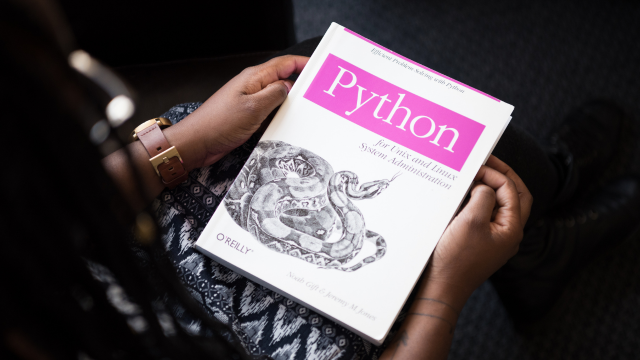
Choosing a Python certification UK learners can pursue is easier when you first decide what you actually want to do with Python.
Python is used across software development, automation, data analysis, artificial intelligence, testing and scientific computing. A beginner who wants to learn basic programming therefore needs a different training route from an experienced analyst preparing for data science careers.
There is also an important distinction between a course certificate and an independent certification. An online course may provide useful lessons and a certificate showing that you completed the programme. A professional certification normally requires a separate examination against a defined syllabus.
Neither automatically guarantees employment.
For employers, practical programming skills still matter. Someone who can explain, test and improve working Python projects may have stronger evidence of ability than somebody who has collected several certificates without writing substantial code.
This guide explains the major certification routes, current Python courses UK learners can consider, entry requirements and the careers where Python knowledge can be valuable.
What Is Python Certification and Why Is It Important?
Python certification is formal evidence that somebody has been assessed against a defined body of Python programming knowledge.
The OpenEDG Python Institute currently offers one of the clearest dedicated certification frameworks.
Its general-purpose pathway progresses through:
PCEP – Certified Entry-Level Python Programmer
PCAP – Certified Associate Python Programmer
PCPP1 – Certified Professional Python Programmer Level 1
Additional specialist tracks cover areas including data analytics, software testing, security, automation and AI.
The important word is certification.
You normally earn one of these credentials by passing an examination rather than simply completing video lessons.
Certification and course completion are different
Suppose two learners both study Python online.
The first completes a short course and receives a provider’s completion certificate.
The second studies independently and then passes the PCEP examination.
Both have evidence of learning, but the evidence is different.
The course certificate shows completion according to the provider’s arrangements.
PCEP shows that the learner passed an external examination built around a particular Python Institute syllabus.
Neither proves that the person is an experienced professional developer.
That still requires practical application.
Is Python certification legally required in the UK?
No.
Software development is not a regulated occupation in the UK requiring a statutory Python licence.
Employers decide what education, experience and certifications they want applicants to have.
Some vacancies emphasise computer science degrees.
Others prioritise commercial experience, portfolios, apprenticeships or knowledge of a particular technology stack.
Python certification is therefore an optional professional-development tool rather than legal permission to work.
Why Python Is an Important Skill for Technology Careers in the UK
Python’s value comes partly from its versatility.
The same language can be used to build web services, automate routine processes, analyse datasets and support machine-learning systems.
That makes it relevant across industries rather than only within specialist technology companies.
Python may appear in organisations working in:
- finance;
- government;
- healthcare;
- retail;
- science;
- engineering;
- cybersecurity;
- education.
Skills England currently identifies programmers and software-development professionals as a priority occupation required by multiple strategic sectors.
Python in software development
Python can be used to create:
- APIs;
- web back ends;
- scripts;
- internal business tools;
- automated workflows.
Frameworks and libraries allow developers to build considerably more than simple command-line programs.
However, professional software development requires more than Python syntax.
Developers also need to understand testing, databases, version control, security and maintainable code.
Python in data science
Python is particularly significant in analytics and data science.
The National Careers Service specifically lists Python alongside R, SQL, Power BI and Excel as useful technologies for people interested in data-science work.
Python libraries can support:
- data cleaning;
- statistical analysis;
- visualisation;
- machine learning;
- automation.
That makes Python useful for people exploring data science careers, although data science also requires mathematics, statistics and analytical reasoning.
Knowing Python alone does not make somebody a data scientist.
Essential Python Skills and Qualifications
A good learning pathway starts with fundamentals.
Variables and data types
Beginners should understand how Python represents and manipulates information.
Common concepts include:
- integers;
- floating-point numbers;
- strings;
- Boolean values;
- lists;
- tuples;
- dictionaries;
- sets.
The objective is not simply remembering their names.
You should understand when one structure is more appropriate than another.
Conditions and loops
Programs need to make decisions and repeat actions.
Learners should understand:
- if;
- elif;
- else;
- for;
- while.
These concepts appear in almost every programming problem.
Functions
Functions allow code to be divided into reusable units.
Developers should understand:
- parameters;
- return values;
- scope;
- decomposition.
A program made entirely from one enormous block of code quickly becomes difficult to test and maintain.
Exceptions
Real programs encounter unexpected situations.
A file may be missing.
A user may provide invalid input.
A network request may fail.
Exception handling allows developers to respond to these situations deliberately rather than allowing software to fail unpredictably.
Object-oriented programming
At intermediate level, Python learners commonly encounter classes, objects, inheritance and related object-oriented concepts.
These feature prominently in the current PCAP syllabus.
Object-oriented programming is not the answer to every design problem, but developers should understand the approach sufficiently to read and maintain codebases using it.
Files, modules and packages
Professional programs rarely exist in a single file.
Learners should understand how Python code can be organised into modules and packages and how programs read and write external data.
Testing and debugging
Strong programming skills include finding errors.
Developers need to learn how to:
- reproduce a problem;
- read error messages;
- inspect program behaviour;
- test assumptions;
- verify a correction.
Python’s testing ecosystem can also support automated verification.
Version control
Git is not part of Python itself, but it is fundamental to professional development.
A Python learner seeking employment should understand:
- repositories;
- commits;
- branches;
- merging;
- code review.
Software teams need to know not only how code works but what changed and why.
Best Python Certification Courses in the UK

There is no universal best certification.
The right choice depends on your starting point and career objective.
PCEP – Certified Entry-Level Python Programmer
PCEP is the Python Institute’s beginner credential.
The current active PCEP-30-02 exam has no prerequisites.
It tests areas such as:
- programming fundamentals;
- Python syntax;
- data types;
- control flow;
- collections;
- functions;
- exceptions.
The current exam contains 30 questions, takes 40 minutes plus tutorial time and requires a 70% passing score.
The certification is currently valid for five years.
PCEP makes most sense for learners who understand the basics and want an external benchmark before progressing towards more substantial programming.
It should not be interpreted as proof that someone is ready to design complex professional applications independently.
PCAP – Certified Associate Python Programmer
PCAP is more advanced.
The current active PCAP-31-03 exam assesses intermediate Python knowledge, including:
- modules and packages;
- object-oriented programming;
- exception handling;
- advanced string operations;
- list comprehensions;
- lambdas;
- generators;
- closures;
- file processing.
There are no formal prerequisites, although prior PCEP-level knowledge is recommended.
The current exam has 40 questions, a 65-minute examination period and a 70% passing score.
The credential currently has five-year validity.
PCAP is more appropriate than PCEP for somebody who has already written Python programs and understands programming fundamentals.
PCPP1 – Certified Professional Python Programmer Level 1
PCPP1 sits at professional level on the Python Institute general-programming pathway.
It covers more advanced subjects including:
- object-oriented programming;
- coding standards;
- design practices;
- graphical interfaces;
- network programming;
- file processing.
The current PCPP-32-101 examination remains active.
Previous PCAP certification is recommended rather than formally mandatory.
For beginners, jumping directly to professional certification would usually make little sense.
It is designed for developers who already have substantial Python understanding.
PCED – Certified Entry-Level Data Analyst with Python
Learners interested primarily in analytics have a different pathway.
The current PCED – Certified Entry-Level Data Analyst with Python certification tests introductory data-analysis capability.
Its syllabus covers areas such as:
- data concepts;
- Python for analysis;
- data preparation;
- basic analytics;
- communicating findings.
This can be more relevant to aspiring analysts than taking increasingly advanced general-purpose Python programming certifications.
PCAD – Certified Associate Data Analyst with Python
PCAD provides a more advanced data-analysis credential.
The current PCAD-31-02 examination evaluates the ability to acquire, process, analyse, model and communicate data using Python and SQL.
The Python Institute recommends prior PCAP- and PCED-level knowledge or equivalent experience, although there are no formal prerequisites.
For someone pursuing data science careers, this pathway may align better with their objective than focusing entirely on software-engineering credentials.
It still does not replace statistics, mathematics or genuine analytical project experience.
Specialist Python certifications
The Python Institute’s current roadmap has expanded considerably.
Active specialist certifications now include areas such as:
- software testing with Python;
- data analytics;
- security;
- entry-level AI;
- limited-trial automation certification.
This means learners can increasingly specialise after establishing core Python knowledge.
Do not collect specialist certifications simply because they exist.
Choose according to the work you want to perform.
Tyne Academy Python training
Tyne Academy provides flexible online Python learning for beginners and learners looking for further development.
Its current Python Programming for Beginners listing includes lessons, PDFs and assessment and is self-paced.
Another current Python Developer Training listing covers Python for development, automation and web applications.
These can be useful as Python courses UK learners use to build initial understanding before undertaking projects or an external examination.
However, current listings explicitly classify the programmes as:
No formal qualification.
That distinction should remain clear.
A Tyne Academy completion certificate can document study, but it is not the same credential as PCEP, PCAP or another externally examined Python Institute certification.
Comparing the main routes
| Route | Best suited to | Main purpose |
| Tyne Academy Python course | Beginners wanting flexible learning | Introductory/course-based development |
| PCEP | Python beginners with foundational knowledge | Independent entry-level certification |
| PCAP | Intermediate Python learners | Associate-level programming certification |
| PCPP1 | Experienced Python professionals | Advanced programming certification |
| PCED | Beginning data analysts | Python-based data-analysis certification |
| PCAD | More experienced analysts | Intermediate Python and SQL data analysis |
The strongest option is not necessarily the highest-level credential.
It is the one matching your present competence.
Python Certification Entry Requirements, Exams, and Professional Development
One advantage of Python certification is that several entry-level exams have few formal barriers.
PCEP entry requirements
PCEP currently has no prerequisites.
You do not need a degree or previous certification.
However, taking the examination before writing actual Python programs is unlikely to be a productive strategy.
Learners should practise first.
PCAP requirements
PCAP also has no formal prerequisite.
PCEP knowledge is recommended.
In practical terms, candidates should be comfortable writing and debugging Python rather than relying entirely on memorised definitions.
Professional certification
PCPP1 does not formally require PCAP under the current published rules, but prior associate-level knowledge is recommended.
That reflects the intended progression.
Certification pathways make more sense when knowledge develops sequentially.
Data certification
PCED is suitable for introductory data-analysis development.
PCAD is more advanced and recommends PCAP and PCED or equivalent knowledge along with relevant analytical skills.
Exams versus course assessments
An external certification examination and a training-provider quiz are not automatically comparable.
Professional certification exams usually have:
- published syllabuses;
- defined examination rules;
- passing thresholds;
- identity and testing controls.
Course assessments can range from substantial practical projects to short multiple-choice quizzes.
Before describing a certificate on your CV, understand what was actually assessed.
Python Programming Skills, Tools, and Workplace Applications
Python becomes valuable when it solves real problems.
Automation
Python can automate repetitive computer tasks.
A business employee might use it to:
- rename large numbers of files;
- process spreadsheets;
- generate reports;
- transfer data between systems.
Automation can save time, but code used in professional environments needs testing and safeguards.
A script that incorrectly edits 50,000 files can automate a mistake just as efficiently as it automates useful work.
Web development
Python is widely used for server-side web development.
Frameworks can support:
- websites;
- APIs;
- business applications;
- backend services.
Professional web developers also need knowledge beyond Python, including databases, HTTP, authentication and deployment.
Data analysis
Python is commonly used to prepare and analyse data.
A data professional may:
- import datasets;
- clean inconsistent information;
- calculate statistics;
- visualise patterns;
- automate reports.
Libraries can make these tasks efficient, but tools do not replace analytical reasoning.
The important question is always what the data actually supports.
Machine learning
Python has a major role in modern AI and machine learning.
Data scientists and machine-learning engineers may use it to build, train, evaluate and deploy models.
This work requires understanding the data, mathematics and limitations of the model.
Running a machine-learning library with default settings is not the same as understanding machine learning.
Software testing
Python can also support testing.
The Python Institute now has dedicated testing certifications, including PCET and PCAT.
This reflects Python’s usefulness for automated testing and quality-assurance workflows.
Data engineering
Python is used in data pipelines and engineering workflows.
The current Government Digital and Data capability framework describes professional programming in data and analytics as creating secure, maintainable code, using test automation and repeatable deployment processes.
This is a useful description of how workplace programming differs from isolated tutorial exercises.
Career Opportunities After Completing Python Certification Courses

Certification can strengthen a CV, but career opportunities depend on the wider skills supporting it.
Python developer
A Python-focused developer may work on:
- applications;
- APIs;
- automation;
- web backends;
- internal systems.
The National Careers Service currently gives the broader software developer occupation an indicative salary range of approximately £30,000 to £75,000.
There is no nationally regulated qualification required to become a software developer.
Employers set their own criteria.
Data analyst
Python is increasingly useful for analysts who want to go beyond spreadsheets.
Relevant skills can include:
- Python;
- SQL;
- statistics;
- data visualisation;
- business analysis.
Entry-level data work can provide progression towards more specialised analytics and data science.
Data scientist
The National Careers Service currently provides a data scientist salary range of approximately £32,000 to £83,000.
Typical routes include degrees, postgraduate qualifications, apprenticeships and direct applications for people with relevant experience.
Python is one valuable skill within this profession, alongside statistics, mathematics, machine learning and data management.
Anyone targeting data science careers should therefore develop the wider analytical toolkit rather than concentrating solely on Python certification.
Software tester
Testing and QA roles can involve Python for automated tests, tooling and debugging.
Someone who enjoys systematic investigation may find this route particularly suitable.
Python-specific testing credentials are also now available.
Automation roles
Python can help employees move towards automation-focused positions in technology, finance, operations and infrastructure.
These roles may involve scripting repetitive processes and integrating systems.
Machine-learning engineering
Machine-learning engineers combine programming with AI and data skills.
The current Government Digital and Data framework includes machine-learning engineer among roles requiring professional programming and build capability.
This is normally not an entry-level outcome from a short Python course.
It requires considerably broader technical development.
How to Build a Successful Career Using Python Skills
The biggest mistake a learner can make is studying Python indefinitely without building anything.
Build small projects first
Begin with manageable problems.
Examples include:
- expense tracker;
- file organiser;
- quiz application;
- simple API;
- data-cleaning script.
The goal is to work without copying every line from a tutorial.
Progress to portfolio projects
Once fundamentals are comfortable, create projects relevant to your career target.
For software development, build an application using a database and tests.
For data careers, analyse a genuine dataset and explain the findings.
For automation, develop a script with validation and error handling.
Use Git
Store projects in version control.
This helps demonstrate professional habits and allows employers to see how a project developed.
Learn SQL
SQL is particularly important for anyone moving towards data, backend development or many business applications.
Python and SQL frequently appear together.
Study testing
Learn how to verify that your code works.
A professional programmer should not simply run an application once and assume it is reliable.
Read documentation
Libraries change.
Tutorials become outdated.
Professional developers learn to use official documentation to understand current behaviour.
Do not rely entirely on AI-generated code
AI assistants can accelerate programming.
They can also generate incorrect or insecure solutions.
If you cannot explain what generated code does, you are not in a good position to maintain it.
Use AI as a development tool rather than a replacement for understanding.
Future Trends in Python Programming and Technology Careers
Python remains highly relevant, but the kind of programming work employers value is changing.
AI-assisted development
Code-generation tools can already produce routine functions, tests and documentation.
Skills England’s 2026 analysis expects AI to move more development work towards:
- verification;
- oversight;
- assurance;
- collaboration;
- judgement.
This means future Python professionals need to become good reviewers as well as good writers of code.
Code comprehension becomes more important
When AI can generate a large amount of code quickly, understanding existing code becomes increasingly valuable.
Developers need to recognise:
- logical errors;
- security weaknesses;
- inappropriate dependencies;
- maintainability problems.
The professional question becomes less:
“Can you type this function from memory?”
and more:
“Can you judge whether this implementation is safe and appropriate?”
Python and artificial intelligence
Python’s strong AI ecosystem means it is likely to remain relevant to machine-learning workflows.
The Python Institute now has an active entry-level AI Specialist with Python credential, reflecting this development.
However, AI careers require more than a Python library.
Mathematics, data quality, model evaluation, governance and domain understanding remain important.
Greater specialisation
Python certification itself is becoming more specialised.
The Python certification UK Institute now separates pathways into:
- general programming;
- data science;
- testing;
- security;
- automation;
- AI.
This reflects the wider labour market.
Employers increasingly need people who can apply Python certification UK within a professional domain rather than simply advertise themselves as “Python programmers”.
Secure development
Software security is likely to become more prominent across ordinary development roles.
Python certification UK developers need to consider:
- input validation;
- authentication;
- dependencies;
- secrets;
- data protection.
Secure software development is becoming part of ordinary engineering competence rather than a responsibility left entirely to cybersecurity teams.
Continued demand with changing skill expectations
Skills England projects substantial growth in programming and software-development occupations through 2035.
But these projections carry uncertainty, particularly because AI can change how much routine development labour organisations need.
A resilient career strategy therefore combines Python with broader skills:
- problem-solving;
- domain expertise;
- databases;
- testing;
- communication;
- AI literacy.
Key Takeaways
Choosing a Python certification UK pathway works best when certification supports a clear career objective.
Key points include:
- Python certification is optional rather than a UK statutory professional requirement;
- PCEP provides an entry-level independent Python credential;
- PCAP targets intermediate Python capability;
- PCPP1 sits at professional level;
- PCED and PCAD provide dedicated routes for Python data-analysis skills;
- current Python Institute certifications also cover testing, security, automation and AI;
- flexible Tyne Academy Python courses UK learners can take provide completion certificates rather than formal qualifications;
- strong programming skills require projects, testing, debugging and version control;
- Python supports software development, automation, analytics, testing and AI;
- people interested in data science careers also need statistics, mathematics and wider data skills;
- AI is likely to change routine programming while increasing the importance of code review, judgement and verification.
FAQ
What is Python certification?
Python certification is a credential earned by demonstrating Python knowledge against a defined assessment standard. Dedicated examples include the Python Institute’s PCEP, PCAP and PCPP1 certifications. A course-completion certificate is different from an independently examined certification.
Why should I get a Python certification in the UK?
Certification can provide structure to your learning and give employers another form of evidence that you understand particular Python certification UK concepts. It can be particularly useful for beginners with limited professional experience, although projects and practical skills remain essential.
What are the entry requirements for Python certification courses?
Requirements depend on the credential. PCEP currently has no formal prerequisites. PCAP also has no formal prerequisite, although prior PCEP-level knowledge is recommended. Advanced and specialist certifications expect progressively stronger knowledge even where formal prerequisites are not mandatory.
Which Python certification is best in the UK?
There is no universal best certification. PCEP suits beginners, PCAP suits intermediate programmers and PCPP1 targets more advanced developers. Learners focused on analytics may prefer PCED or PCAD. Choose according to your actual level and intended career.
What skills are required for a career using Python?
Useful programming skills include Python certification UK syntax, data structures, functions, exceptions, object-oriented programming, testing, debugging and version control. Depending on the role, you may also need SQL, web technologies, statistics, cloud platforms or machine learning.
Is Python in demand in the UK?
Python is relevant to several occupations within the UK’s priority digital workforce, including software development and data science. Skills England projects continued demand for programming professionals, although AI is changing the balance between routine coding and higher-level verification and judgement.
What qualifications are needed to become a Python developer?
There is no legally mandatory Python qualification for UK software developers. Employers may recruit people with degrees, apprenticeships, certifications or demonstrable practical experience. A strong portfolio can be particularly valuable where formal professional experience is limited.
What careers are available after completing Python certification courses?
Possible careers include Python certification UK developer, software developer, data analyst, software tester and automation specialist. With deeper mathematics, data and engineering knowledge, Python can also support progression into data science careers, machine-learning engineering and more specialised technical positions.

Conclusion
Choosing a Python certification UK learners can pursue should begin with the problem you want Python to help you solve professionally.
A complete beginner may first use flexible Python courses UK providers such as Tyne Academy to understand syntax, functions and programming fundamentals. An independently examined PCEP or PCAP credential can then provide additional evidence that defined Python certification UK knowledge has been assessed.
The certification itself is only part of the journey.
Strong programming skills develop through writing programs, making mistakes, debugging them, using Git, testing code and building applications without following a tutorial line by line.
Career direction matters too. Someone interested in software development should add databases, testing and software-engineering practices. A learner targeting data science careers needs Python certification UK alongside SQL, mathematics, statistics and analytical reasoning.
Python’s versatility is likely to keep it useful as technology changes, but AI is altering what employers value. Writing routine code may become faster. Understanding what the code does, whether it is secure, whether the result is correct and whether the solution actually addresses the problem will become even more important.
That is why the strongest Python certification UK career strategy is not simply collecting certificates. It is using certification to structure learning while steadily building the practical judgement needed to turn Python into reliable professional work.